Itchy dog
Dog Hot Spot Tonight? A Calm First-Night Checklist
Quick answer
Dog hot spots are red, wet, oozing patches that grow quickly, and they need your vet the same day or the next. Tonight, stop your dog licking with a cone or barrier, keep the area clean and dry, and never trim the fur with scissors.
- A hot spot is a red, wet, oozing patch that grows quickly. Act the same day.
- Tonight: block licking with a cone, keep the area clean and dry, and book a vet visit promptly.
- Never cut the fur with scissors, and do not use human creams or oils.
- Your vet clips and cleans the area and looks for the cause.
Dog hot spots can appear overnight and hurt. A hot spot is a red, wet, oozing patch that grows quickly, and it needs your vet the same day or the next. If you are reading this late at night, take a breath. There are a few safe things to do tonight, and a few things to avoid.
What is a hot spot on a dog?
A red, wet, oozing patch that grows quickly. Your vet looks for the cause, which can include fleas, ear problems, allergy, anal glands or pain. So the patch is a sign to look further, not a problem to solve with a home mix.
What is your first-night checklist for dog hot spots?
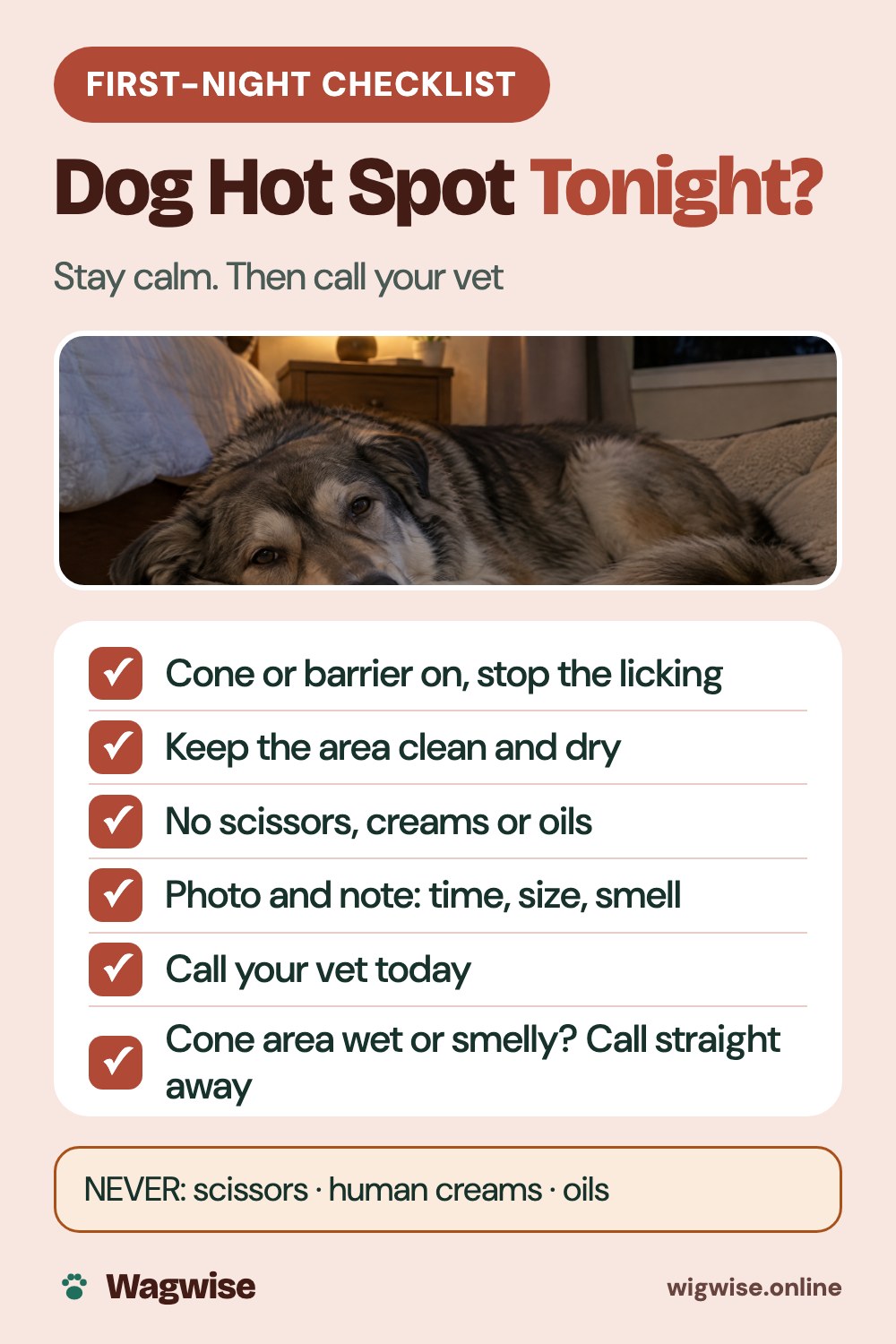
- Stop the licking. Fit a cone or barrier. Choose one that reaches a little past the tip of the nose, or a soft or inflatable collar, and fasten it so two fingers fit under the collar.
- Supervise the first hour. Check your dog can eat, drink and sleep.
- Keep the area clean and dry. Do not apply anything unless your vet says so.
- Note and photograph it. Write the time, the size and any smell, and take a photo so you can show how fast it changes.
- Book a vet visit promptly. Call your vet or emergency vet, tell them it looks like a hot spot, and ask when to come in.
What should you never do?
| Never | Why |
|---|---|
| Cut the fur with scissors | It is easy to cut the skin, which may need stitches |
| Use human creams or oils | Licking can make your dog sick, and some are dangerous |
| Give human medicine by mouth | Many are toxic to dogs. Only your vet sets doses |
| Use vinegar or essential oils | Not safe on broken skin, and oils can poison dogs |
What will the vet do?
Your vet clips and cleans the area, and looks for the underlying cause. Hot spots often come with something else, so expect questions about fleas, ears, allergy and pain. Bring your notes, any photos and the names and dates of flea products for every pet.
When should you check with your vet right away?
Call straight away if:
- The patch is growing fast or looks worse by the hour
- The area under the cone is wet, smelly or growing
- Your dog panics in the cone, or seems in pain
- There is pus, spreading redness, or open wounds
- Your dog is flat, off food or losing weight
What about the next few days?
Keep your dog in the cone or barrier until your vet says otherwise. Follow the plan your vet gives you and attend any recheck. Keep a daily itch score and a note about the area so you can tell your vet whether it is changing.
Do the 5-minute flea check over a white towel too, and ask your vet about year-round flea control for every pet, since fleas are one of the common causes your vet looks for.
The itchy dog guide has the full safety check, a cone fitting guide and a vet-visit prep sheet.
Frequently asked questions
What does a hot spot look like?
A red, wet, oozing patch that grows quickly. If that matches what you see, call your vet.
Can I trim the fur around a hot spot?
No. It is easy to cut the skin, which may need stitches. Your vet clips and cleans the area.
Can I put cream or oil on it?
No. Human creams and oils are on the skip list. Licking them can make your dog sick, and they can hide the cause.
What causes hot spots?
Your vet looks for the cause, which can include fleas, ear problems, allergy, anal glands or pain. That is why a vet visit matters.
More Wagwise guides for dog owners
 Stop Puppy BitingA gentle 4-week plan to stop the nipping and get through teething.$17 · instant PDFSee the guide →
 Get Rid of Dog Pee SmellRemove urine odor for good, then stop the accidents with a 14-day reset.$17 · instant PDFSee the guide →
 Stop Dog BarkingA quiz finds why your dog barks, then a plan made for that reason.$17 · instant PDFSee the guide →
Want all four? Get the complete library for $29.
Sources
This article is general education, not veterinary advice. It does not replace an examination by your vet or help from a qualified behaviourist.