Barking
How to Stop Dog Barking: Find the Reason, Then Pick the Plan
Quick answer
To stop dog barking, first find out why your dog barks: alert barking at the window, demand barking for attention, boredom, fear or distress when alone, barking on walks, or health and night barking. Each reason needs a different fix, and punishment tools like bark collars don't address the cause. Aim for fewer, shorter episodes, not a silent dog.
- Barking is normal dog communication. The goal is fewer, shorter episodes and a dog who settles faster, not silence.
- Six common reasons cause barking, and each has a different first move.
- Use the calm 'thanks' routine when your dog is barking right now, and keep training sessions to 3 to 5 minutes.
- New or sudden barking, or barking from pain or panic, needs a vet visit first.
If you want to stop dog barking, start with the reason, not the noise. A dog who barks at the mail carrier needs a different plan from a dog who barks when you leave, so “why is my dog barking?” is the first question to answer. Most free tips fail because they mix the two up.
Barking is normal dog communication. Your dog isn’t being spiteful, and you’re not a bad owner. The goal isn’t a silent dog. It is fewer, shorter barking episodes and a dog who settles faster.
Why is my dog barking? The 6 common reasons
Behavior experts sort barking into types for exactly this reason. Match what you see to the closest row, then start with the first move.
| Reason | What you see | First move |
|---|---|---|
| Alert (window, door, fence) | Something passes, your dog barks, it leaves. Stiff body, leaning forward. | Block the view |
| Demand (food, play, attention) | Barks at you, often with a loose, wiggly body. It pays off when you look, talk or give something. | Meet the need before the bark |
| Boredom | Barks on long, quiet days or evenings. Steady and rhythmic. | Add a sniff walk and a food toy |
| Fear or alone-time distress | Scary sounds, or barking and howling when you leave. May drool or refuse food. | Don’t push past what your dog can cope with, and talk to your vet |
| Leash barking | Barks at dogs, people or bikes on walks, from fear or frustration. | Add distance |
| Health, age or night | New or sudden barking, night barking, pacing or repetitive habits. | See your vet first |
How to stop a dog from barking right now: the “thanks” routine
The “thanks” routine works for most dogs and keeps things calm:
- Don’t shout. Yelling can sound like you’re joining in, and the attention can pay off the bark.
- Allow 2 to 3 barks, then say “Thanks!” Your dog told you something. Acknowledge it once, in a calm, light voice.
- Walk away from the trigger. Move away from the window or door. Most dogs follow you.
- Cue “Find it.” Scatter a few treats on the floor. A sniffing nose is a quieter nose.
- Block the view, then note it down. Close the blind or shut the door, and write down the time and the trigger.
Dog barking training: how long and how often
Keep sessions short: 3 to 5 minutes, two or three times a day. Move up a step only after about 8 out of 10 successes. Sessions, steps and timing depend on your dog’s reason, and results vary by dog, history and consistency. Some barking is normal, so aim for progress, not perfection.
Stop dog barking without a collar
Bark collars, sprays and shaker cans punish every bark, including useful ones, and they don’t address the reason behind it. Force-free training is the approach recommended by veterinary behavior organizations. For excessive dog barking, find the reason first, then manage the trigger and teach your dog what to do instead.
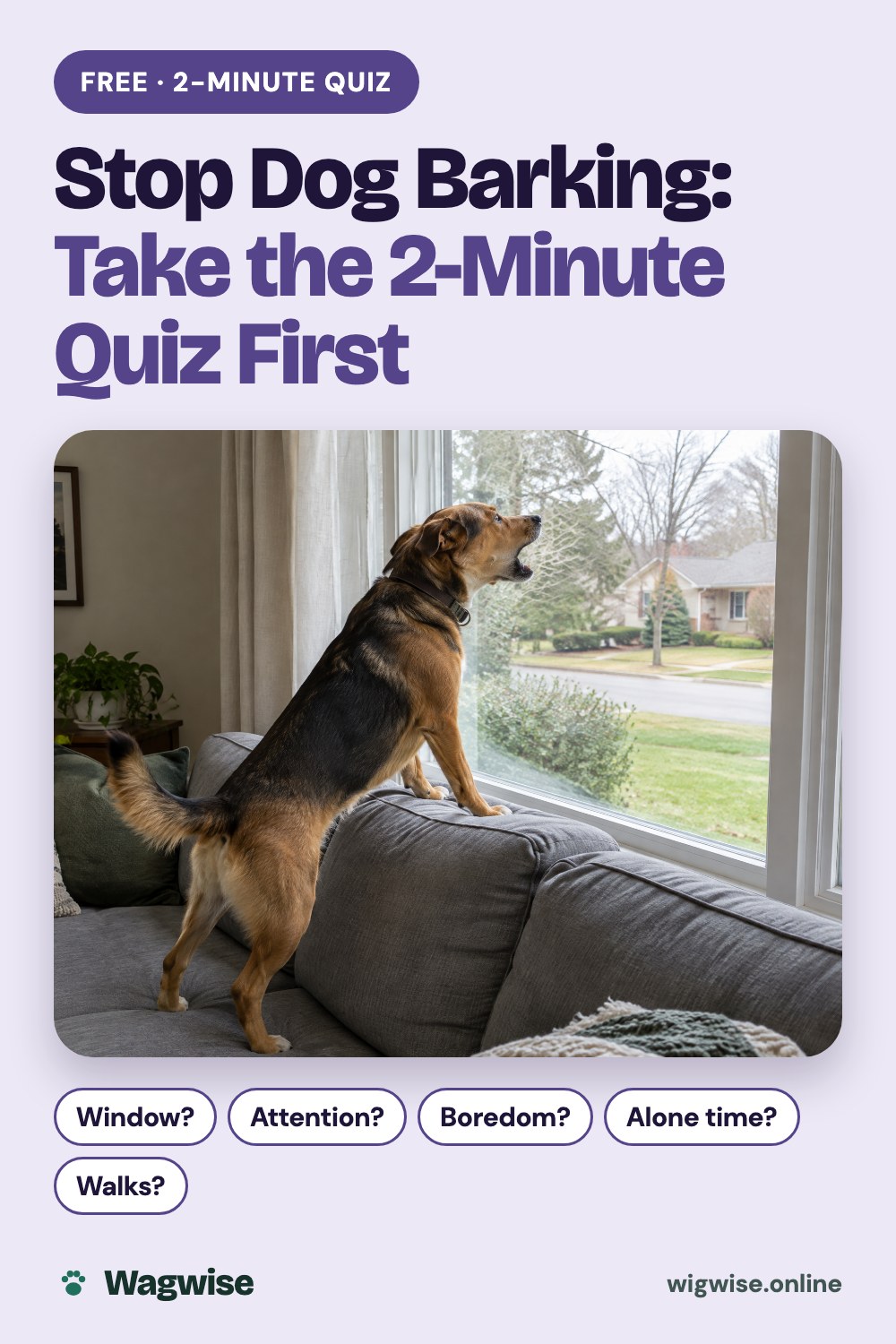
Find your dog’s reason with the free quiz
Keep a quick log for a few days (time, trigger, what happened next), then take the free quiz. It starts with five safety questions, then 12 quick ones, and tells you which of the six reasons is most likely your dog’s main one, with two first steps to start with.
Frequently asked questions
Why is my dog barking all the time?
Barking is normal dog communication, and constant barking usually has one main reason: alert, demand, boredom, fear or alone-time distress, barking on walks, or health and age. Note when and where it happens and what happens next to find the reason. If it started suddenly, see your vet.
How do I stop my dog barking at the window?
Block the view first: apply window film or lower the blinds to your dog's eye height, and use a gate to keep your dog out of the front room. Then reward calm behavior, such as settling on a mat, while things pass by.
Do bark collars work?
Bark collars punish every bark, including useful ones, and they don't address why your dog barks. Veterinary behavior organizations recommend force-free training instead.
Should I ignore my dog's barking?
For demand barking, ignoring alone often fails, and ignoring for a long time then finally scolding teaches your dog to keep going. Meet the need before the bark, teach a polite way to ask, and reward quiet.
When is dog barking a health problem?
See your vet if the barking started suddenly in the last few weeks, if your dog is 8 or older and barks or paces at night, or if you notice limping, stiffness, flinching when touched, or changes in eating, drinking or toileting.
More Wagwise guides for dog owners
 Stop Puppy BitingA gentle 4-week plan to stop the nipping and get through teething.$17 · instant PDFSee the guide →
 Get Rid of Dog Pee SmellRemove urine odor for good, then stop the accidents with a 14-day reset.$17 · instant PDFSee the guide →
 Help Your Itchy DogTrack triggers, soothe skin safely and know when to see the vet.$17 · instant PDFSee the guide →
Want all four? Get the complete library for $29.
Sources
This article is general education, not veterinary advice. It does not replace an examination by your vet or help from a qualified behaviourist.