Itchy dog
Seasonal or All Year? Track Your Dog's Itch Pattern
Quick answer
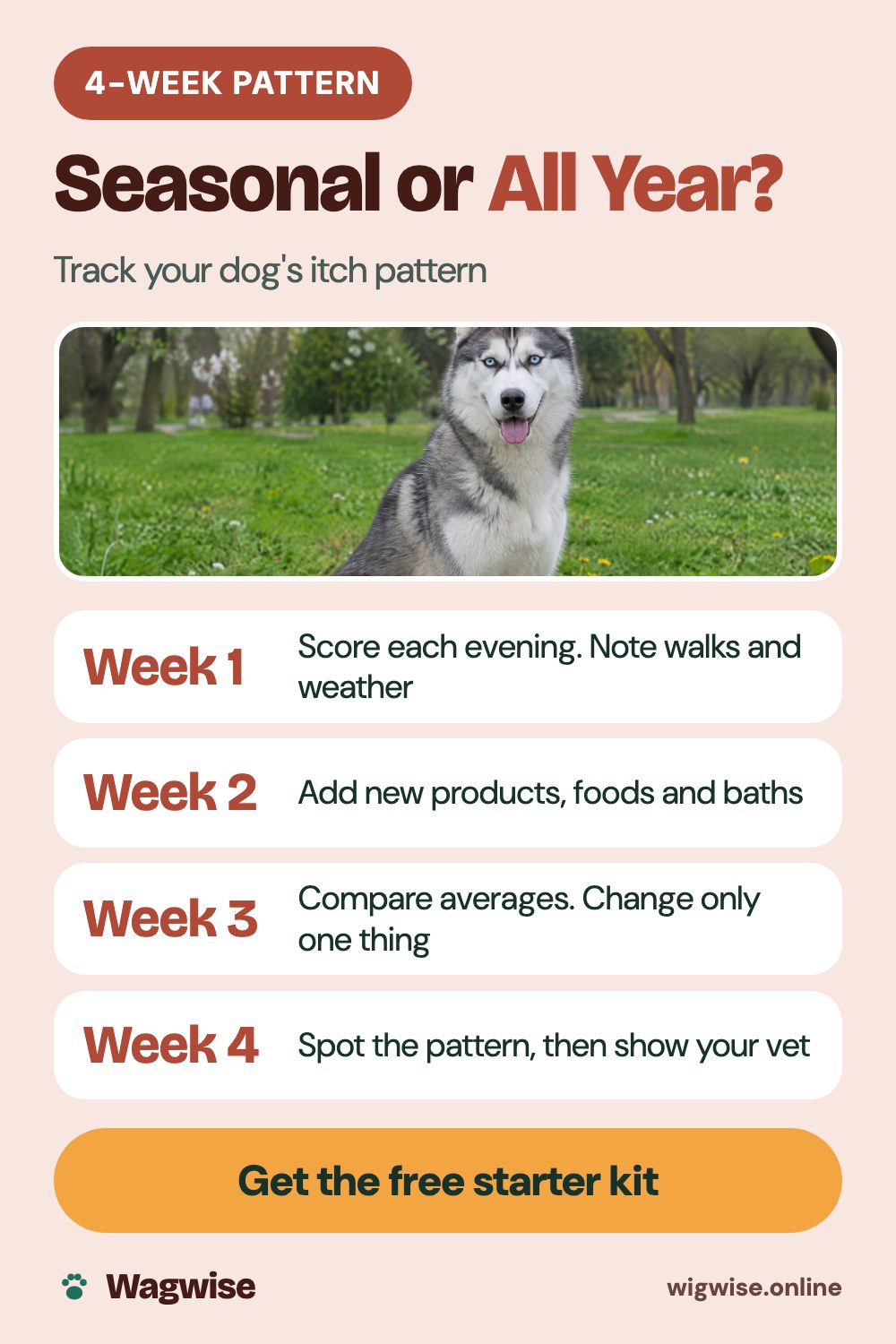
Dog skin allergies often show up in patterns, so a simple calendar helps. Each evening log an itch score from 0 to 10 and short notes on walks, weather, new products and food. After a few weeks, bring the pattern to your vet to see if the itch is seasonal or all year.
- Environmental allergy in dogs often starts seasonally, then becomes year-round.
- A calendar with a daily score and a few notes shows patterns no exam can see.
- Change only one thing at a time, for 2 weeks, then compare average scores.
- Allergic itch is usually managed over time, not made to disappear, so plan for flares.
Dog skin allergies often show up in patterns, and a simple calendar is one of the best ways to see them. Your vet sees your dog for a short visit. You see them every day. A few weeks of notes can show whether the itch is seasonal, all year, or linked to something new.
Are dog skin allergies seasonal or all year?
Environmental allergy often starts at 1 to 3 years of age. It is usually seasonal at first, then becomes year-round. But itch has many causes, and they can stack. Fleas, a skin infection or food can all be part of the picture, so a pattern is a clue for your vet, not an answer.
What should you log each day?
Keep it short. One line per day is enough.
| Log this | Examples |
|---|---|
| Walk | Grass, woods, beach, pavement |
| Weather or pollen | Rain, dry and windy, high pollen day |
| Anything new | Product, cleaner, detergent, shampoo |
| Food and treats | Anything outside the usual |
| Baths and wipes | Date and what was used |
| Itch score | 0 to 10, once each evening |
How do you read the calendar after a few weeks?
Look for clues like these and write them down for your vet:
- Worse in some seasons at first, then all year. This is how environmental allergy often starts.
- Belly and paws itch after grass walks. Pollen or a contact irritant may be involved. Ask your vet about after-walk wipe-downs.
- Itch after a new detergent or shampoo. A contact irritant may be involved.
- Worse after sleeping on one rug, or in winter with the heating on. Indoor triggers may be involved.
- Itch rises after a food slip. Mention it to your vet, especially if your dog is on a vet-guided food trial.
Many boxes ticked is common. Several causes can be at work at once.
How do you test a suspect safely?
Pick one suspect, such as the bedding detergent. Change only that for 2 weeks. Then compare the average scores from before and after. Add up the seven evening scores in a week and divide by seven. If you change several things at once, you will not know which mattered.
Tell your vet what you are testing. Do not add medicines, supplements or home mixtures to the test.
What if the pattern does not show up?
One bad week is not a trend. If you miss a few days, restart tonight. Gaps are fine and the trend still shows. If nothing has changed after four weeks, book a recheck and ask about a referral to a veterinary dermatologist.
What does long-term tracking look like?
Allergic itch is usually managed, not made to disappear. Vets describe it as lifelong, and flares can happen even when it is well controlled. Many owners score two or three times a week in good spells and nightly in flares. Ask your vet to help you agree on a flare plan, and keep flea control going all year for every pet, decided with your vet.
The free itchy dog starter kit includes a 7-day itch score tracker, a red-flags card and a 5-minute flea check to get your calendar started.
Frequently asked questions
How do I know if my dog's itch is seasonal?
Log a daily score and notes for several weeks and look for a pattern, such as worse after walks in long grass or in certain months. Bring the pattern to your vet, who decides what is going on.
At what age do dog skin allergies start?
Environmental allergy often starts at 1 to 3 years of age, seasonal at first and then year-round. Your vet will check other causes too.
How many things should I change at once?
One. Pick a single suspect, such as the bedding detergent, change only that for 2 weeks, then compare average scores before and after.
Will the itch go away for good?
Vets describe allergic itch as usually managed rather than made to disappear, and flares can happen even when it is well controlled. Plan with your vet for those times.
More Wagwise guides for dog owners
 Stop Puppy BitingA gentle 4-week plan to stop the nipping and get through teething.$17 · instant PDFSee the guide →
 Get Rid of Dog Pee SmellRemove urine odor for good, then stop the accidents with a 14-day reset.$17 · instant PDFSee the guide →
 Stop Dog BarkingA quiz finds why your dog barks, then a plan made for that reason.$17 · instant PDFSee the guide →
Want all four? Get the complete library for $29.
Sources
This article is general education, not veterinary advice. It does not replace an examination by your vet or help from a qualified behaviourist.