Puppy biting
DIY Frozen Washcloth Teething Toy for Puppies
Quick answer
For diy puppy teething toys dog chews, a frozen knotted washcloth is the simplest option. Wring a clean cotton washcloth until damp, twist it into a rope, tie one or two firm knots and freeze for 1 hour. Offer it for up to 15 minutes, supervised.
- One clean 100 percent cotton washcloth and plain water are all you need.
- Freeze for 1 hour, then offer for up to 15 minutes while you watch.
- Remove the cloth if threads come loose, and take it away if it starts to shred.
- Cold soothes sore gums, but chewing a cloth will not stop hand biting on its own.
Searching for diy puppy teething toys dog chews that cost almost nothing? A frozen knotted washcloth is one of the easiest. It takes two minutes to make, needs one washcloth, and gives sore gums something cold and bendable to work on.
Why does a frozen washcloth work for teething?
Cold soothes sore gums, and a knotted cloth bends and dents, so it passes the thumbnail test. Veterinary dentists say not to let a dog chew anything that will not bend, so a damp cloth is a better choice than ice cubes or hard chews, which can crack teeth.
What you need and how to make it
You need one clean 100 percent cotton washcloth, plain water (or homemade unsalted chicken broth, simmered with no salt, onion, garlic, stock cubes or herbs) and a freezer.
- Soak and wring. Soak the washcloth, then wring it until damp, not dripping.
- Twist. Twist it into a rope.
- Knot. Tie one or two firm knots.
- Freeze. Freeze for 1 hour.
- Offer and watch. Offer for up to 15 minutes while you supervise. Remove it if threads come loose.
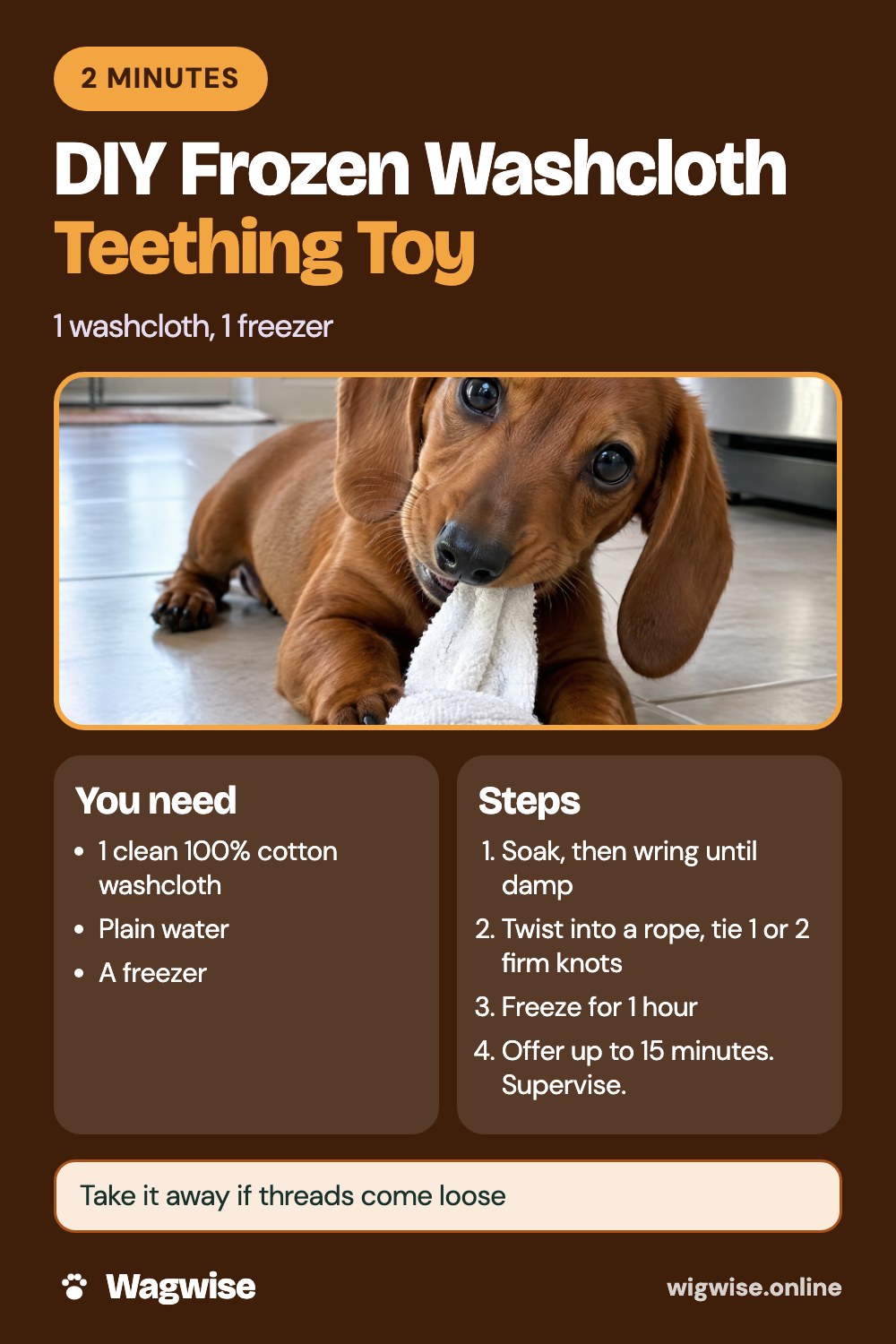
The cloth should feel cold, damp and bendable, not like a block of ice. If it feels stiff, let it sit for a few minutes until it bends again. Before you hand it over, press your thumbnail into a knot. A safe chew should dent, and a damp cotton knot does. Also make sure the knotted cloth is too big to fit fully in your puppy’s mouth, and unknot it or choose a bigger cloth if it is not.
When should you take it away?
Stay within arm’s reach for the whole session. Take the toy away when:
- Threads come loose or the cloth starts to shred
- It gets small enough to swallow
- The 15 minutes are up
- Your puppy starts tearing pieces off
Wash the cloth between uses and replace it once it frays. No toy is 100 percent safe, so supervision is the real safety tool. Replace damaged toys, and never leave a chew with a puppy you cannot watch.
Can you change the recipe?
| Option | How it works |
|---|---|
| Plain knotted cloth | Wring until damp, knot and freeze for 1 hour |
| Broth-soaked cloth | Soak in homemade unsalted broth, then wring and freeze |
| Soft rubber toy | Stuff and freeze instead, if your puppy shreds cloth |
Count any food you add as part of the day’s meals, and check labels for xylitol, onion, garlic and salt before adding anything. Introduce one new food at a time, in a small amount.
When is the best time to offer it?
Offer it for one short session at a time, and count it as an enrichment activity rather than a replacement for sleep. It also works as a calm wind-down in the pen before the evening zoomies start, because a tired puppy bites harder. Pair it with a nap, not with more play.
Will it stop puppy biting?
Teething drives chewing on objects, while biting people is mostly play. A frozen cloth helps sore gums, but it will not fix hand biting alone. Keep a toy within arm’s reach for the moments teeth reach skin, and use the same calm response every time. The full guide includes five more frozen recipes. If your puppy swallows cloth, chokes or vomits, use the help box below.
Frequently asked questions
How long do I freeze a washcloth for a puppy?
Freeze a damp, knotted cotton washcloth for 1 hour. It should be cold, damp and still bendable, not a block of ice.
Is a frozen washcloth safe for teething puppies?
It can be, when supervised. Offer it for up to 15 minutes, and remove it if threads come loose. No toy is 100 percent safe.
Can I use broth instead of water?
Yes. You can soak the cloth in plain water, or in homemade unsalted chicken broth made with no salt, onion, garlic, stock cubes or herbs.
What if my puppy shreds the washcloth?
Take it away straight away. Loose threads can be swallowed, so switch to a soft rubber toy that passes the thumbnail test.
More Wagwise guides for dog owners
 Get Rid of Dog Pee SmellRemove urine odor for good, then stop the accidents with a 14-day reset.$17 · instant PDFSee the guide →
 Stop Dog BarkingA quiz finds why your dog barks, then a plan made for that reason.$17 · instant PDFSee the guide →
 Help Your Itchy DogTrack triggers, soothe skin safely and know when to see the vet.$17 · instant PDFSee the guide →
Want all four? Get the complete library for $29.
Sources
This article is general education, not veterinary advice. It does not replace an examination by your vet or help from a qualified behaviourist.