Dog pee smell
Dog Got Skunked? The 3-Ingredient Wash and How to Use It Safely
Quick answer
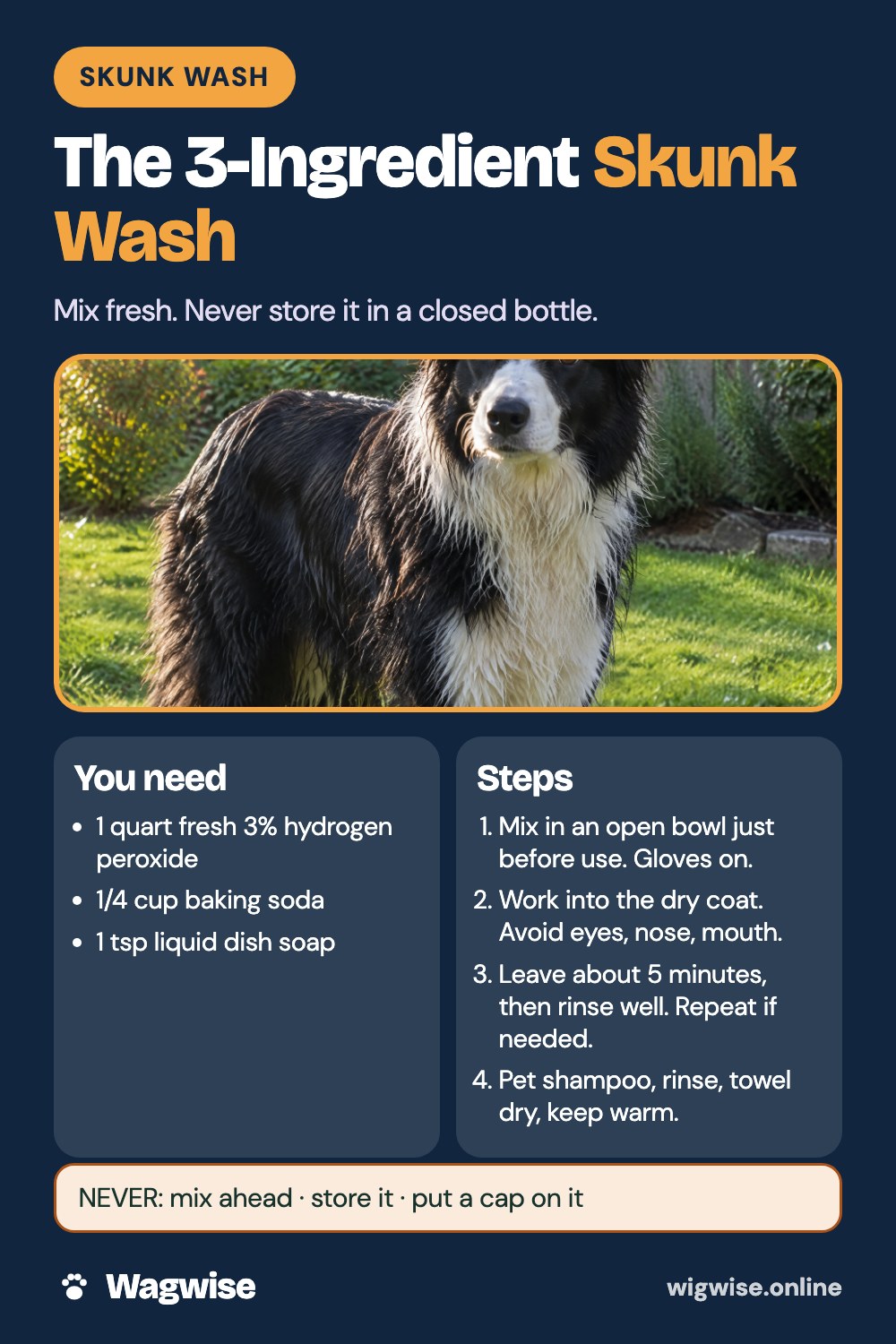
To get skunk smell out of dog fur, mix 1 quart of fresh 3% hydrogen peroxide, 1/4 cup of baking soda and 1 teaspoon of liquid dish soap just before use. Work it into the dry coat, avoid eyes, nose and mouth, leave about 5 minutes, then rinse well.
- The wash is 1 quart fresh 3% hydrogen peroxide, 1/4 cup baking soda and 1 teaspoon liquid dish soap.
- Mix it fresh in an open bowl or bucket. Never store it or put a cap on it.
- Keep it away from your dog's eyes, nose and mouth, and rinse thoroughly.
- Tomato juice may mask the smell but does not neutralize skunk compounds.
- Call your vet if the eyes stay red, your dog vomits, or seems weak or unwell.
To get skunk smell out of dog fur, mix a fresh wash of hydrogen peroxide, baking soda and dish soap, work it into the dry coat and rinse well. Mix it just before you use it, keep it away from your dog’s eyes, nose and mouth, and never store the leftovers.
What is in the 3-ingredient skunk wash?
You need three things, and the peroxide should come from a fresh bottle.
| Ingredient | Amount |
|---|---|
| Fresh 3% hydrogen peroxide | 1 quart (about 950 ml) |
| Baking soda | 1/4 cup (about 60 g) |
| Liquid dish soap | 1 teaspoon (5 ml) |
How to get skunk smell out of dog fur, step by step
- Stay outside and glove up. Keep your dog outside and put gloves on.
- Mix just before use. Combine the three ingredients in an open bowl or bucket.
- Work it into the dry coat. Avoid the eyes, nose and mouth.
- Wait, then rinse. Leave it about 5 minutes, then rinse thoroughly. Repeat if needed.
- Shampoo and dry. Use pet shampoo, rinse, towel dry and keep your dog warm.
Safety rules for the skunk wash
- Mix fresh, every time. Never mix it ahead, store it, or put a cap on it. Pressure can burst a closed bottle, so throw away leftovers.
- Protect the face. Keep it away from your dog’s eyes, nose and mouth, and rinse thoroughly.
- Watch the fur. It may lighten dark fur, so don’t leave it on longer than needed.
- Keep it off your home. Don’t use it on carpets, furniture or clothing, because it can bleach them.
- Never mix cleaners. Don’t put vinegar and peroxide in one bottle, and keep bleach away from everything else, including vinegar.
Why does skunk smell come back when wet?
Skunk spray contains thioacetates, which turn into smelly thiols when they get wet. That is why a damp dog can smell worse days later. Some smell may linger for a few days, especially when the coat gets wet.
Tomato juice is a popular fix, but it may only mask the smell for a while. It does not neutralize skunk compounds, so skip it.
What about your clothes and the house?
Wash clothes in cold water with regular detergent plus 1/2 cup (about 110 g) of baking soda, and air dry them outdoors. Don’t use hot water or the dryer, because heat can set the odor.
For the house, ventilate with open windows and fans. Bowls of vinegar or activated charcoal can help absorb odor, but keep vinegar far from any bleach.
What if a faint smell remains?
A faint smell after the first rinse is common. Repeat the wash once if needed, then shampoo with pet shampoo. Some smell may linger for a few days, especially when the coat gets wet, because wet fur turns the remaining thioacetates into smelly thiols again. That does not mean the wash failed.
Keep your dog warm after bathing. If your dog seems unwell at any point, call your vet rather than trying another round.
Get ready before you need it. A small kit helps:
- Buy a fresh bottle of 3% hydrogen peroxide and keep it sealed.
- Keep baking soda, dish soap and gloves together in one bucket.
- Save your emergency vet’s number in your phone.
What should you do first?
Before any mixing, keep your dog outside and check the eyes. Flush red or irritated eyes with cool water. Our guide to the first minutes after a skunk spray walks through that part, and it helps to keep a fresh bottle of 3% hydrogen peroxide, baking soda, dish soap and gloves together in one bucket before you ever need them.
Frequently asked questions
What is the skunk wash recipe for dogs?
Mix 1 quart (about 950 ml) of fresh 3% hydrogen peroxide, 1/4 cup (about 60 g) of baking soda and 1 teaspoon (5 ml) of liquid dish soap. Mix it just before use in an open bowl or bucket.
Can I make the skunk wash ahead and store it?
No. Never mix it ahead, store it or put a cap on it. Pressure can burst a closed bottle, so throw away any leftovers.
Does tomato juice get rid of skunk smell?
It may mask the smell for a while, but it does not neutralize the skunk compounds. Use the fresh wash instead.
Why does the skunk smell come back when my dog gets wet?
Skunk spray contains thioacetates, which turn into smelly thiols when they get wet. That is why a damp dog can smell worse days later.
Will the wash lighten my dog's fur?
It may lighten dark fur, so don't leave it on longer than needed. Don't use it on carpets, furniture or clothing either, because it can bleach them.
More Wagwise guides for dog owners
 Stop Puppy BitingA gentle 4-week plan to stop the nipping and get through teething.$17 · instant PDFSee the guide →
 Stop Dog BarkingA quiz finds why your dog barks, then a plan made for that reason.$17 · instant PDFSee the guide →
 Help Your Itchy DogTrack triggers, soothe skin safely and know when to see the vet.$17 · instant PDFSee the guide →
Want all four? Get the complete library for $29.
Sources
This article is general education, not veterinary advice. It does not replace an examination by your vet or help from a qualified behaviourist.