Puppy biting
Frozen Pumpkin Lick Mat for Teething Puppies
Quick answer
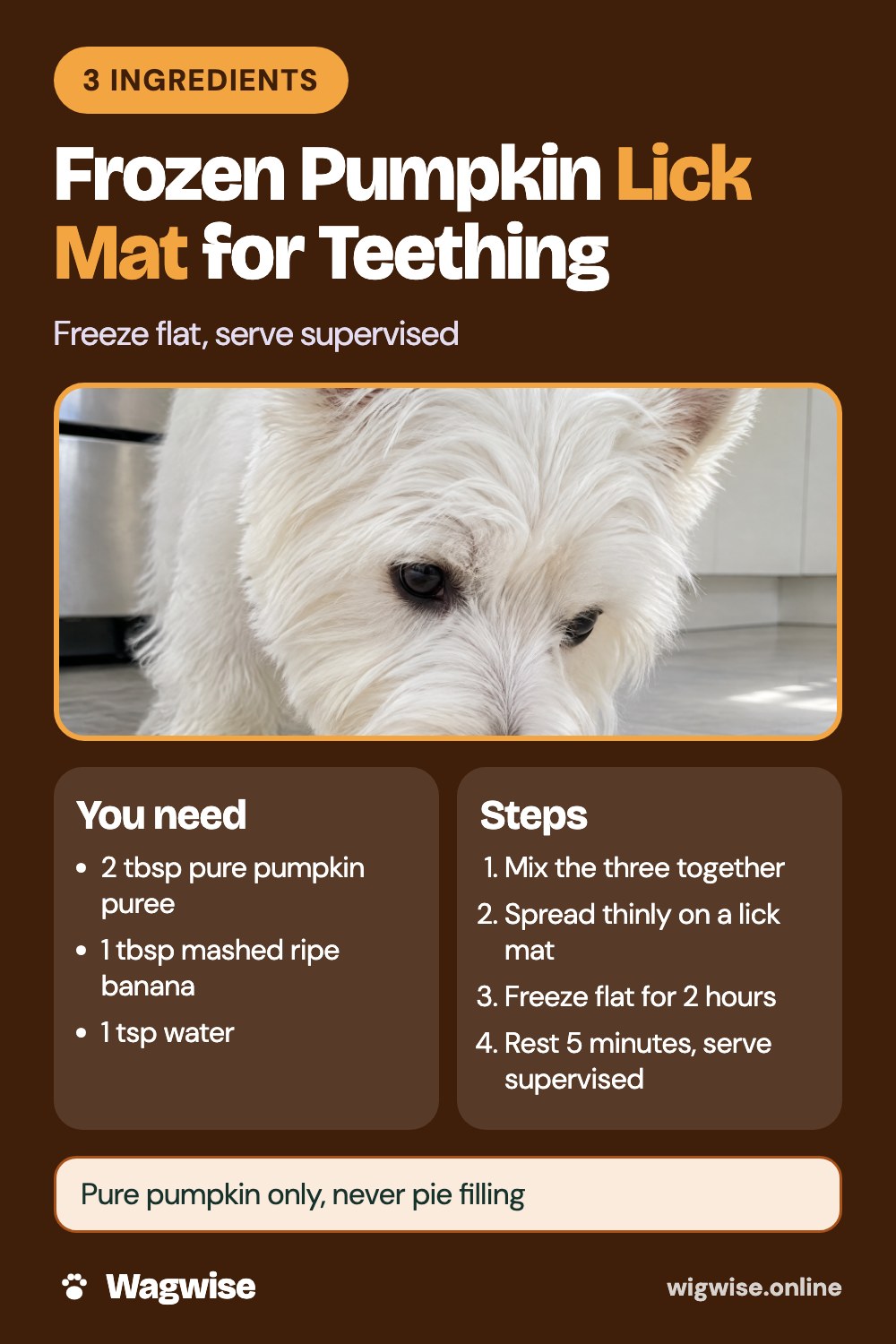
One of the simplest puppy teething remedies frozen is a pumpkin and banana lick mat. Spread 2 tablespoons of pure pumpkin puree, 1 tablespoon of mashed banana and 1 teaspoon of water thinly on a lick mat, freeze flat for 2 hours, and serve supervised.
- Use 100 percent pure pumpkin puree, never pie filling.
- Spread thinly on a lick mat and freeze flat for 2 hours.
- Serve for 10 to 15 minutes in the pen, ideally before the evening witching hour.
- Supervise every session, and count the treat as part of the day's food.
Among the best puppy teething remedies frozen at home is a pumpkin and banana lick mat. Cold soothes sore gums, the licking keeps your puppy busy, and the mat needs only three ingredients. The key is to use plain pumpkin puree, not pie filling.
Why use a frozen lick mat for a teething puppy?
Cold soothes sore gums. Serving it on a lick mat, instead of as a hard frozen block, keeps it soft enough to lick safely. Licking also helps a wound-up puppy settle, which makes the mat handy before the evening witching hour, when overtired puppies tend to bite hardest.
What you need and how to make it
- 2 tablespoons (30 g) pure pumpkin puree, not pie filling
- 1 tablespoon (15 g) mashed ripe banana
- 1 teaspoon (5 ml) water
- A lick mat
Check the pumpkin can: it should say 100 percent pure pumpkin, with no sugar, spices or sweeteners. Amounts are for an 11 to 33 lb (5 to 15 kg) puppy. Halve them for toy breeds.
- Mix. Stir the banana and water into the pumpkin.
- Spread. Press a thin layer into the grooves of the lick mat.
- Freeze. Freeze flat for 2 hours.
- Serve. Let it sit for 5 minutes, then serve for 10 to 15 minutes in the pen, supervised.
When should you serve it, and how do you store the rest?
Serve it 10 to 15 minutes in the pen before the witching hour, which is the burst of zoomies and hard biting that often hits in the early evening. Giving it before the zoomies start works better than using it as a rescue. Count the mat as part of the day’s food.
Leftover pumpkin keeps about 3 days in the fridge, or you can freeze it in 1 tablespoon portions. A good batch-prep habit is to make a few frozen toys and mats on Sunday, which covers most evenings for the week.
Safety rules for any frozen recipe
| Rule | Why |
|---|---|
| Introduce one new food at a time | Stop if stools go loose |
| Check every label for xylitol, onion, garlic and salt | These can be toxic or unsafe |
| Serve on a mat or in a toy | Never as a hard frozen block |
| Supervise every session | No treat or toy is 100 percent safe |
Ask your vet first if your puppy has a sensitive stomach, and stop if anything seems off.
Want a different flavor or a calm trick?
For a second mat, mash 2 tablespoons (30 g) of seedless watermelon flesh (no rind, no seeds), spread it on a lick mat, press in 6 halved blueberries and freeze for 2 hours. It gets messy, so serve it outdoors or on a washable floor.
Not ready to freeze? Try the lick-to-calm trick: smear a little plain pumpkin puree on a spoon or your palm. Your puppy practices licking hands, not biting them. Peanut butter works too, but only if the label shows no xylitol, which is toxic to dogs.
Remember that teething drives chewing on objects, while biting people is mostly play. A lick mat is a helper, not a fix. See the full guide for the biting plan, and use the help box below if anything seems off.
Frequently asked questions
Can puppies have pumpkin puree?
Pure pumpkin puree is safe in small amounts. Never use pumpkin pie filling, which contains sugar and spices. Introduce it as one new food at a time.
How long do I freeze a lick mat?
Freeze it flat for 2 hours. Let it sit for 5 minutes before serving so it softens slightly.
Is a frozen lick mat safe for a teething puppy?
It is safe when served on a lick mat, never as a hard frozen block, and when you supervise. Check labels for xylitol, onion, garlic and salt on anything else you add.
How much can my puppy have?
Amounts here are for a puppy of 11 to 33 lb (5 to 15 kg). Halve them for toy breeds and count the treat as part of the day's food. Ask your vet if your puppy has a sensitive stomach.
More Wagwise guides for dog owners
 Get Rid of Dog Pee SmellRemove urine odor for good, then stop the accidents with a 14-day reset.$17 · instant PDFSee the guide →
 Stop Dog BarkingA quiz finds why your dog barks, then a plan made for that reason.$17 · instant PDFSee the guide →
 Help Your Itchy DogTrack triggers, soothe skin safely and know when to see the vet.$17 · instant PDFSee the guide →
Want all four? Get the complete library for $29.
Sources
This article is general education, not veterinary advice. It does not replace an examination by your vet or help from a qualified behaviourist.