Dog pee smell
How to Find Hidden Dog Pee Spots With a Blacklight
Quick answer
To get dog smell out of house, find every spot first. Wait until after dark, switch off all lights, sweep a UV flashlight low along floors and walls, then sniff to confirm. Mark each spot, treat it, and re-scan once it is dry.
- You can't fix what you can't find, so a spot hunt comes before any cleaning.
- Under a blacklight, old urine can glow. Glow plus smell confirms it, but glow alone may be another stain.
- Check the hot zones: corners, behind sofas, doorways, the back door, curtain hems and the dog's bed.
- Re-scan after cleaning and drying. A spot that still glows and smells needs a second round.
- Small amounts on walls or furniture legs suggest marking, not accidents.
To get dog smell out of house, you first need to know where every spot is. A UV blacklight, a dark room and your nose can find spots you’ve walked past for months. Once you can see them, you can treat each one properly.
How do you find hidden dog pee with a blacklight?
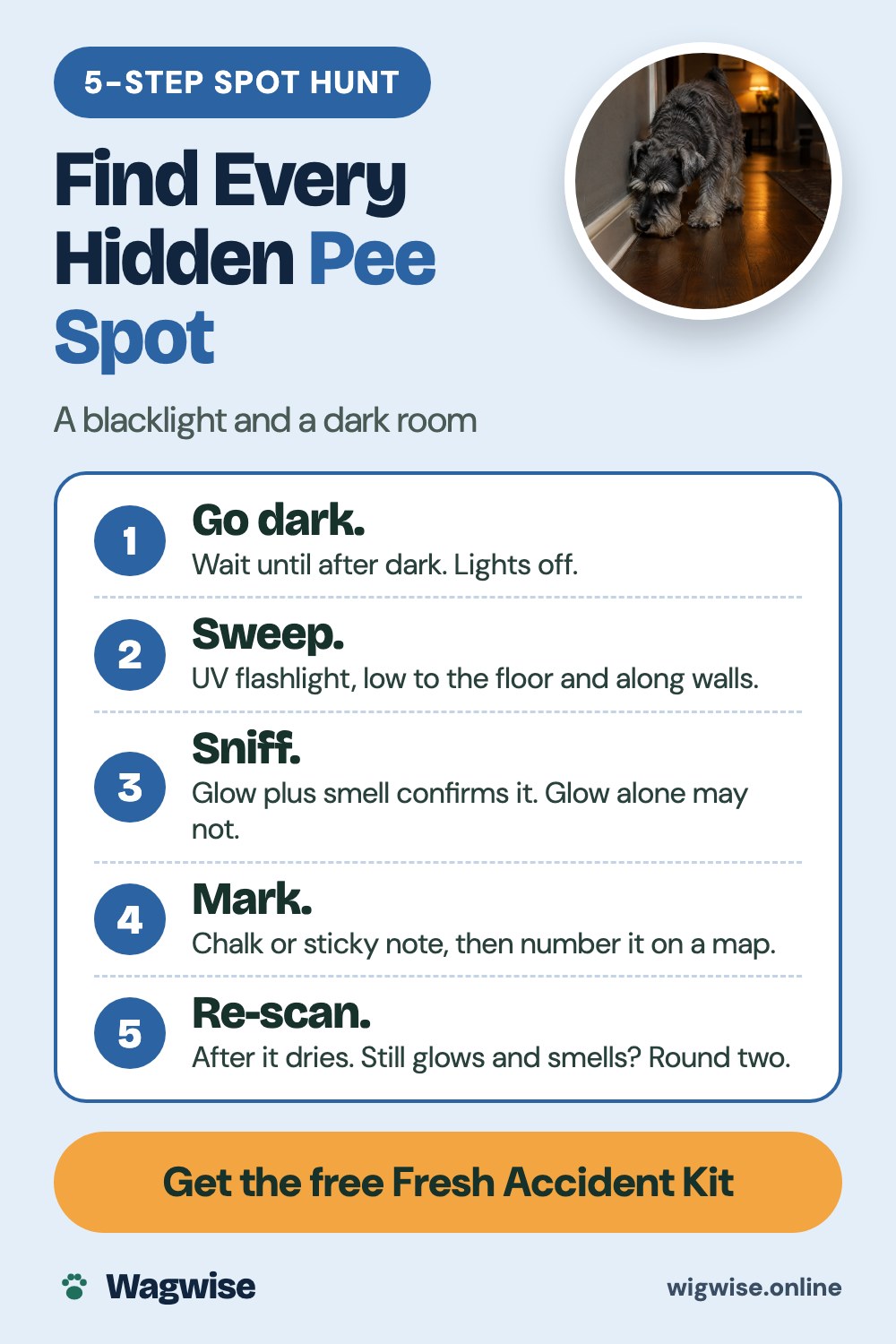
Follow these steps once it’s fully dark:
- Wait until after dark. Turn all the lights off.
- Sweep slowly. Move the UV flashlight low to the floor and along the walls.
- Get low and sniff. Glow plus smell confirms it. Glow alone may be another kind of stain.
- Mark each spot. Use chalk or a sticky note, then number it on a simple sketch of the room.
- Re-scan after cleaning. Once a spot is cleaned and dry, scan again. If it still glows and smells, give it a second round.
Where do dogs leave hidden pee spots?
These are common hiding places, not a complete list. Check each one, and lift rugs to look underneath.
| Hot zone | Where to look |
|---|---|
| Corners | Room corners and walls |
| Sofas | Behind and under |
| Doorways | Every one |
| Back door | The “I tried to tell you” spot |
| Curtains | Hems and drapes |
| Legs | Table and furniture legs |
| Dog’s bed | The bed and blankets |
| Stairs | Edges and landings |
What if the spots are on walls or furniture legs?
Small amounts on walls, baseboards and furniture legs suggest marking rather than accidents. Write an M next to them on your map. Marking needs a different fix from a training gap, and your vet should check your dog first. Our guide to why dogs pee inside explains the pattern.
How to get dog smell out of house once you’ve found the spots
Treat each one with an enzymatic urine cleaner, soaked as deep as the urine went, then let it dry fully before you re-scan. The first 10 minutes after any new accident matter most, and our post on why the smell keeps coming back shows what surface cleaning misses. A few safety rules apply whenever you clean:
- Test any product on a hidden spot first.
- Never use bleach on urine.
- Never mix cleaning products, such as bleach with ammonia cleaners or vinegar, or peroxide and vinegar in one bottle.
Our free Fresh Accident Kit has the fridge card and a never-mix card for when you start cleaning.
What does the re-scan tell you?
The re-scan is how you know a spot is really fixed. Treat each spot, let it dry fully, often 24 to 48 hours, then sweep again after dark. If it still glows and smells, give it a second round. A glowing patch bigger than a dinner plate, or a smell that returns after two full rounds, can mean the urine soaked into the pad or subfloor. Our rule of thumb is to move up the repair ladder only as far as you need.
It also helps to number the spots on a simple room map, write the date you treated each one, and note whether it needs a second round. Spots on walls get an M instead. Over a weekend you can usually work through the list in order, starting with the worst spot.
How often should you sweep?
A blacklight sweep takes about ten minutes after dark. Do one along the walls and the back door each month to catch new spots while they’re small. That monthly habit is our suggested routine, so adjust it to your home and your dog.
Buy or borrow a UV blacklight flashlight, do your first scan tonight, and write down how many spots you find, and how many look like marking.
Frequently asked questions
Does a blacklight really show dog urine?
Under a blacklight, old urine can glow. Confirm with your nose, because glow alone may be another kind of stain.
Where do dogs hide pee spots in a house?
Common hiding places include room corners and walls, behind and under sofas, doorways, the back door, curtain hems, table and furniture legs, the dog's bed, stair edges and under rugs. It's a list of common places, not a complete one.
How do I know if it's marking or accidents?
Small amounts on walls, baseboards and furniture legs suggest marking, not accidents. Write an M next to them on your map and have your vet check your dog.
How often should I do a blacklight sweep?
A monthly ten-minute sweep after dark, along the walls and the back door, catches new spots while they're small. That routine is our suggestion, not a rule from a study.
More Wagwise guides for dog owners
 Stop Puppy BitingA gentle 4-week plan to stop the nipping and get through teething.$17 · instant PDFSee the guide →
 Stop Dog BarkingA quiz finds why your dog barks, then a plan made for that reason.$17 · instant PDFSee the guide →
 Help Your Itchy DogTrack triggers, soothe skin safely and know when to see the vet.$17 · instant PDFSee the guide →
Want all four? Get the complete library for $29.
Sources
This article is general education, not veterinary advice. It does not replace an examination by your vet or help from a qualified behaviourist.