Dog pee smell
Why Is My Dog Peeing in the House? 8 Causes and a Flowchart
Quick answer
To stop dog from peeing in house, find the cause before you retrain. Vets group causes into training gaps, illness, fear or anxiety, and marking. Rule out red flags with your vet, then match what the accident looks like to the right fix.
- Find the cause before you retrain: a schedule won't fix a bladder infection.
- Check red flags first, such as blood, straining, much more drinking or a trained adult with sudden accidents.
- Full puddles suggest a training or schedule gap. Small amounts on upright things suggest marking.
- Dribbling at greetings is not deliberate, and scolding makes it worse.
- Dogs don't pee out of spite.
To stop dog from peeing in house, you have to find the cause first. A training schedule won’t fix a bladder infection, and a scolding won’t fix a dog who is stressed. Vets group indoor peeing into four causes: a training gap, illness, fear or anxiety, and marking.
Step 1: Check for red flags before anything else
See a vet before you retrain if you notice any of these:
- Blood in the urine, or pink or red urine.
- Straining, crying, or only drops coming out.
- Peeing much more often, or larger amounts.
- Drinking noticeably more water.
- A house-trained adult suddenly having accidents.
- Leaking or wet patches where your dog slept.
If you see any red flag, vet first. Pause the reset until your vet gives the all-clear.
The flowchart: what does the accident look like?
If there are no red flags, read the pattern:
- Full puddle on the floor, often near the door or after long gaps: training or schedule gap.
- Small amounts on upright things like walls, furniture or bags: marking.
- Dribbles at greetings, such as crouching or rolling over: submissive urination.
- Only when alone, or after a big change: talk to your vet or a behaviorist.
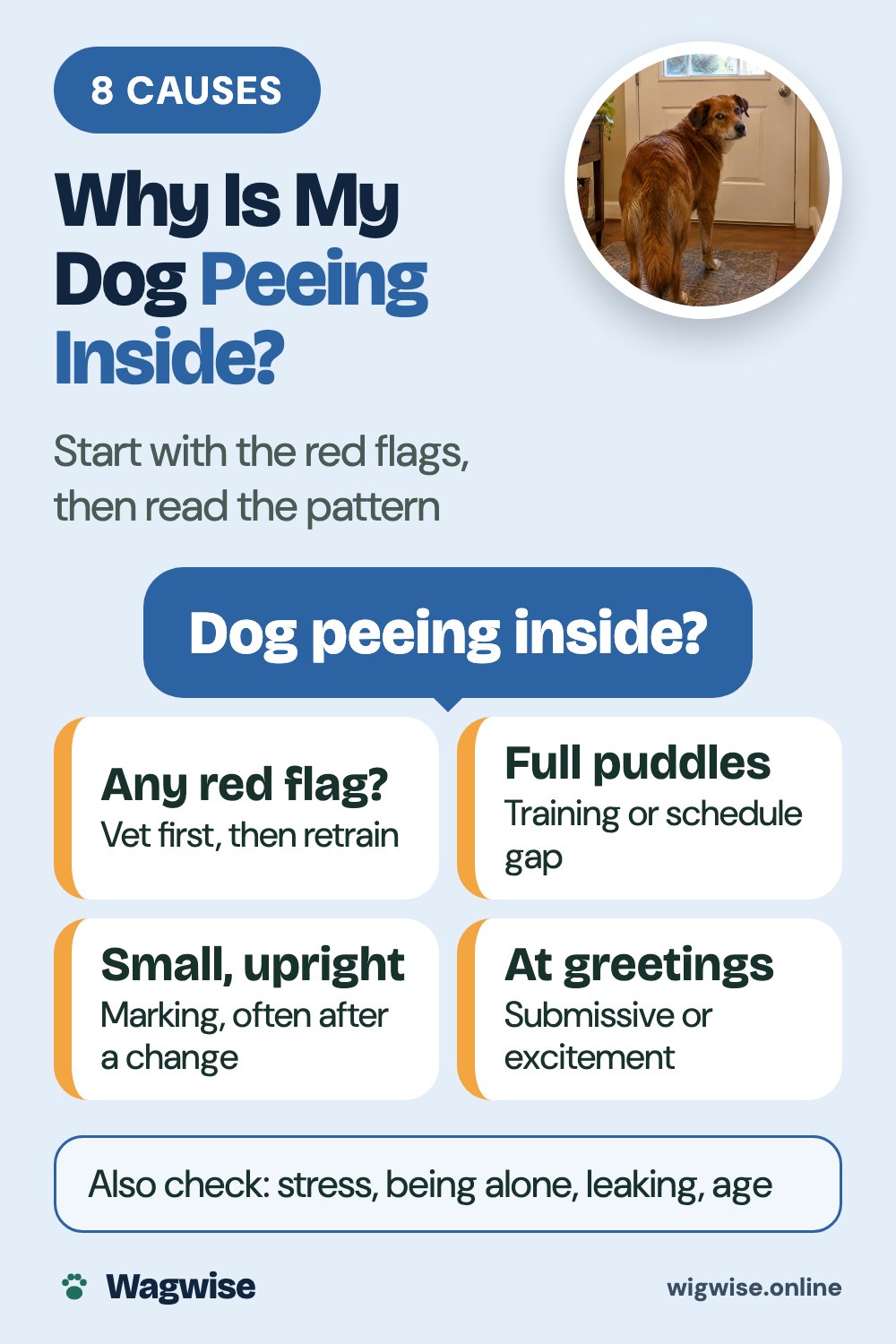
The 8 causes at a glance
| What you see | Likely cause |
|---|---|
| Full puddles, often near the door or after long gaps | Training or schedule gap |
| Small amounts on upright things, new objects, visitors’ bags | Marking |
| Dribble when greeted, crouched or rolling over | Submissive urination |
| Pee while jumping at greetings, mostly under 1 year | Excitement urination |
| Only when left alone, with chewing or howling | Possible separation distress (vet or behaviorist) |
| Wet bed or wet patch where the dog slept, often a spayed female | Incontinence (vet) |
| Senior dog pees right after coming in, seems lost | Possible cognitive decline (vet) |
| Started after a move, new baby, new pet or new work hours | Stress or change |
How to stop dog from peeing in house, cause by cause
- Training gap: restart as if your dog were a puppy, with one toilet spot, trips before they need to go, supervision and a log.
- Marking: vet check first. Supervise and redirect with a happy voice or a toy, block favorite targets with gates or furniture, and use a leash in new places. Neutering may reduce marking in males, but it doesn’t always work.
- Submissive urination: it isn’t deliberate, and scolding makes it worse. Greet calmly, crouch side-on, avoid eye contact and leaning over, and ignore your dog for about 5 minutes when you arrive.
- Excitement urination: keep arrivals boring, greet outdoors and use low voices. It usually fades as dogs mature.
- Stress, change or anxiety: treat the cause with your vet or a behaviorist.
- Incontinence or cognitive decline: these are vet matters, not training problems.
Keep a 3-day log
Record every pee, inside and out, plus water, meals, sleep and triggers. A few lines show the time, place and what happened just before. Bring the notes to your vet if a red flag shows up. Our post on seven signs it’s time to see a vet lists what to watch, and the adult and rescue dog plan covers retraining.
Whatever the cause, never punish, shout or rub a nose in a mess, and clean accident spots with enzymatic cleaner so the smell doesn’t draw your dog back. Never use bleach or mix cleaners.
Frequently asked questions
Why is my dog peeing in the house all of a sudden?
A house-trained adult suddenly having accidents can be a medical sign, so call your vet. Other causes include stress or change, marking and fear or anxiety.
How do I tell marking from a normal accident?
Marking is small amounts on upright things like walls, furniture and visitors' bags. A full puddle on the floor, often near the door or after long gaps, suggests a training or schedule gap.
Is my dog peeing inside out of spite?
No. Dogs don't pee to get back at you. The 'guilty look' is appeasement, not guilt.
What is excitement urination?
Peeing while jumping at greetings, mostly in dogs under 1 year. It is common and usually fades as they mature, so keep arrivals boring and never scold.
What if my spayed female leaks while asleep?
Wet patches where your dog slept can be incontinence, which is not a training problem. Up to 1 in 5 spayed female dogs develop it, typically about 2.9 years after spaying. Talk to your vet.
More Wagwise guides for dog owners
 Stop Puppy BitingA gentle 4-week plan to stop the nipping and get through teething.$17 · instant PDFSee the guide →
 Stop Dog BarkingA quiz finds why your dog barks, then a plan made for that reason.$17 · instant PDFSee the guide →
 Help Your Itchy DogTrack triggers, soothe skin safely and know when to see the vet.$17 · instant PDFSee the guide →
Want all four? Get the complete library for $29.
Sources
This article is general education, not veterinary advice. It does not replace an examination by your vet or help from a qualified behaviourist.