Itchy dog
Itchy Dog Ears: A Vet Visit Checklist
Quick answer
Itchy dog ears need a vet, ideally within 24 to 48 hours if you see head shaking, smell, discharge, redness or pain. Before the visit, note which ear and the signs, then bring your scores, photos, product list and a short list of questions.
- Itchy dog ears with head shaking, smell, discharge or pain need a vet within 24 to 48 hours.
- Do not put anything in the ear before the exam. Your vet checks the canal and eardrum first.
- Notes, photos and a short video make a short appointment more useful.
- Ask what the vet found and when the recheck is, and finish any prescribed course.
Itchy dog ears are a reason to see your vet, and a little preparation makes the visit far more useful. Ten minutes at home gives your vet facts instead of “he’s been shaking his head for a while”. This checklist covers what to note, what to bring and what to ask.
What should you note about itchy dog ears?
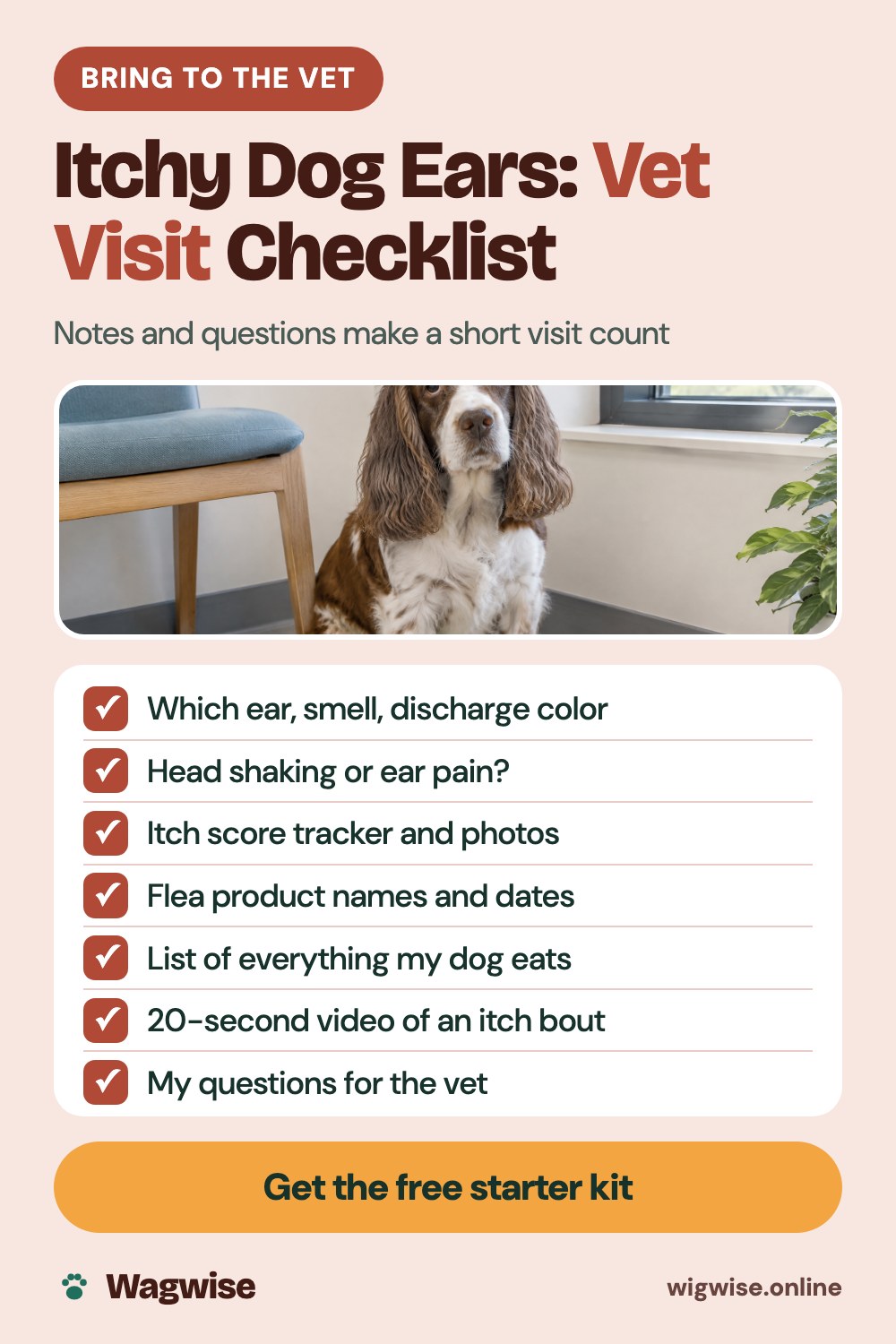
Before the visit, write down:
- Which ear. Left, right or both.
- The signs. Head shaking, scratching, smell, redness, discharge (and its color), pain.
- When it started and whether it has happened before.
- Anything new. A product, a shampoo, a swim or a change in food.
- Other places that itch. Paws, belly, face, tail base.
Do not put anything in the ear before the exam. Your vet checks the ear canal and eardrum before choosing a cleaner or medicine.
What should you bring to the vet?
| Bring | Why it helps |
|---|---|
| Itch score tracker | Shows the trend, not just today |
| Photos of ears, belly, paws and armpits | Easy to compare week by week |
| Flea product names and dates, all pets | Tells your vet whether fleas are covered |
| “Everything My Dog Eats” list | Helps if food is a question |
| List of products that touch your dog | Shampoo, wipes, sprays, bedding detergent |
| A 20-second video of an itch bout | Dogs often sit still at the clinic |
Which questions should you ask?
- What do you think is the main cause, and what else could be adding to it?
- Is there an infection now? Did you check a sample?
- Could this be mites?
- Is our flea control good enough for every pet in the house?
- What should I do if it flares at night or on a weekend?
- What itch score drop would you count as success, and when is the recheck?
- When would you refer us to a veterinary dermatologist?
What happens at the visit?
Expect an exam from nose to tail, a flea check, and an ear exam of the canal and eardrum. Your vet may take a sample from the ear or skin and look at it under a microscope. They may suggest something to calm the itch while the cause is found. That is normal: comfort first, then detective work. Only your vet sets doses, so ask what each option does and when to expect a change.
What about home care before and after?
- Before: note, photograph, and wait. Use a cone if your dog is scratching hard.
- After: follow your vet’s cleaning and schedule exactly. Finish the full course with its rechecks, even if the ear looks better.
- Always: skip cotton swabs, vinegar mixtures, powders and wax removers your vet has not approved.
Ear problems that keep coming back, or no change after four weeks, are good reasons to ask about a referral. Asking for a referral is a normal, reasonable request.
Where can you get a checklist to print?
The free itchy dog starter kit has a 7-day itch score tracker, a red-flags card and a 5-minute flea check to bring along. Fleas are one of the usual suspects behind itchy skin, so ask your vet about year-round flea control for every pet.
After the visit, write down what your vet said in one sentence. It will help at the recheck.
Frequently asked questions
What are the signs of ear trouble in dogs?
Head shaking, scratching at the ears, smell, redness, discharge and pain. Brown ear wax and a sour smell are also worth noting.
Should I clean my dog's ears before the vet visit?
No. Your vet checks the ear canal and eardrum before choosing a cleaner. Do not use cotton swabs, vinegar, powders or wax removers beforehand.
What should I bring?
Your itch tracker, photos of the ears, flea product names and dates for every pet, a list of what your dog eats, a list of products that touch your dog, and a short video of an itch bout.
What happens at the visit?
Usually an exam from nose to tail, a flea check, an ear exam of the canal and eardrum, and possibly a sample to look at under a microscope.
More Wagwise guides for dog owners
 Stop Puppy BitingA gentle 4-week plan to stop the nipping and get through teething.$17 · instant PDFSee the guide →
 Get Rid of Dog Pee SmellRemove urine odor for good, then stop the accidents with a 14-day reset.$17 · instant PDFSee the guide →
 Stop Dog BarkingA quiz finds why your dog barks, then a plan made for that reason.$17 · instant PDFSee the guide →
Want all four? Get the complete library for $29.
Sources
This article is general education, not veterinary advice. It does not replace an examination by your vet or help from a qualified behaviourist.