Itchy dog
Smelly, Itchy Dog Ears: What to Do Tonight (and What to Skip)
Quick answer
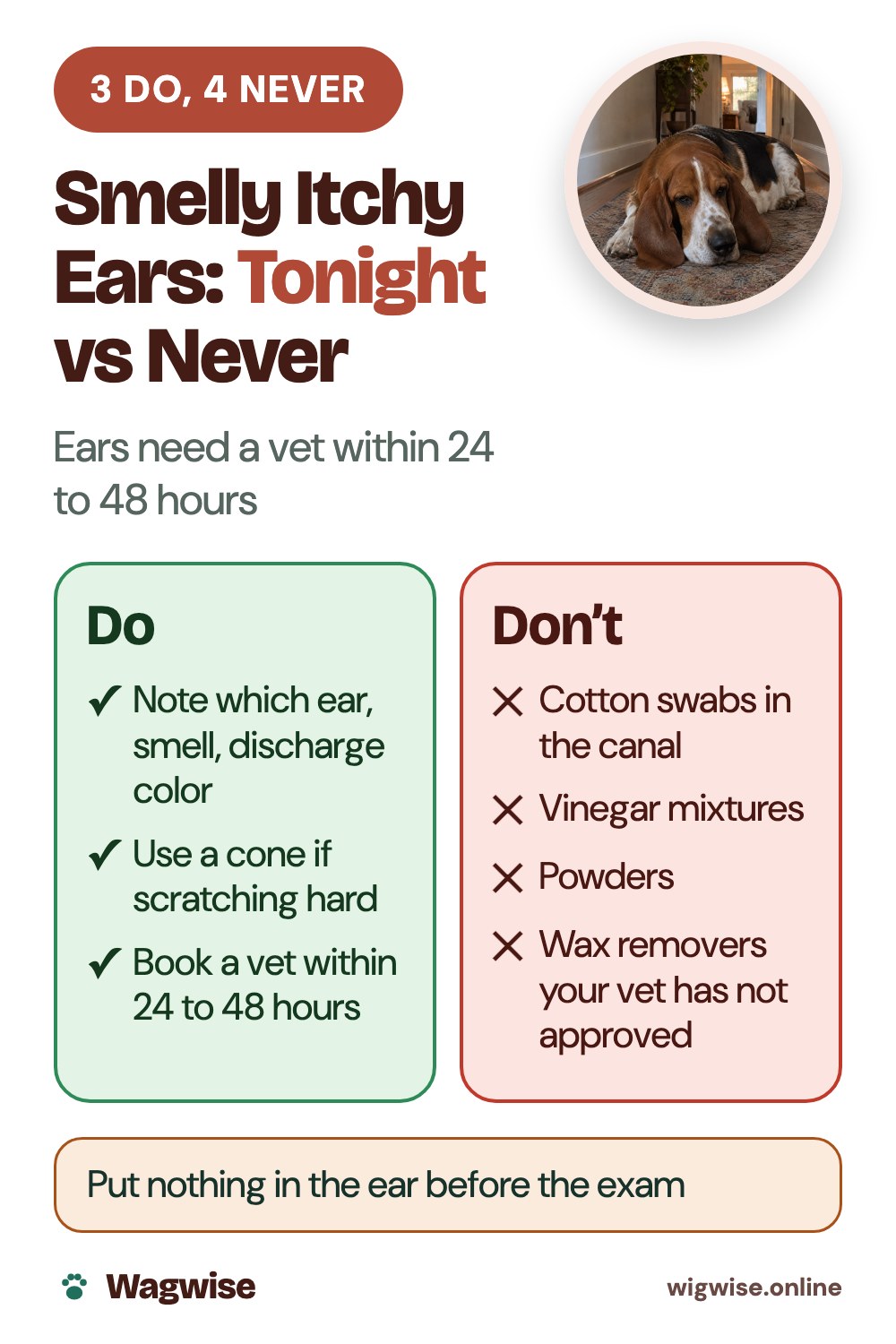
Smelly, itchy ears are often called a dog yeast infection ear problem online, but only a vet can say what is going on. Tonight, note which ear, the smell and the discharge color, use a cone if your dog scratches hard, and book a vet within 24 to 48 hours.
- Smelly, itchy ears need a vet. Aim for within 24 to 48 hours.
- Tonight: note it down, protect the ear with a cone if needed, and book the visit.
- Never use cotton swabs in the canal, vinegar mixtures, powders or wax removers your vet has not approved.
- If your vet prescribes something, finish the whole course and go to the rechecks.
Smelly, itchy ears often get called a dog yeast infection ear problem online, but only a vet can say what is going on. What you can do tonight is simple: note what you see, protect the ear, and book a visit. Equally important is what to skip, because several popular hacks can make ears worse.
What should you do tonight for smelly, itchy dog ears?
- Note it down. Which ear? What does it smell like? What color is any discharge? Is your dog shaking their head or tilting it? Take a photo of the ear if your dog lets you.
- Protect the ear. If your dog is scratching hard, use a cone or soft collar. It should reach a little past the tip of the nose, with two fingers fitting under the collar. Supervise the first hour and check your dog can eat, drink and sleep.
- Book a vet visit within 24 to 48 hours. Say it is an ear problem when you call.
What should you never do to a smelly dog ear?
| Never | Why |
|---|---|
| Cotton swabs in the canal | Can push debris deeper |
| Vinegar mixtures | Vets warn they can worsen ear swelling and infection |
| Powders | Can form irritating masses |
| Wax removers your vet has not approved | Can push debris deeper or form irritating masses |
Your vet checks the ear canal and eardrum before choosing a cleaner or medicine. That is the reason not to put anything in first.
What are the signs of an ear problem?
- Head shaking
- Scratching at the ears
- A sour or musty smell
- Redness
- Discharge, including brown ear wax
- Pain
Yeast normally lives on dog skin, and it can overgrow in the ears when allergy or another problem weakens the skin. But a sour smell can also have other causes, so do not try to work it out yourself.
What happens at the vet visit?
Your vet will look into the ear canal and check the eardrum. They may take a sample and look at it under a microscope. They will also ask what else is going on with the skin, since ear trouble often comes with allergy, and may suggest a cleaning routine or a prescribed option.
If your vet shows you how to clean the ears at home, follow their steps exactly. A common sequence is to use only the cleaner they recommend, gently massage the base of the ear, then wipe the visible part with a real cotton ball. Follow your vet’s schedule.
Finish the full course, with its rechecks, even if the ear looks better. Do not stop early.
Why not just try a quick fix?
A quick fix from the internet is a guess, and the ear is delicate. Without an exam, nobody knows whether the problem is in the outer canal or deeper, or what else is involved. Using the wrong thing can make swelling and infection worse and make the vet visit harder. A short wait with a cone and good notes is safer than a mixture from a pin.
How do you stay on top of it?
Sniff and look at both ears each evening and write a note on your tracker. Keep flea control going for every pet, decided with your vet. Itchy ears that keep coming back are worth raising with your vet, who may suggest looking at the whole picture of skin and allergy.
For the full set of ear steps and the vet-visit prep sheet, see the itchy dog guide.
Frequently asked questions
What are the signs of an ear problem in dogs?
Head shaking, scratching at the ears, smell, redness, discharge and pain. Brown ear wax and a sour smell can also be signs your vet will want to look at.
Can I clean my dog's ears with vinegar?
No. Vets warn vinegar mixtures can worsen ear swelling and infection. Your vet checks the ear canal and eardrum before choosing a cleaner.
Can I use a cotton swab?
Not in the canal. Swabs can push debris deeper. If your vet shows you how to clean, they may suggest a real cotton ball for the visible part of the ear only.
How soon should I see a vet?
Within 24 to 48 hours for head shaking and a smelly ear. Sooner if the ear is painful, bleeding or swollen shut, or your dog tilts their head.
More Wagwise guides for dog owners
 Stop Puppy BitingA gentle 4-week plan to stop the nipping and get through teething.$17 · instant PDFSee the guide →
 Get Rid of Dog Pee SmellRemove urine odor for good, then stop the accidents with a 14-day reset.$17 · instant PDFSee the guide →
 Stop Dog BarkingA quiz finds why your dog barks, then a plan made for that reason.$17 · instant PDFSee the guide →
Want all four? Get the complete library for $29.
Sources
This article is general education, not veterinary advice. It does not replace an examination by your vet or help from a qualified behaviourist.