Puppy biting
Puppy Nap Schedule: How Much Sleep Does a Puppy Need?
Quick answer
A good puppy schedule gives a puppy 18 to 20 hours of sleep a day. As a starting point for young puppies, plan about 30 to 60 minutes awake, then a nap of 1 to 2 hours, with short activity of about 10 minutes in between. Adjust for your puppy's age.
- Puppies need 18 to 20 hours of sleep a day, and many get far less.
- Plan the naps first, then fit potty, meals, play and training around them.
- Three or more tired signs, such as harder biting or zoomies, mean it is nap time, not training time.
- The pattern matters more than the clock. Short awake windows and lots of naps work for most young puppies.
A good puppy schedule is built around sleep, not play. Puppies need 18 to 20 hours of sleep a day, and many owners are surprised to find their puppy gets far less, because there is always something exciting going on. Plan the naps first, then fit everything else around them.
How much sleep does a puppy need?
Between 18 and 20 hours a day. That sounds like a lot, but it is normal. A puppy who misses naps does not just get sleepy. The puppy gets wound up, and the early evening often turns into a burst of zoomies and hard biting.
This burst is called the witching hour, and it looks like naughtiness. It is usually an overtired puppy who cannot switch off alone. More exercise is not the fix. More stimulation often means more biting, so aim for a balance of short play, sniffing and lots of rest.
What does a puppy nap schedule look like?
Young puppies do best with a repeating rhythm. Wake up, go straight outside, potty and praise, enjoy a short activity of about 10 minutes, potty again, then nap for 1 to 2 hours. As a starting point, that means about 30 to 60 minutes awake, then sleep. Adjust for your puppy’s age, and ask your vet how many meals to feed.
Here is an example day for a 10-week-old puppy:
| Time | What happens |
|---|---|
| 6:30 am | Wake up, straight outside to potty |
| 7:00 am | Potty, 10 minutes of play, 3-minute training session |
| 7:30 am | Nap in the pen until about 9:30 |
| 10:30 am | Nap |
| 1:30 pm | Nap |
| 6:00 pm | Wind-down: frozen stuffed toy in the pen before the zoomies start |
| 6:45 pm | Nap |
| 10:00 pm | Last potty, then bed |
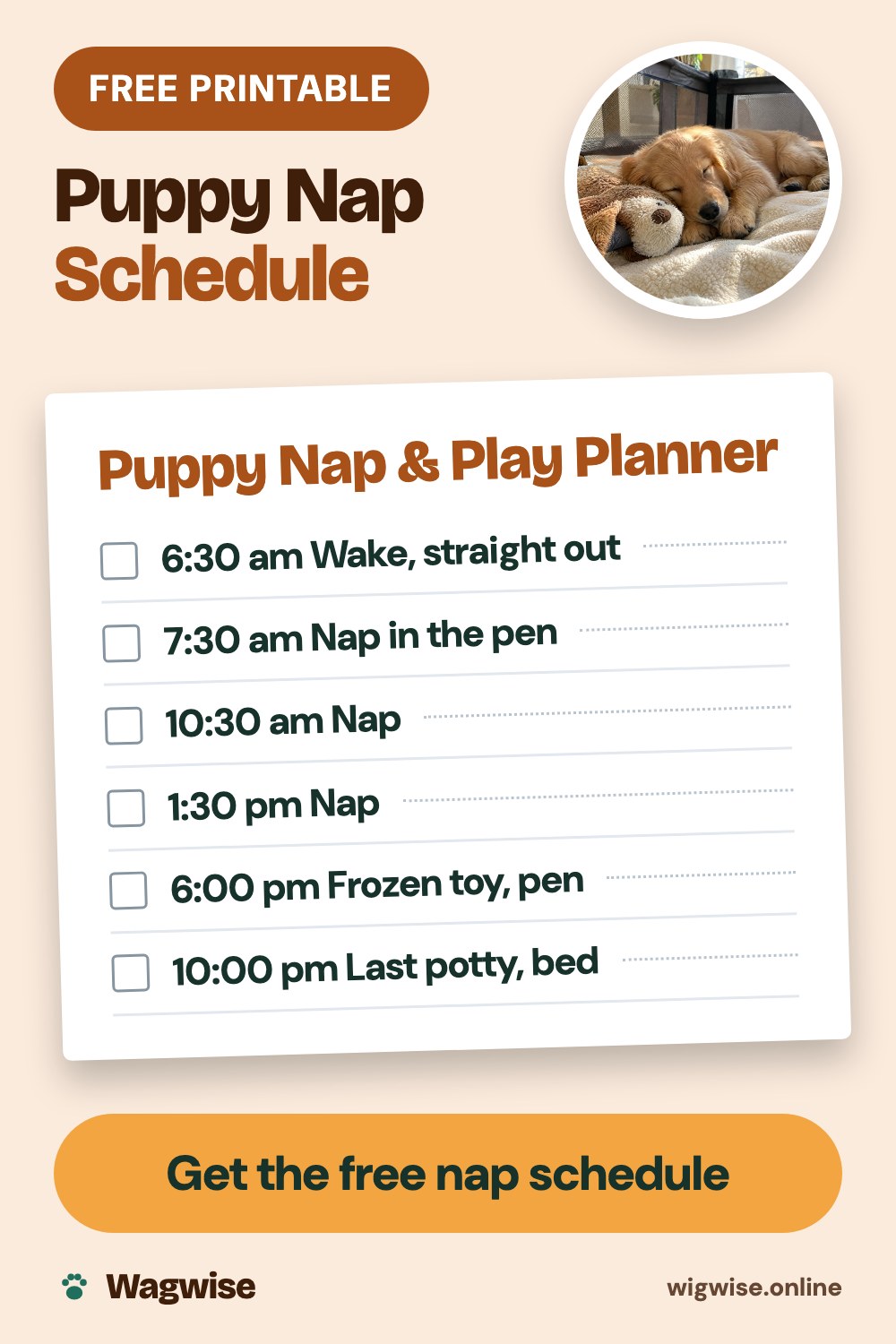
This is an example to adapt, not a rule. The pattern matters more than the clock: short awake windows and lots of naps.
What are the signs a puppy needs a nap?
Tick every sign you see right now. Three or more ticks means it is nap time, not training time.
- Biting harder and faster than usual
- Grabbing clothes, sleeves or hair
- Ignoring toys you offer
- Zoomies around the room
- Whining or barking at you
- Awake for more than an hour
How do you put a wound-up puppy to bed?
- Walk calmly. Lead your puppy to the pen without fuss or chasing.
- Give a lick or chew. A lick mat or stuffed toy helps a puppy settle.
- Dim and leave. Lower the lights, cover a wire crate if you use one, and walk away calmly.
Use the crate for sleep only, so it stays a happy, calm place. Keep the pen for chews and naps when you cannot watch. Hunger also adds to irritability, and young puppies usually do better on several small meals a day.
Get the free puppy nap schedule
Our free 2-page printable has a filled sample day for an 8 to 12 week puppy, a blank planner for your own puppy, and a signs-your-puppy-needs-a-nap strip. Download the free puppy nap schedule, then count how many hours your puppy really sleeps tomorrow. Write down when the biting starts and how long your puppy has been awake. The pattern usually shows within a few days.
If naps are in place and biting is still getting harder, see the help box below. A vet check comes first, because sudden or increased biting can be a sign of pain.
Frequently asked questions
How much sleep does a puppy need?
Puppies need 18 to 20 hours of sleep a day. Many owners are surprised to find their puppy sleeps much less than that, because there is always something exciting going on.
How long should a puppy be awake between naps?
A starting point for young puppies is about 30 to 60 minutes awake, then a nap of 1 to 2 hours. Adjust for your puppy's age, and ask your vet about meals.
Why does my puppy get wild in the evening?
The early evening burst of zoomies and hard biting is often called the witching hour. It is usually an overtired or overstimulated puppy who cannot switch off alone.
Will a long walk tire my puppy out?
Not usually. More stimulation often means more biting. Puppies need a balance of short play, sniffing and lots of rest.
More Wagwise guides for dog owners
 Get Rid of Dog Pee SmellRemove urine odor for good, then stop the accidents with a 14-day reset.$17 · instant PDFSee the guide →
 Stop Dog BarkingA quiz finds why your dog barks, then a plan made for that reason.$17 · instant PDFSee the guide →
 Help Your Itchy DogTrack triggers, soothe skin safely and know when to see the vet.$17 · instant PDFSee the guide →
Want all four? Get the complete library for $29.
Sources
This article is general education, not veterinary advice. It does not replace an examination by your vet or help from a qualified behaviourist.