Puppy biting
Puppy Biting Everything? Check These 4 Things Before Training
Quick answer
Puppy biting is normal play at 8 to 16 weeks, and it often gets worse when something basic is missing. Before you train, check four things: sleep, hunger, sore gums and your setup. Fixing those first makes most biting sessions shorter and softer.
- Biting at 8 to 16 weeks is normal play, not aggression.
- Overtiredness is the number one hidden cause, so check the clock first.
- Hunger, sore gums and a home full of temptations all make biting worse.
- If none of the four fits, or biting is sudden or severe, talk to your vet.
Puppy biting is normal at 8 to 16 weeks, and it is rarely about being bad. It is how puppies explore, play and learn. Before you try any training, check four basics, because a missing nap or an empty tummy can undo the best method.
Why is my puppy biting everything?
In the litter, a puppy who bites too hard gets a yelp, and the game stops. That is how puppies learn bite inhibition, meaning how hard is too hard. Your puppy left the litter at around 8 weeks, so now that job is yours.
Eight common triggers sit behind most biting: play, overexcitement, overtiredness, hunger, teething, frustration, attention and the urge to chase moving feet. Four of these are easy to fix tonight, and they come first.
1. Is your puppy overtired?
Overtiredness is the number one hidden cause. Puppies need 18 to 20 hours of sleep a day, and a tired puppy cannot switch off alone. Check the clock. If your puppy has been awake for more than an hour, or is grabbing sleeves, ignoring toys and doing zoomies, it is nap time, not training time.
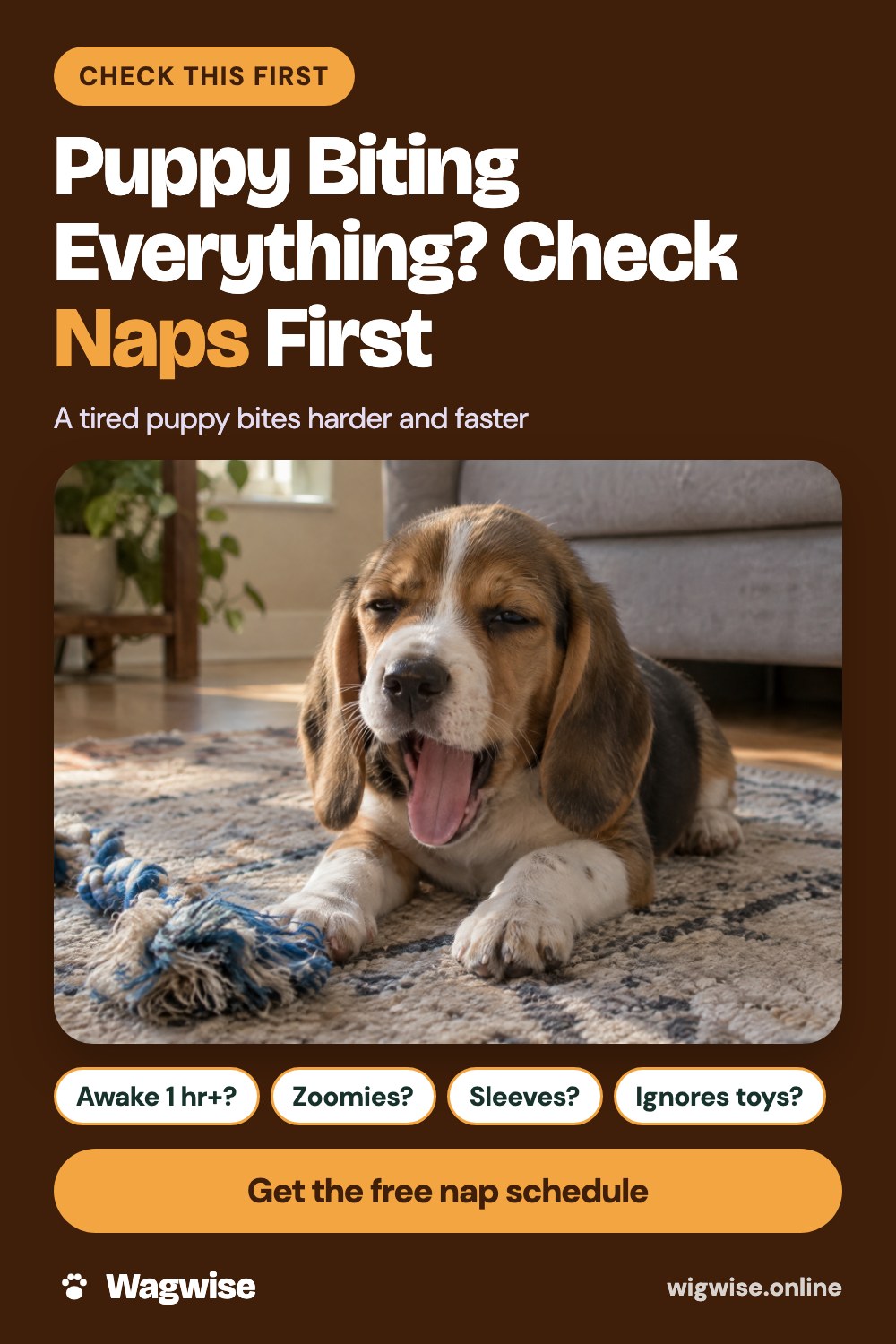
Lead your puppy calmly to the pen and offer a chew or lick mat. Our free puppy nap schedule helps you plan tomorrow’s naps.
2. Is your puppy hungry?
Hungry puppies are grumpy, and hunger adds to irritability. Young puppies usually do better on several small meals a day. Ask your vet how many meals suit your puppy.
3. Are your puppy’s gums sore?
Teething makes puppies want to chew, and sore gums need something to work on. Offer safe chews that dent under your thumbnail, and supervise every chew. Cold soothes sore gums, so a frozen treat served in a rubber toy or on a lick mat can help. Teething drives chewing on objects, while biting people is mostly play, so chews alone will not fix hand biting.
4. Is your home set up for success?
Every bite you prevent is a bite your puppy does not practice. A few small changes stop most bites before they happen:
- Keep a basket of 3 or 4 toys in every room where you sit, so you are never more than an arm’s length from a toy.
- Swap the toys every 2 to 3 days so they stay interesting.
- Put away slippers, robe ties, shoelaces, kids’ toys and loose clothing for now.
- Use a gated pen for naps and chews when you cannot watch.
Quick check: what to try first
| If you see | Check this first |
|---|---|
| Harder, faster biting, zoomies, whining | Sleep: nap in the pen |
| Grabbing clothes, hands, hair | Setup: a toy in reach, loose clothing away |
| Chewing everything, extra drool | Gums: safe chews and a frozen treat in a toy |
| Grumpy before meals | Hunger: small, regular meals |
What if the four checks do not fix it?
Then start the calm routine: freeze, swap your hand for a toy, say a flat “oops” if teeth return, and step out behind a gate for 30 to 60 seconds if needed. Everyone in the home should use the same response every time.
Never hold your puppy’s mouth shut, shout, or use a spray bottle. These can make puppies afraid of hands and often make biting worse. If biting is sudden, severe or comes with stiff, growling behavior, see the help box below.
Frequently asked questions
Why is my puppy biting everything?
Puppies explore and play with their mouths. Common triggers are play, overexcitement, tiredness, hunger, teething, frustration, learned attention and chasing moving feet.
Is puppy biting normal?
Yes. Biting at 8 to 16 weeks is normal play, not aggression. Most puppies ease off by 5 to 7 months, and large breeds can mouth until 18 to 24 months.
Can a tired puppy really bite harder?
Yes. Overtiredness is the number one hidden cause of hard, frantic biting. Fix sleep first and many biting sessions disappear before you train anything.
Does teething cause biting hands?
Teething drives chewing on objects. Biting people is mostly play. Chew toys help with sore gums, but they will not fix hand biting on their own.
More Wagwise guides for dog owners
 Get Rid of Dog Pee SmellRemove urine odor for good, then stop the accidents with a 14-day reset.$17 · instant PDFSee the guide →
 Stop Dog BarkingA quiz finds why your dog barks, then a plan made for that reason.$17 · instant PDFSee the guide →
 Help Your Itchy DogTrack triggers, soothe skin safely and know when to see the vet.$17 · instant PDFSee the guide →
Want all four? Get the complete library for $29.
Sources
This article is general education, not veterinary advice. It does not replace an examination by your vet or help from a qualified behaviourist.