Puppy biting
Puppy Teething Timeline: 3 Weeks to 7 Months
Quick answer
Puppy teething starts with the first baby teeth at about 3 weeks. All 28 baby teeth are in by about 6 weeks, they start falling out at 12 to 16 weeks, chewing peaks at 4 to 6 months, and all 42 adult teeth are in by 6 to 7 months.
- Baby teeth arrive from about 3 weeks, and all 42 adult teeth are in by 6 to 7 months.
- Chewing peaks at 4 to 6 months, and heavy chewing can continue until around 18 months.
- Extra drool, a tiny tooth on the floor and slight pink on a toy are normal signs.
- Two teeth in the same spot, heavy bleeding or refusing food for over a day means a vet visit.
Puppy teething follows a predictable timeline, from tiny baby teeth at about 3 weeks to a full set of 42 adult teeth by 6 to 7 months. Knowing where your puppy is on that line helps you tell normal chewing from a problem. Find your puppy’s age in weeks below.
What is the puppy teething timeline?
| Age | What is happening |
|---|---|
| 3 weeks | First baby teeth come in |
| 6 weeks | All 28 baby teeth are in |
| 12 to 16 weeks | Baby teeth start falling out |
| 4 to 6 months | Peak chewing |
| 6 to 7 months | All 42 adult teeth are in |
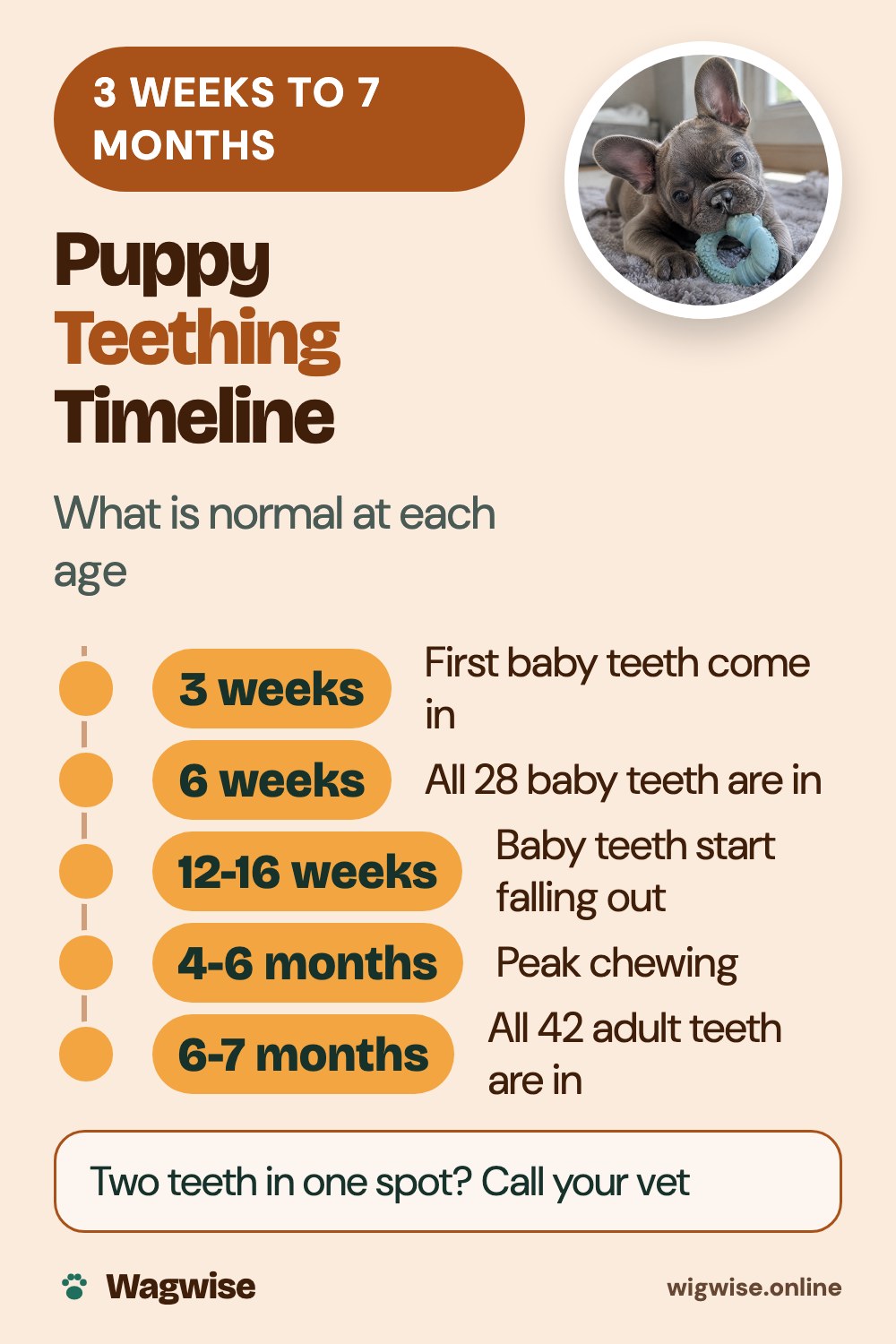
These ages come from VCA and Dogs Trust, and individual puppies vary. Heavy chewing often continues until around 18 months.
What are normal puppy teething signs?
- Chewing everything in reach
- Extra drool
- A tiny tooth on the floor, or none, because many get swallowed, which is fine
- Slight pink on a chew toy
- Not wanting hard kibble for a day or two
When should you call the vet about teething?
Call your vet if you see any of these:
- Two teeth in the same spot, which is a retained baby tooth
- More than slight bleeding, a broken tooth or a swollen face
- Your puppy refuses food for more than a day
Small and short-nosed breeds keep baby canines most often, including Chihuahuas, pugs, bulldogs, Boston terriers and boxers. Check weekly from 5 months. Also call your vet if your puppy swallows pieces of a toy or chew, chokes, vomits or has a swollen belly.
How do you do a 30-second mouth check?
- Gently lift the lip at the side.
- Look at the long canine teeth.
- Praise and give a treat.
Do it daily so handling feels normal. Start brushing with dog toothpaste only, never human toothpaste, and use a soft puppy brush.
Does teething cause puppy biting?
Teething drives your puppy to chew objects, but biting people is mostly play. So chew toys help with sore gums, but they will not fix hand biting on their own. Cold can soothe sore gums: serve frozen food inside a rubber toy or on a lick mat, never as a hard frozen block.
Keep a basket of 3 or 4 toys in every room where you sit, so you are never more than an arm’s length from one, and swap them every 2 to 3 days so they stay interesting. During the peak chewing months of 4 to 6 months, this simple habit saves ankles, sleeves and furniture.
Test every chew before you hand it over. If it will not bend, do not give it. A safe chew should dent under your thumbnail, it must be too big to fit fully in your puppy’s mouth, and you should supervise every chew.
How long until the biting eases?
Most puppies ease off by 5 to 7 months, which matches the end of the teething timeline. Large breeds can mouth until 18 to 24 months. In the meantime, a calm routine matters more than any single toy. See the full guide for the Gentle Mouth Method and a 4-week plan.
If biting is sudden, or your puppy seems to be in pain, see your vet first. For fear, guarding or stiff, growly behavior, use the help box below.
Frequently asked questions
When do puppies start teething?
The first baby teeth come in at about 3 weeks, and all 28 are in by about 6 weeks. Baby teeth start falling out at 12 to 16 weeks.
How long does puppy teething last?
Teething runs until all 42 adult teeth are in at 6 to 7 months. Peak chewing is at 4 to 6 months, and heavy chewing often continues until around 18 months.
Is blood on a chew toy normal?
Slight pink on a chew toy is normal. More than slight bleeding, a broken tooth or a swollen face needs a vet.
What is a retained baby tooth?
It is when you see two teeth in the same spot. Small and short-nosed breeds keep baby canines most often. Book a vet exam.
More Wagwise guides for dog owners
 Get Rid of Dog Pee SmellRemove urine odor for good, then stop the accidents with a 14-day reset.$17 · instant PDFSee the guide →
 Stop Dog BarkingA quiz finds why your dog barks, then a plan made for that reason.$17 · instant PDFSee the guide →
 Help Your Itchy DogTrack triggers, soothe skin safely and know when to see the vet.$17 · instant PDFSee the guide →
Want all four? Get the complete library for $29.
Sources
This article is general education, not veterinary advice. It does not replace an examination by your vet or help from a qualified behaviourist.