Barking
Reactive Dog Walks: 5 Changes You Can Make This Week
Quick answer
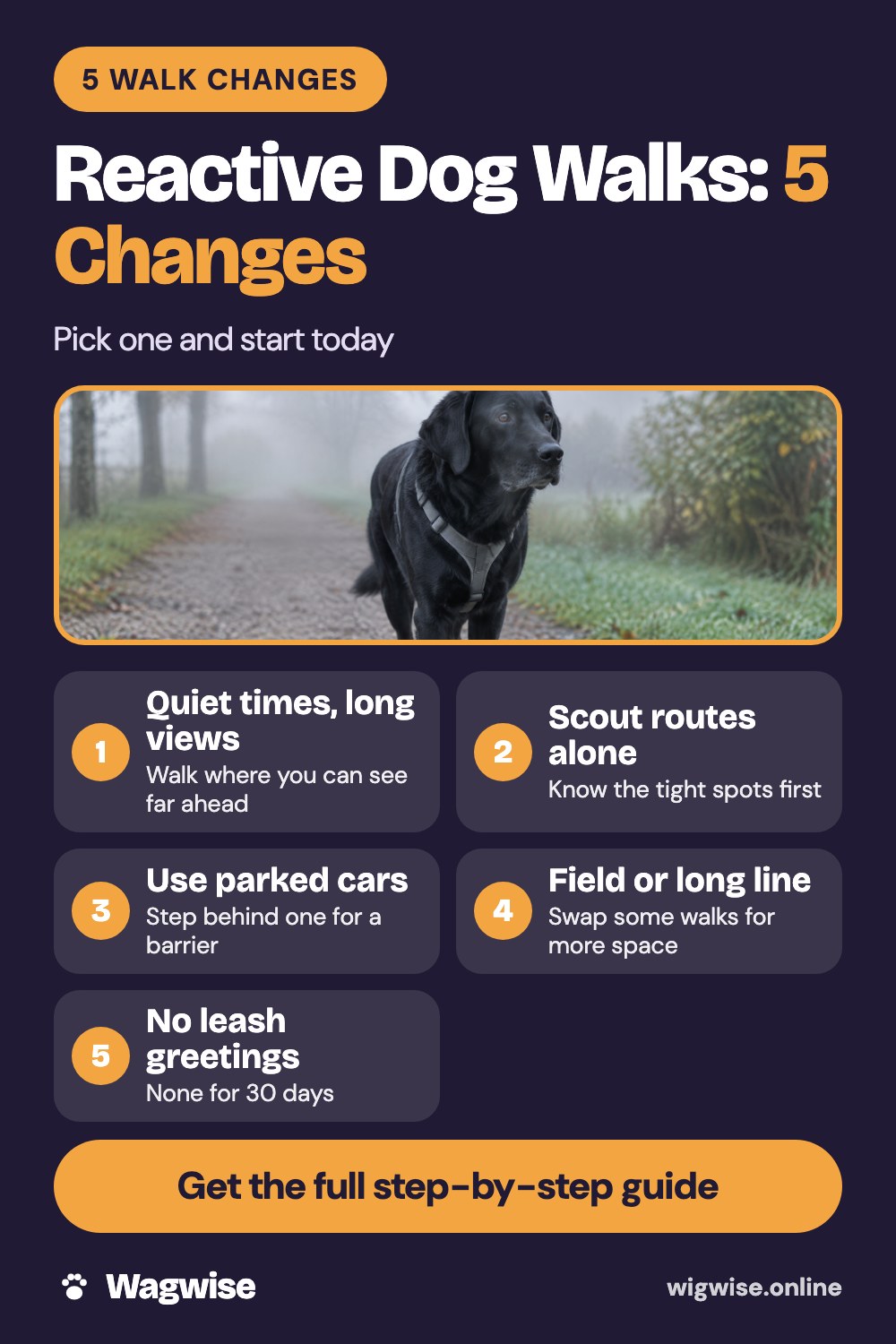
Reactive dog walks get easier when you plan them. This week, walk at quiet times and places with a long view, scout routes alone, use parked cars as barriers, swap some walks for a secure field or long line, and skip on-leash greetings. Pick one change today.
- Management comes first. Fewer bad encounters means fewer rehearsals of the barking.
- Quiet times, long views and parked cars help you keep your distance.
- No on-leash greetings for 30 days.
- A well-fitted Y-shaped harness and a 4 to 6 foot leash (never retractable) are the basic gear.
Reactive dog walks do not have to end in barking and lunging. A few small changes to when, where and how you walk can cut down the number of times your dog meets a trigger too close, too fast. Management comes first, because every bad encounter is another rehearsal.
If your dog lunges, snaps or has bitten or tried to bite, work with a qualified behaviorist and use management only.
Five reactive dog walks changes to try
- Walk at quiet times and in places where you can see far ahead. Early or late hours and wide open spaces give you time to move away.
- Scout routes on your own first. Know where the tight corners and busy spots are before you take your dog.
- Use parked cars as barriers. Step behind one to put something between your dog and a trigger.
- Swap some walks for a secure field or a long line. Your dog can still sniff and move without close passes.
- No on-leash greetings for 30 days. Let your dog look from a distance and move on.
Fear or frustration on walks?
Fear means your dog wants distance: backing off, hiding behind you, barking then retreating. Frustration means your dog wants to reach the other dog but can’t: pulling, whining, bouncing and barking to get closer. Many dogs show both, and the fix is the same: more distance.
The basic gear
| Item | What to look for |
|---|---|
| Harness | Well-fitted, Y-shaped |
| Leash | 4 to 6 feet, never retractable |
| Treat pouch | High-value food, easy to reach |
| Muzzle | Basket type, trained with treats, for safety only |
What to do when a trigger appears
Practice a U-turn at home first. Use a happy cue such as “this way!”, turn 180 degrees and give a treat after 10 to 15 feet. Five turns in the hallway or yard is a good start. Then use it on walks the moment your dog notices a dog or person at a distance. Never jerk the leash, and never force your dog to say hello. If a trigger appears too close, turn and move away calmly rather than waiting to see what happens. Write down where and when the surprises happen, because that tells you which route or time of day to change first.
Which change should you start with?
Pick the one that fits your week. If your usual route is busy, start with quiet times and a new route. If surprise dogs around corners are the problem, scout first and use parked cars as barriers. If you can’t find any space nearby, look for a secure field or use a long line. Then add the next change when the first feels easy.
After a stressful day, expect more reactivity for 24 to 48 hours. Drop back one level and rest. That is not starting over, it is how training works.
What does a calmer walk look like?
Progress takes weeks or months. Success in 30 days is a shorter threshold distance and faster recovery, not a dog who ignores everything. After a big reaction, expect lower tolerance for 48 to 72 hours, so plan quiet walks and home enrichment. Learn the green zone with our guide to finding your dog’s green zone. Get a professional if there is any bite or contact. The full plan in our guide adds a pocket card for the walking zones.
Frequently asked questions
How can I make walks easier with a reactive dog?
Walk at quiet times, scout routes, use distance and parked cars, and have a plan for each trigger. Pick one change this week and build from there.
Can I let my reactive dog greet other dogs?
Skip on-leash greetings for 30 days. Forced greetings add pressure for a dog who is already struggling.
Is a retractable leash okay?
No. Use a 4 to 6 foot leash, never retractable, with a well-fitted Y-shaped harness.
What if my dog reacts anyway?
Use a U-turn and leave calmly. After a big reaction, expect lower tolerance for 48 to 72 hours, so plan quiet walks and home enrichment.
Should I use a muzzle?
A basket muzzle, trained with treats, is fine as safety equipment for a reactive dog. It is for safety, not for stopping barking.
More Wagwise guides for dog owners
 Stop Puppy BitingA gentle 4-week plan to stop the nipping and get through teething.$17 · instant PDFSee the guide →
 Get Rid of Dog Pee SmellRemove urine odor for good, then stop the accidents with a 14-day reset.$17 · instant PDFSee the guide →
 Help Your Itchy DogTrack triggers, soothe skin safely and know when to see the vet.$17 · instant PDFSee the guide →
Want all four? Get the complete library for $29.
Sources
This article is general education, not veterinary advice. It does not replace an examination by your vet or help from a qualified behaviourist.