Puppy biting
5 Puppy Biting Training Tips That Actually Help
Quick answer
The best puppy biting training tips are calm and consistent: plan naps first, freeze and swap your hand for a toy, use one flat word like oops, teach what to do instead, and keep toys within reach. Add one tip a day and keep every session short.
- Fix sleep first, because most hard biting is a tired puppy.
- Freeze and swap. Pulling your hand away turns you into a chase toy.
- Everyone in the home must use the same response every time.
- Teach alternatives like Touch and sit for play in 2 to 5 minute sessions.
The best puppy biting training tips are calm, boring and the same every time. Biting at this age is normal play, so the aim is a softer mouth, not a perfect puppy. Start with these five tips and add one a day, so nobody in the home feels overwhelmed.
What are the 5 puppy biting training tips?
Tip 1: Check the clock before you train
Most hard, frantic biting is a tired puppy. Puppies need 18 to 20 hours of sleep a day. If your puppy has been awake for more than an hour, skip training, give a chew in the pen and let your puppy nap. Tired puppies cannot learn.
Tip 2: Freeze, then swap
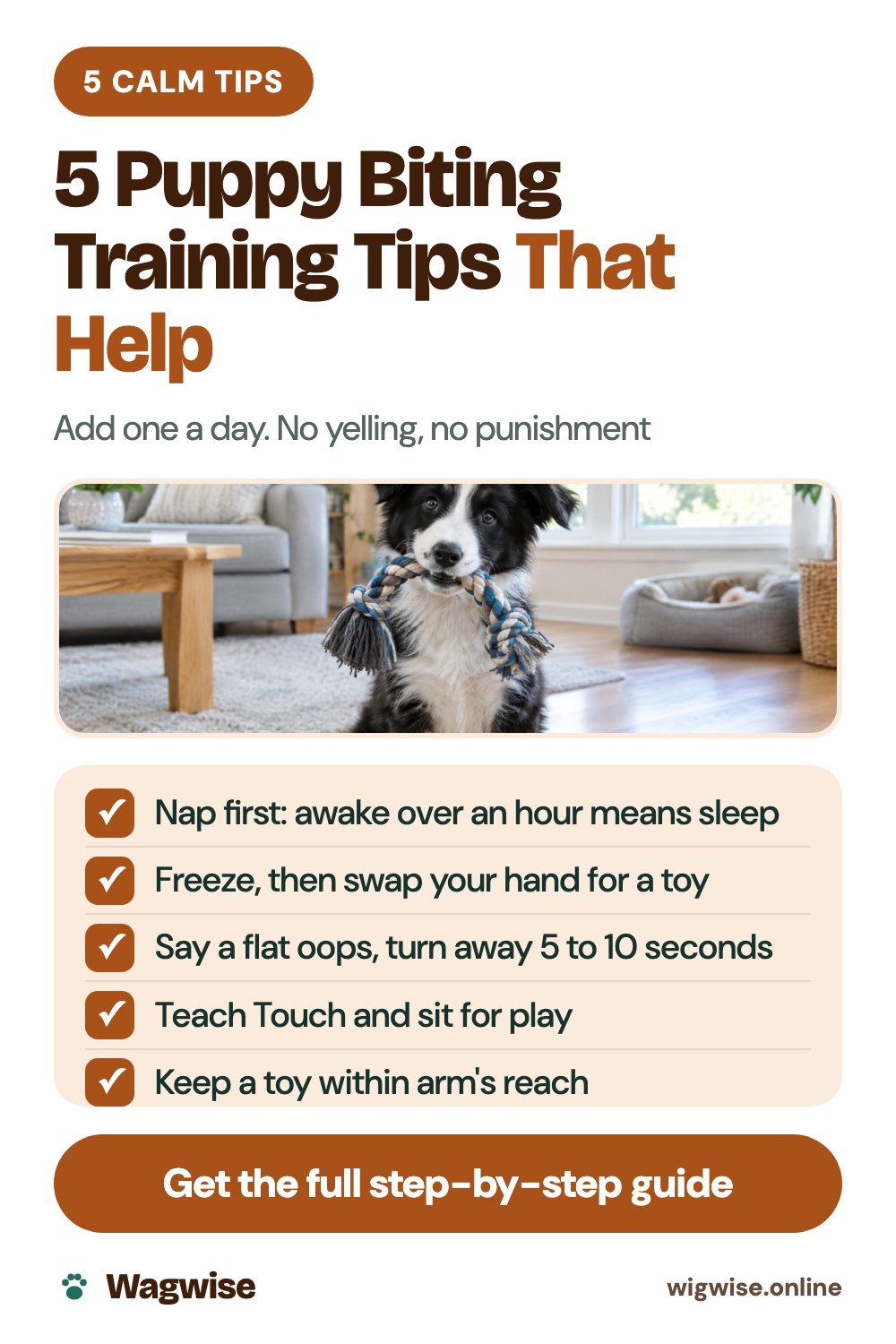
When teeth touch skin or clothes, keep your hands and feet still. Do not pull away, because moving hands look like a toy. Then put a long toy in your puppy’s mouth and wiggle it along the floor. Say “Good, take it!” when your puppy grabs it.
Tip 3: Use one word, the same way, from everyone
If teeth come back to skin, say “oops” in a flat, calm voice. Stand up, turn away and fold your arms for 5 to 10 seconds. If it continues, step behind a gate or door for 30 to 60 seconds. You leave, not the puppy.
Agree on the word with the whole family. One person allowing nibbles while another does not confuses a puppy.
Tip 4: Teach what to do instead
Telling a puppy “don’t bite” is not enough. Short sessions of 2 to 5 minutes build better habits:
- Touch. Hold an open palm about an inch from your puppy’s nose, then say “Yes!” and give a treat when the nose touches it.
- Sit for play. Ask for a sit before every game and whenever play pauses. Reward the sit by starting the game.
- Take it and drop it. Trade a toy for a treat, then give the toy back.
Tip 5: Keep a toy within arm’s reach
Put a basket of 3 or 4 toys in every room where you sit. Swap them every 2 to 3 days so they stay interesting. Remove slippers, robe ties and shoelaces for now.
Why does everyone in the home need the same response?
Picture a home where one parent says “oops” and steps away, but the kids squeal and run when the puppy nips. The puppy learns that kids are the fun ones to bite. Once everyone uses the same four moves (freeze, swap, “oops”, step out), the kids stop being the best game in the house, and the nipping moves back to toys. Consistency beats any single trick. Adults should supervise every interaction between kids and puppy, and a gate keeps things safe when nobody can watch.
What to skip
| Common advice | Why to skip it |
|---|---|
| Holding the mouth shut, tapping the nose | Physical force can make puppies afraid of hands |
| Shouting or “bad dog” | Adds excitement or fear, and attention can reward the bite |
| Spray bottles and shaker cans | Intimidation tools that veterinary behaviorists advise against |
| Long runs to tire them out | Overtired puppies bite more |
Veterinary behaviorists recommend reward-based methods only. Biting that gets a squeal, a chase or attention gets repeated, so the calm response matters more than any single trick.
How long will it take?
Most puppies ease off by 5 to 7 months, and most owners see improvement within a few weeks of consistent practice. Large breeds can mouth until 18 to 24 months. The full guide lays out all five tips in a 4-week plan. If you see warning signs, use the help box below.
Frequently asked questions
How do I train my puppy not to bite?
Use one calm response every time teeth touch skin: freeze, swap for a toy, then pause the game. Add naps, toys within reach and short practice of what to do instead.
Should I yelp when my puppy bites?
Advice is split. Some puppies soften when you yelp, and many get more excited. Try one calm oops instead, and drop the yelp for good if your puppy bites harder.
Does hand target training help with biting?
Yes. Hold an open palm about an inch from your puppy's nose and reward the nose touch. Hands start to mean touch for a treat, not bite.
How long until my puppy stops biting?
With consistent practice, most owners see improvement within a few weeks. Most puppies ease off by 5 to 7 months, though results vary.
More Wagwise guides for dog owners
 Get Rid of Dog Pee SmellRemove urine odor for good, then stop the accidents with a 14-day reset.$17 · instant PDFSee the guide →
 Stop Dog BarkingA quiz finds why your dog barks, then a plan made for that reason.$17 · instant PDFSee the guide →
 Help Your Itchy DogTrack triggers, soothe skin safely and know when to see the vet.$17 · instant PDFSee the guide →
Want all four? Get the complete library for $29.
Sources
This article is general education, not veterinary advice. It does not replace an examination by your vet or help from a qualified behaviourist.