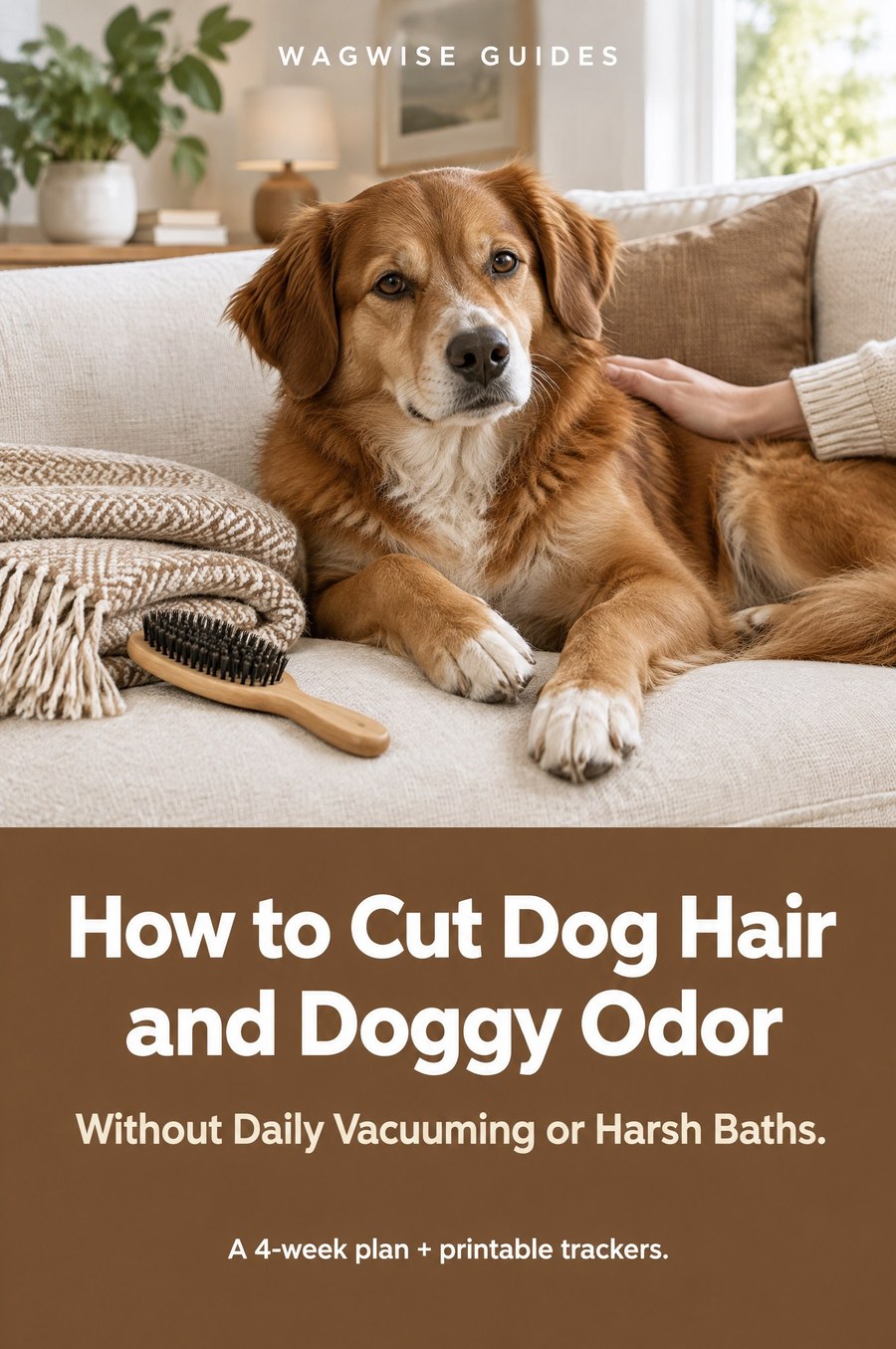
Shedding and smell
A Short Dog Brushing Routine
Quick answer
A good dog brushing routine is short enough to keep: a mat in a quiet spot, a warm-up, your main tool, a comb check, a quick look at the skin and a treat to finish. Our timing is about 10 minutes. If your dog isn't enjoying it, go back a step.
- A routine you can keep beats a long one you skip.
- Brush the hair, not the skin, and check your work with a comb.
- Brushing doubles as a quick look for lumps, skin changes and new bald patches.
- If your dog isn't enjoying it, the routine isn't ready yet. Go back a step.
A short dog brushing routine works because you can actually keep it up. Pick a quiet spot, brush for about 10 minutes (our estimate), give treats along the way, and stop if your dog isn’t enjoying it. Short and steady beats long and rare.
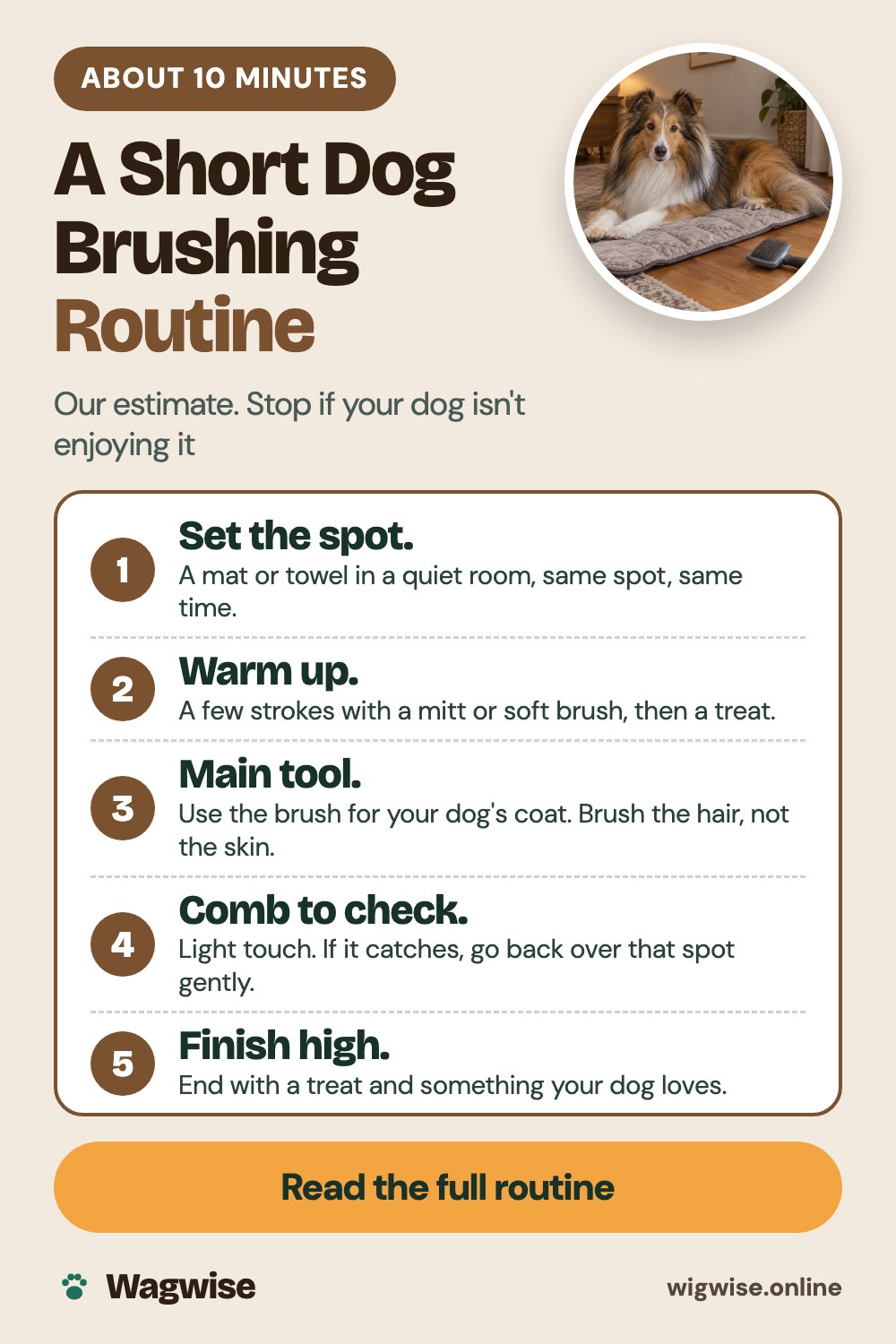
The 10-minute dog brushing routine
- Set the spot. A mat or towel in a quiet room, same spot, same time.
- Warm up. Use the mitt or a soft brush for a few strokes, then give a treat.
- Use your main tool. On short coats, brush against the direction of growth to loosen dead hair, then with it to remove it. On double coats, use the slicker first and the rake for the undercoat.
- Comb to check. Use a light touch. Brush the hair, not the skin.
- Do the quick health check. See below.
- Finish on a high. End with a treat and something your dog loves.
Not sure which tool to use? Pick the right brush for the coat first.
How often should I brush my dog?
The sources differ, which is why a range is more honest than one number.
| Source | What it says |
|---|---|
| ASPCA | Smooth short coat weekly; long silky coat daily; long coats that mat daily |
| PDSA | Long-haired dogs once a day; short-haired dogs twice a week |
| AKC | Heavy shedders several times a week or daily at peak; double coats at least weekly |
Start in the range for your dog’s coat, then use a simple log to adjust. If you’re unsure, ask your groomer or vet what suits your dog’s coat and skin.
Peak-shedding weeks and the quick health check
Heavy shedders may need brushing daily at peak. Make it a few minutes at a time.
Grooming doubles as a quick check for lumps, skin changes and weight. Look for lumps, parasites, red or flaky skin, new bald patches and any smell at the skin. Take a dated photo of anything new and call your vet if you’re unsure.
How to get a dog used to being brushed
If your dog isn’t enjoying the routine, teach it in small steps, based on the Dogs Trust handling method: short, frequent sessions in a quiet place, a treat right after each touch, and a step back whenever your dog seems worried. The six-step ladder is our adaptation.
- Touch a spot your dog likes. Treat.
- Hold a soft brush still on the body, remove it, treat.
- One slow stroke. Treat.
- Three strokes, then treat.
- Add a leg and the belly, one new area at a time.
- The full routine, with treats between.
Move up when your dog stays loose and relaxed, and about 8 out of 10 tries are calm (our rule of thumb). Stop and step back when your dog moves away, stiffens, turns their head, licks their lips, yawns or goes still. Belly, legs, tail and ears come last.
What never to do
Never pin your dog down, scold, hold a stressed dog for “just one more minute” or pull a brush through a mat. Fear and pain can look like bad behavior, and force teaches your dog to dread the brush. Wet fur mats more, so comb before a bath.
A note on nails and ears
This routine covers the coat only. For nail care and ear care, ask your vet or groomer to show you what suits your dog. Don’t use cotton swabs, powders or home mixtures in the ears.
Frequently asked questions
How often should I brush my dog?
The sources differ, so start in a range for the coat. Short smooth coats are brushed about weekly, heavy shedders several times a week or daily at peak, and long coats that mat daily. Your log helps you adjust.
What if my dog hates being brushed?
Go back to a step where your dog was relaxed and build up with short sessions and treats. Never pin your dog down, scold, or hold a stressed dog for one more minute.
Should I brush a dog at peak shedding every day?
Heavy shedders may need brushing daily at peak. Keep it to a few minutes at a time, and do it outdoors or on a washable sheet if your dog accepts it.
What do I do about mats?
If your dog allows it, tease at the edge of a small tangle with a comb or mat splitter and stop. Matted skin is a job for a groomer or vet, and a badly matted dog may need clipping.
More Wagwise guides for dog owners
 Stop Puppy BitingA gentle 4-week plan to stop the nipping and get through teething.$17 · instant PDFSee the guide →
 Get Rid of Dog Pee SmellRemove urine odor for good, then stop the accidents with a 14-day reset.$17 · instant PDFSee the guide →
 Stop Dog BarkingA quiz finds why your dog barks, then a plan made for that reason.$17 · instant PDFSee the guide →
 Help Your Itchy DogTrack triggers, soothe skin safely and know when to see the vet.$17 · instant PDFSee the guide →
 House-Train Your PuppyA kind 4-week plan with a schedule by age, a night plan and printable trackers.$17 · instant PDFSee the guide →
 Stop Leash PullingA 4-week force-free plan for calmer walks and a loose leash.$17 · instant PDFSee the guide →
 Leave Your Dog AloneFilm, sort and build calm alone time with a vet-first plan and a step-by-step ladder.$17 · instant PDFSee the guide →
 Puppy Sleeps Through the NightA realistic, age-by-age plan for calmer nights, without cry-it-out or crate fights.$17 · instant PDFSee the guide →
Want all four? Get the complete library for $49.
Sources
This article is general education, not veterinary advice. It does not replace an examination by your vet or help from a qualified behaviourist.