

For dogs that howl, chew or toilet when you leave
Your dog falls apart when you leave. Start by finding out why.
A vet-first, force-free plan: film your dog, sort distress from boredom, teen mischief and house-training, then build calm alone time one small step at a time.
- A film-and-sort method for the four causes, with a red-flag screen
- A vet and behaviorist visit sheet, so you walk in prepared
- A sample 7-level graded-absence ladder with a session log
- Cover plans and weekly schedules for working owners
Want to try something first? Take the free quiz.

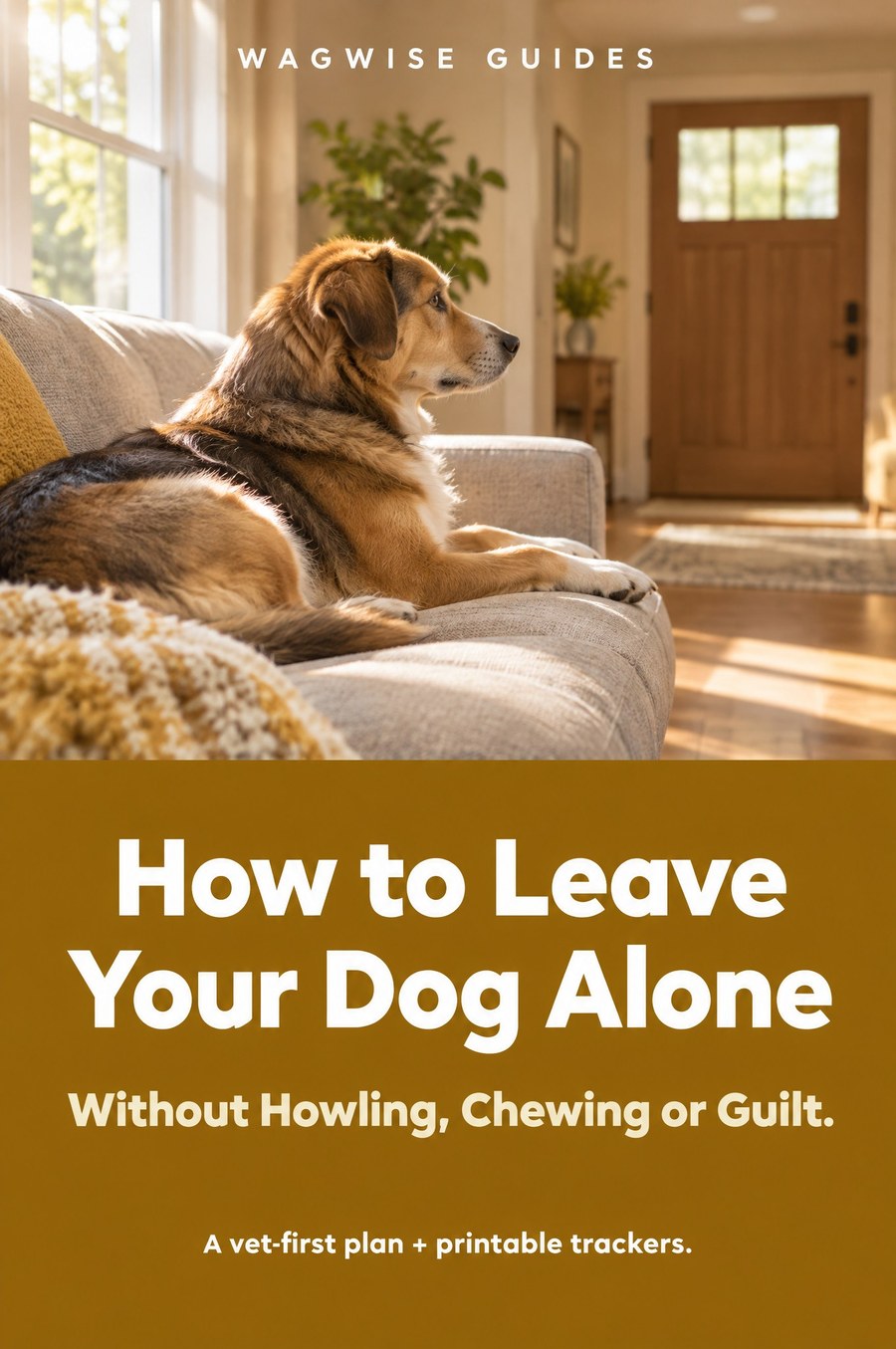

Dreading the sound of the front door closing?
- A neighbor mentioned the howling, or your landlord has sent a warning
- The pet camera shows crying you can’t stop thinking about
- You come home to a chewed door frame or a puddle and feel awful
- You can’t tell if it’s boredom, mischief or real distress
You're not doing it wrong. You've been given advice that doesn't match the real reason behind the problem. This guide starts with the reason.
Why the usual advice backfires
Punishment adds to the problem
Dogs can’t link a telling-off to something done hours earlier, and punishing can add anxiety and confusion. This guide never scolds.
More toys won’t fix real distress
A dog that ignores food when you’re out may be worried. The guide shows when to move to a gradual plan instead of buying more chews.
“Cry it out” and long absences backfire
Welfare charities advise against leaving a dog to cry it out. You practice below your dog’s stress point and cover the long hours.
Inside the guide, you'll discover
What most owners only learn after weeks of guessing
What's inside
A quick start + 13 chapters, in the order that works
- ★Quick Start: it went badly again, now what
- 1Why it isn’t spite, and isn’t your fault
- 2Film your dog
- 3Distress, boredom, mischief or not house-trained?
- 4Getting professional help: your vet and a behaviorist
- 5Safe setup, and covering the hours your dog can’t yet
- 6Foundations: the settle, the “I’m busy” signal and the chew
- 7Departure cues: make the keys and the door boring
- 8The graded-absence ladder (a sample ladder)
- 9Enrichment and exercise for the alone window
- 10Schedules for working owners
- 11What not to do, and why
- 12Your first four weeks, tracking and setbacks
- 13Neighbors and landlords
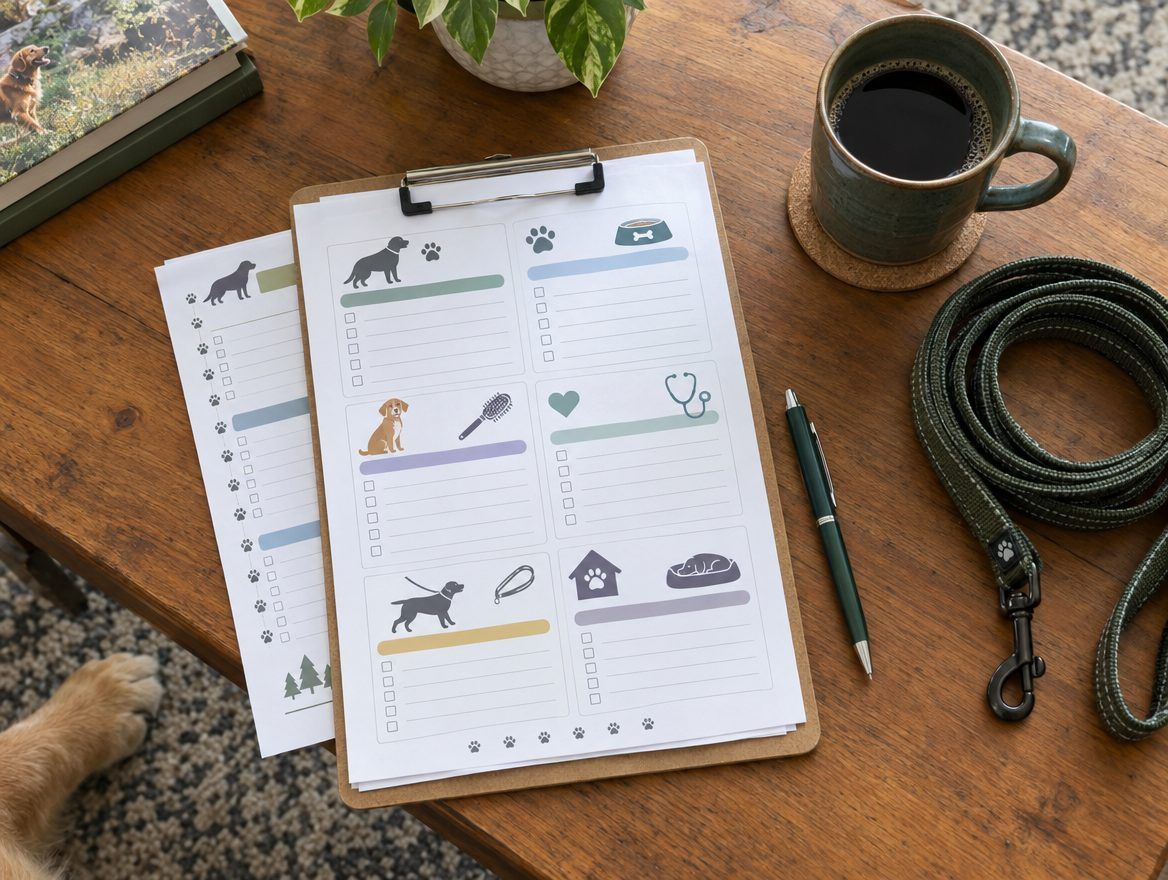
Printables included
Print at home on US Letter or A4 paper, as often as you need.
- Film observation sheet
- Vet and behaviorist visit sheet
- Graded-absence ladder and session log
- Cover plan and weekly schedule
Take a look inside
Short chapters, clear steps and trackers you'll actually use.

Picture a few weeks from now
Picking up your keys, and a dog who barely looks up.
Calmer goodbyes. A written plan and clear notes you can show your vet. And a way to spot the wins that aren’t just silence.
How the plan works
Film and sort
Film your dog, run the red-flag screen and match the signs to one of four patterns.
Get help and set up
See your vet, make a safe space and plan who covers the hours your dog can’t manage yet.
Practice and track
Short, calm practice on the ladder, with a log that shows what’s working.
Built on evidence
Checked against published veterinary and welfare guidance
Every method was checked against guidance from veterinary and animal-welfare organisations and peer-reviewed research. The full source list is printed at the back, so you can check anything yourself.
Our honest promise
- No punishment, shock, spray or bark collars. Ever.
- This guide is vet-first. If your dog panics, hurts itself, has changed suddenly or has bitten, it tells you to call your vet or a qualified behaviorist before any training.
- It doesn’t diagnose or treat anxiety. Progress can take weeks or months, so expect a plan and clear notes, not a quick fix.
It helps, or it's free
Follow the plan. If it doesn't help your dog, email us within 30 days of purchase and we'll refund every cent. No forms, no hoops.
Questions
What dogs is this for?
Dogs that howl, chew or toilet when left alone. The guide helps you sort boredom, teen chewing, unfinished house-training and possible distress. Puppies need much shorter times alone, and the guide says so.
Is it a physical book?
No. It’s an instant PDF you can read on any device or print at home on US Letter or A4 paper.
Does it use punishment?
No. Every method is force-free and reward-based, in line with the American Veterinary Society of Animal Behavior (AVSAB).
My dog panics when I leave. Is this for us?
The guide opens with a red-flag screen. If your dog hurts itself, tries to escape, has changed suddenly or has bitten, please see your vet and ask about a qualified behaviorist first. The guide helps you prepare for that visit.
What if it doesn’t help?
Email us within 30 days of purchase for a full refund.
Leave the house with a plan instead of guilt.
31-page PDF guide + 4 printables. Instant download. 30-day money-back guarantee.
Get instant access · $17