

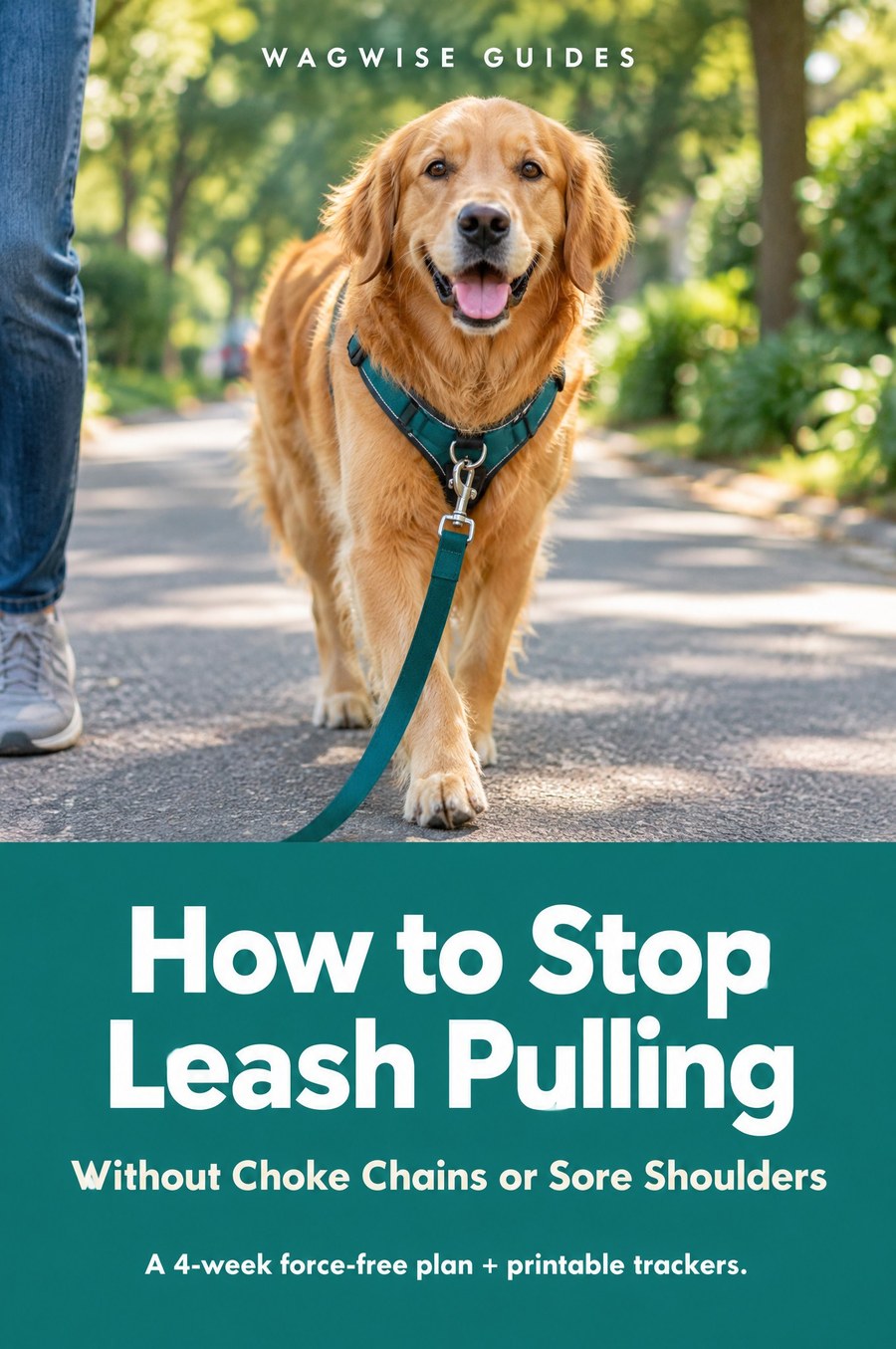
For dogs that pull on the leash: puppies, teens and adults
Walks shouldn’t hurt. Here’s the calm way to a loose leash.
A 4-week, force-free plan: comfortable gear, seven short games at home and simple outdoor methods, with a tracker to show your progress.
- A 2-minute check for pain, cough and reactivity before you train
- Seven short foundation games to teach at home first
- A 4-week walk plan, from quiet rooms to your real routes
- Gear that helps, gear to skip, and a printable fit check
Want to try something first? Get the free checklist.
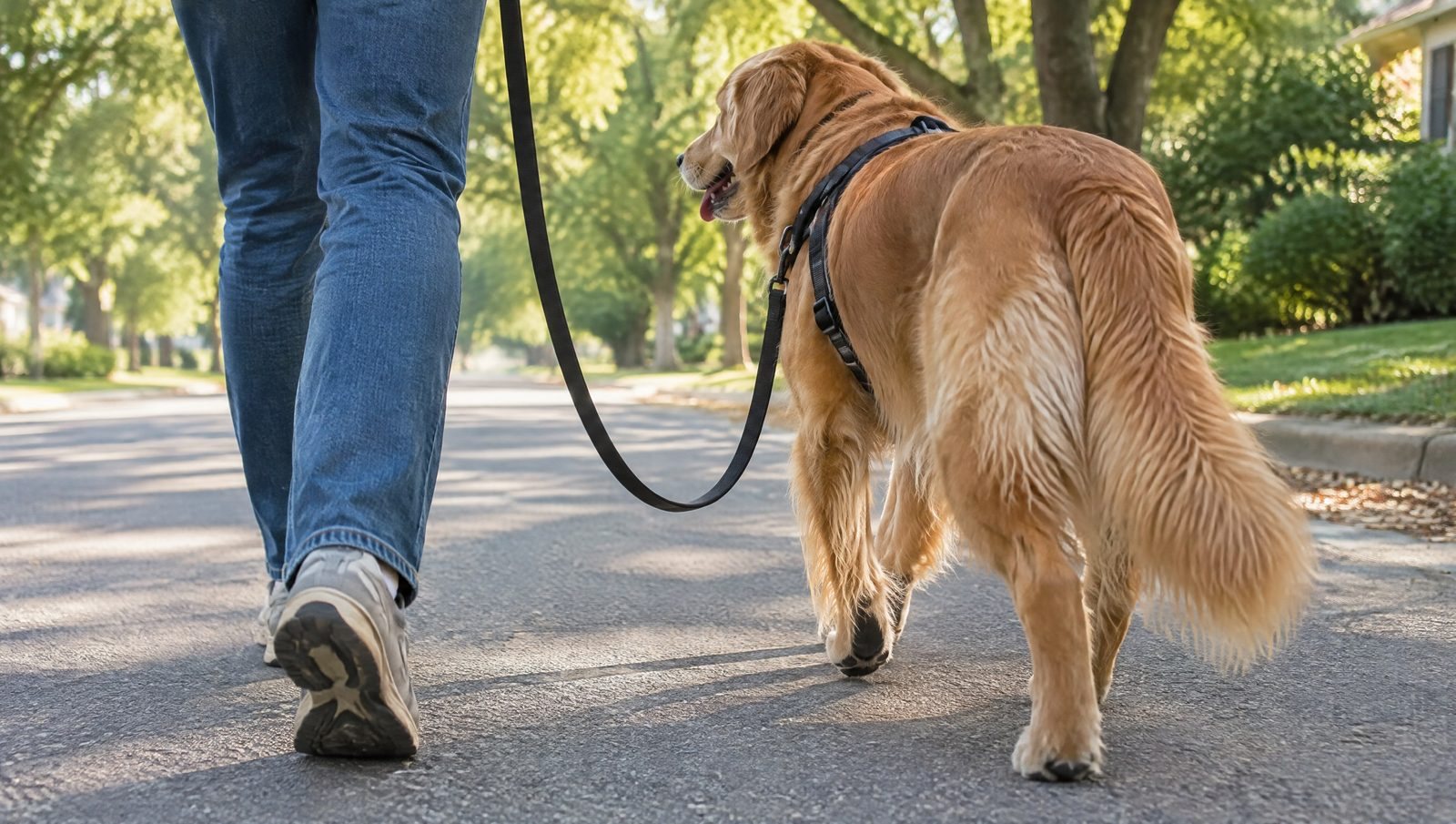
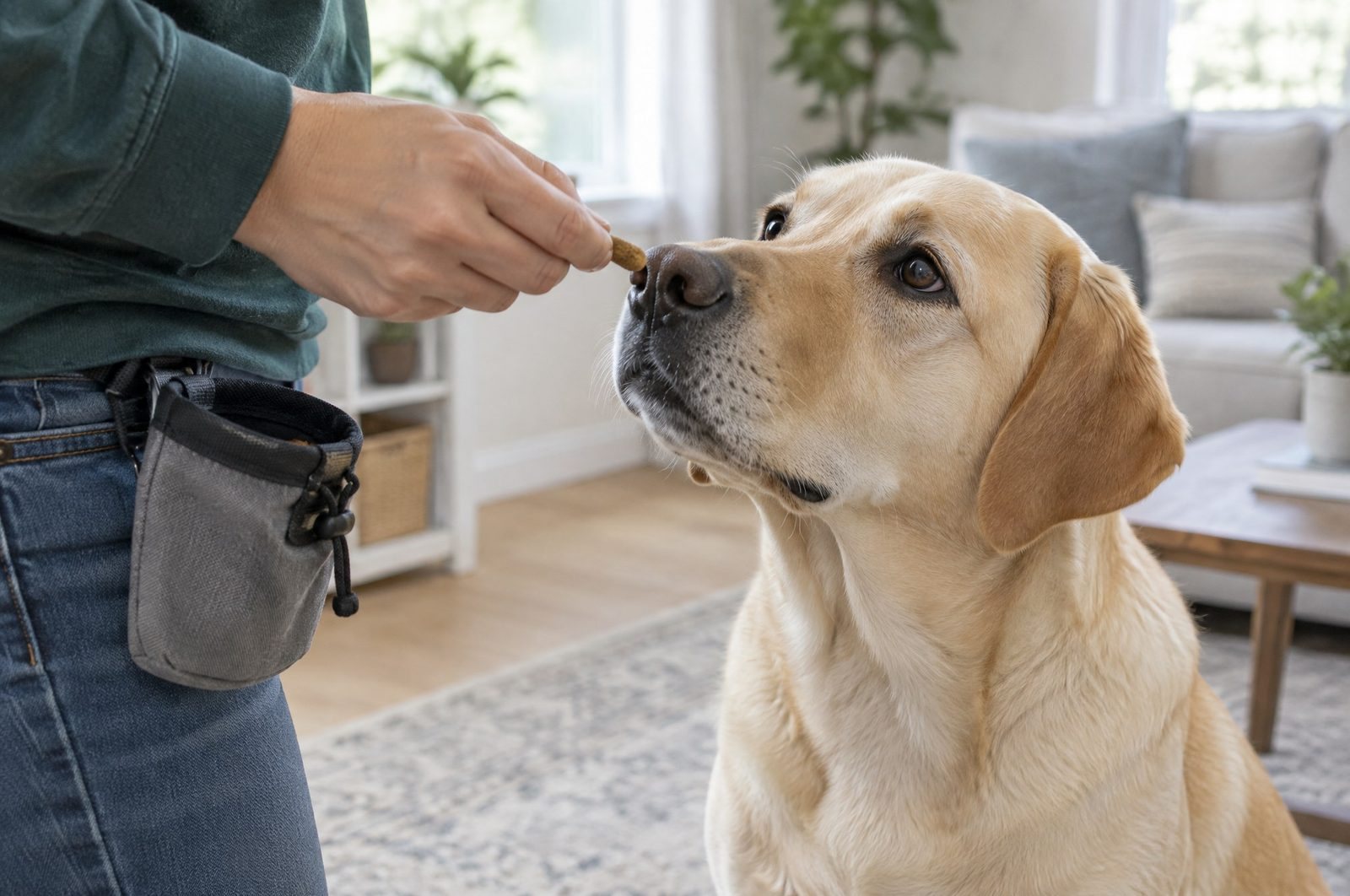
Is every walk a tug of war?
- Your arm gets yanked and your shoulder aches after walks
- Your dog coughs against the collar and you don’t know what to try instead
- You’ve nearly gone over when a squirrel or another dog appears
- Walks feel like a chore when they should be the best part of the day
You're not doing it wrong. You've been given advice that doesn't match the real reason behind the problem. This guide starts with the reason.
Why the usual advice backfires
Every step on a tight leash pays the pull
Dogs walk faster than we do. When the walk speeds up the moment the leash goes tight, pulling works. The plan makes a loose leash the thing that moves you forward.
Jerks and scolding don’t teach a loose leash
Veterinary behavior groups recommend reward-based training over aversive tools. Yanking and telling a dog off add stress without showing what to do instead.
Gear manages pulling, training changes it
No harness fixes the habit on its own. The guide shows how to fit gear comfortably and what to skip, then teaches the skill itself.
Inside the guide, you'll discover
Why the same walk keeps going wrong, and what to do on the next one
What's inside
A quick start + 10 chapters, in the order that works
- ★Quick start: your first walk tonight
- 1Why dogs pull (and why it keeps working)
- 2Pulling or something else? A 2-minute check
- 3Gear that helps and gear to skip
- 4Seven foundation games at home
- 5The outdoor methods
- 6Your 4-week walk plan
- 7Hard cases: puppies, teens, big dogs, small dogs, squirrels
- 8The decompression (sniff) walk
- 9For owners with sore shoulders, hands or balance
- 10When to get help
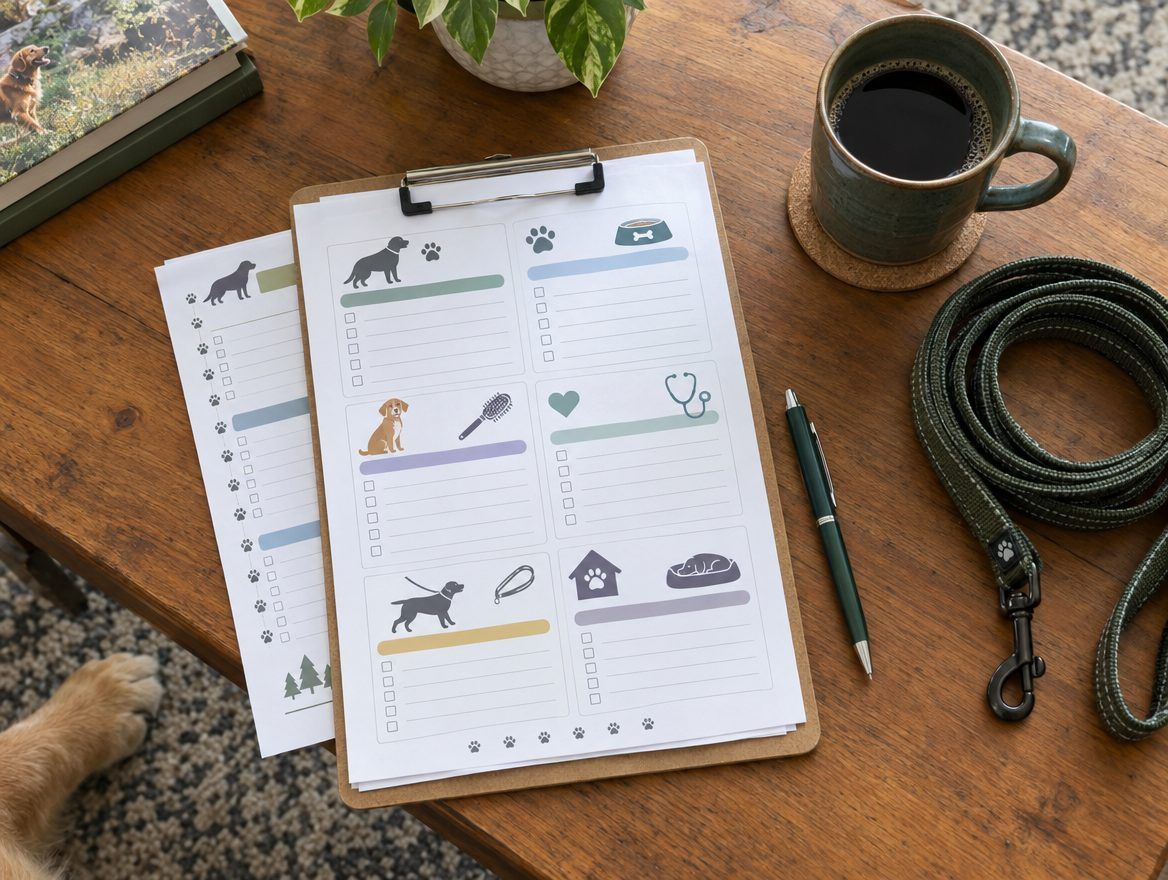
Printables included
Print at home on US Letter or A4 paper, as often as you need.
- Gear fit and safety check
- 4-Week Walk Tracker
- Foundation Games Ladder
- Pocket cue cards (cut-out)
- Pulling or something else? Vet sheet
Take a look inside
Short chapters, clear steps and trackers you'll actually use.
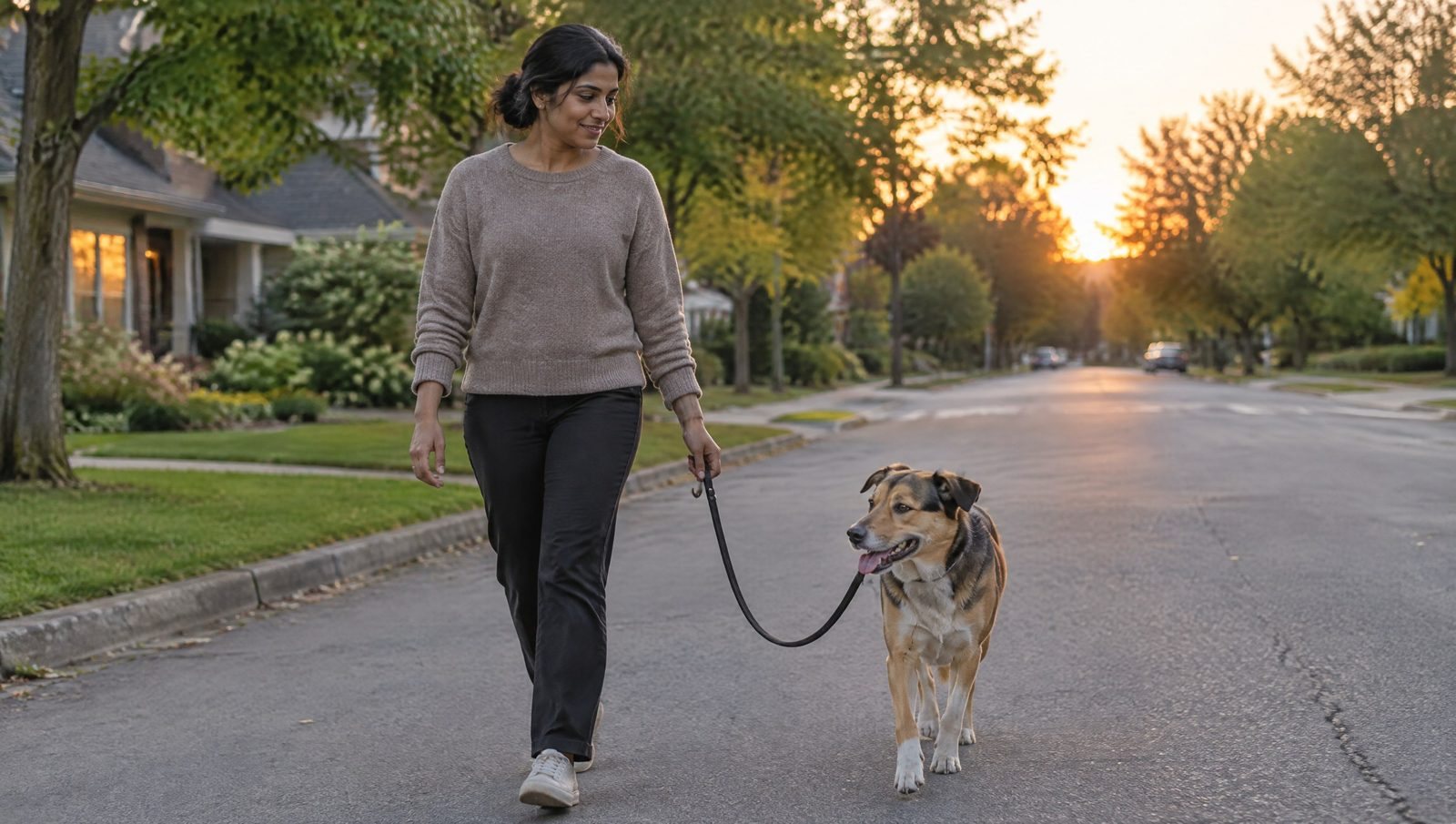
Picture a few weeks from now
A leash that hangs in a gentle J, and a walk you both enjoy.
Fewer stops each week. A dog who checks in with you. And walks that don’t depend on your strength, with progress you can see on the tracker.
How the plan works
Check, then set up
A 2-minute check for pain, cough and reactivity, plus a gear fit check, before any training starts.
Play the games at home
Seven short games teach a loose leash where nothing is more exciting than you.
Take it outside and track
Quiet streets first, then real routes. The tracker shows the stops getting fewer.
Built on evidence
Checked against published veterinary and welfare guidance
Every method was checked against guidance from veterinary and animal-welfare organisations and peer-reviewed research. The full source list is printed at the back, so you can check anything yourself.
Our honest promise
- No choke, prong, shock or spray tools, and no leash jerks or scolding.
- If pulling is new or sudden, or your dog coughs, limps, lunges or growls, the guide tells you to see a vet or qualified behaviorist first.
- Loose-leash walking is a skill that takes weeks of practice, and longer for a dog who has pulled for years.
It helps, or it's free
Follow the plan. If it doesn't help your dog, email us within 30 days of purchase and we'll refund every cent. No forms, no hoops.
Questions
Is this right for my dog?
It’s for dogs of any age who pull on the leash, from puppies to adopted adults, with extra sections for big dogs, small dogs and chasers. For an older dog, check with your vet first.
Is it a physical book?
No. It’s an instant PDF you can read on any device or print at home on US Letter or A4 paper.
Does it use punishment or special collars?
No. Every method is force-free and reward-based. The guide advises against choke, prong, shock and spray tools, and against retractable leashes.
My dog lunges, growls or has bitten. Is this for us?
That is more than pulling. The 2-minute check and red-flag list point you to your vet first, then a qualified behavior professional. A new or sudden change, a cough or a limp also means a vet visit before training.
What if it doesn’t help?
Email us within 30 days of purchase for a full refund.
Calmer walks, a loose leash and shoulders that stay out of the fight.
28-page PDF guide + 5 printables. Instant download. 30-day money-back guarantee.
Get instant access · $17