Barking
Barking Dog and Neighbour Complaints: A Calm 5-Step Plan
Quick answer
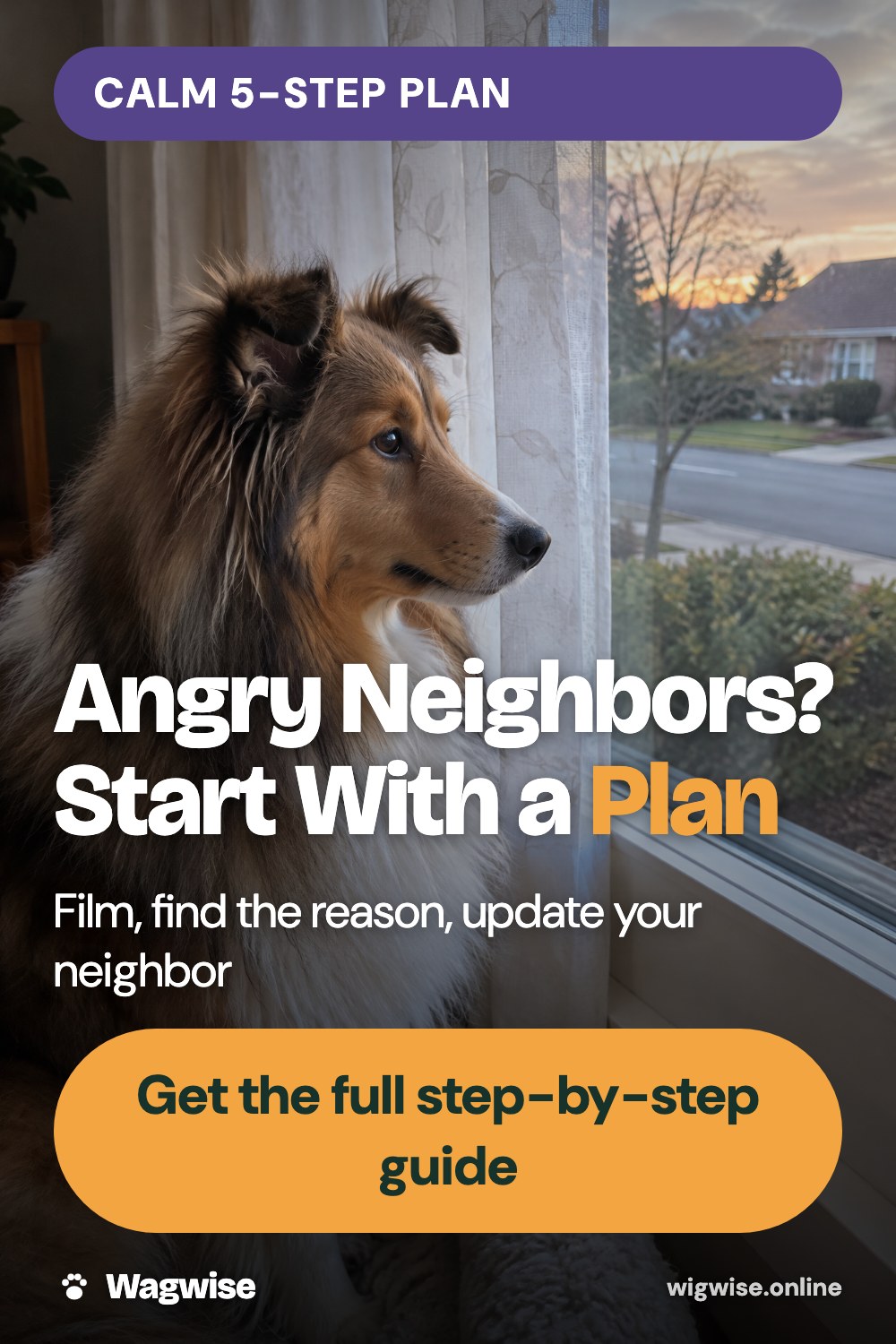
Barking dog neighbor complaints are easier to handle with a plan. Reply calmly, film your dog alone to see when the barking starts, find the reason, put the first fixes in place, then update your neighbor with a number to text. Rules vary by area, so check with your local council.
- Dogs often bark most when nobody is home, so you may not know it is happening. Film your dog to find out.
- Tell your neighbor you are working on it. Most people soften when they hear there is a plan.
- The footage shows the reason: boredom, alert barking or distress need different plans.
- Never use bark collars, sprays or shaker cans, even under pressure.
Barking dog neighbor complaints feel personal, but they are fixable with a calm reply and a clear plan. Most people soften when they hear that you are working on it. The plan below covers the first steps, from finding out what happens when you are out to keeping your neighbor in the loop.
Step 1: Reply calmly and share a number
Tell your neighbor you are sorry for the noise and that you are working on it. Give them a number to text when the barking happens, so you can check in right away. A short note works well: “We know our dog has been barking, and we’re sorry. We’re working on a step-by-step plan starting on [date]. Please text us at [number].”
Step 2: Film your dog alone
Dogs often bark most when nobody is home, so you may not know it is happening. Prop up a phone and record the first 30 minutes after you leave. Note the minute the barking starts.
| What the camera shows | What it points to |
|---|---|
| Barks at outside noises, then settles | Alert barking: block the view |
| Barks on and off, then sleeps | Boredom: add exercise and enrichment |
| Barks or howls soon after you leave, with drooling, scratching or ignoring food | Distress: talk to your vet |
Step 3: Find the reason with a bark log
Keep a 3-day log of time, place, trigger, body language, how long it lasted, what happened after and how long your dog took to settle. This tells you which plan to start. If the barking is new or sudden, or your dog shows signs of pain or distress, see your vet first.
Step 4: Start the first fixes
Begin with management, which removes rehearsals fast:
- Frosted film or blinds on the windows your dog watches.
- White noise or a radio to mask outside sounds.
- A walk before work, a food toy as you leave and a midday walker or friend if your dog is alone more than 4 hours.
- A “please text, don’t knock” note, if knocks set the barking off.
If the video points to distress, the first rule is to stop leaving your dog longer than they can cope with. Use a sitter, family or daycare, or take your dog with you.
If your dog struggles when you leave, don’t tell them off when you get home. Dogs can’t link a telling-off to barking that happened earlier, and it only adds worry about your return. Keep goodbyes and hellos calm, and never leave a distressed dog to cry it out.
Step 5: Update your neighbor
Share the plan and your tracker if they would like to see progress. Some days will be worse. After a stressful day expect more barking for 24 to 48 hours, then drop back a level. A plan and a phone number go a long way.
Aim for fewer, shorter episodes. Very strong triggers, homes that can’t tolerate any barking and fearful dogs take longer, so get help early if you are stuck.
What about the law and bark collars?
In some places, persistent barking can be treated as a noise nuisance. In England, for example, councils can serve abatement notices. Rules vary by country, state and area, so check with your local council. This is not legal advice.
Under pressure, a bark collar can look like a quick answer. It isn’t. Our article on why bark collars backfire explains what to do instead. The full plan in our guide includes a neighbor note and a 30-day tracker.
Frequently asked questions
How do I know if my dog barks when I'm out?
Film your dog alone. Dogs often bark most when nobody is home, so you may not know it is happening.
What should I say to a neighbor?
Say you are sorry, tell them you are working on it, share the plan if they want to see it, and give them a number to text when the barking happens.
Can a council act on a barking dog?
In some places persistent barking can be treated as a noise nuisance. In England, for example, councils can serve abatement notices. Rules vary by country, state and area, so check with your local authority. This is not legal advice.
Will a bark collar solve it?
No. Bark collars punish every bark, including useful ones, and do not address the reason. They can raise anxiety and cause pain, burns or injury.
How long until the barking stops?
Some cases are harder: very strong triggers, homes that cannot tolerate any barking, and fearful dogs take longer. Aim for fewer, shorter episodes and keep your neighbor informed.
More Wagwise guides for dog owners
 Stop Puppy BitingA gentle 4-week plan to stop the nipping and get through teething.$17 · instant PDFSee the guide →
 Get Rid of Dog Pee SmellRemove urine odor for good, then stop the accidents with a 14-day reset.$17 · instant PDFSee the guide →
 Help Your Itchy DogTrack triggers, soothe skin safely and know when to see the vet.$17 · instant PDFSee the guide →
Want all four? Get the complete library for $29.
Sources
This article is general education, not veterinary advice. It does not replace an examination by your vet or help from a qualified behaviourist.