Barking
Dog Barking at the Window: 5 Fixes That Don't Need a Collar
Quick answer
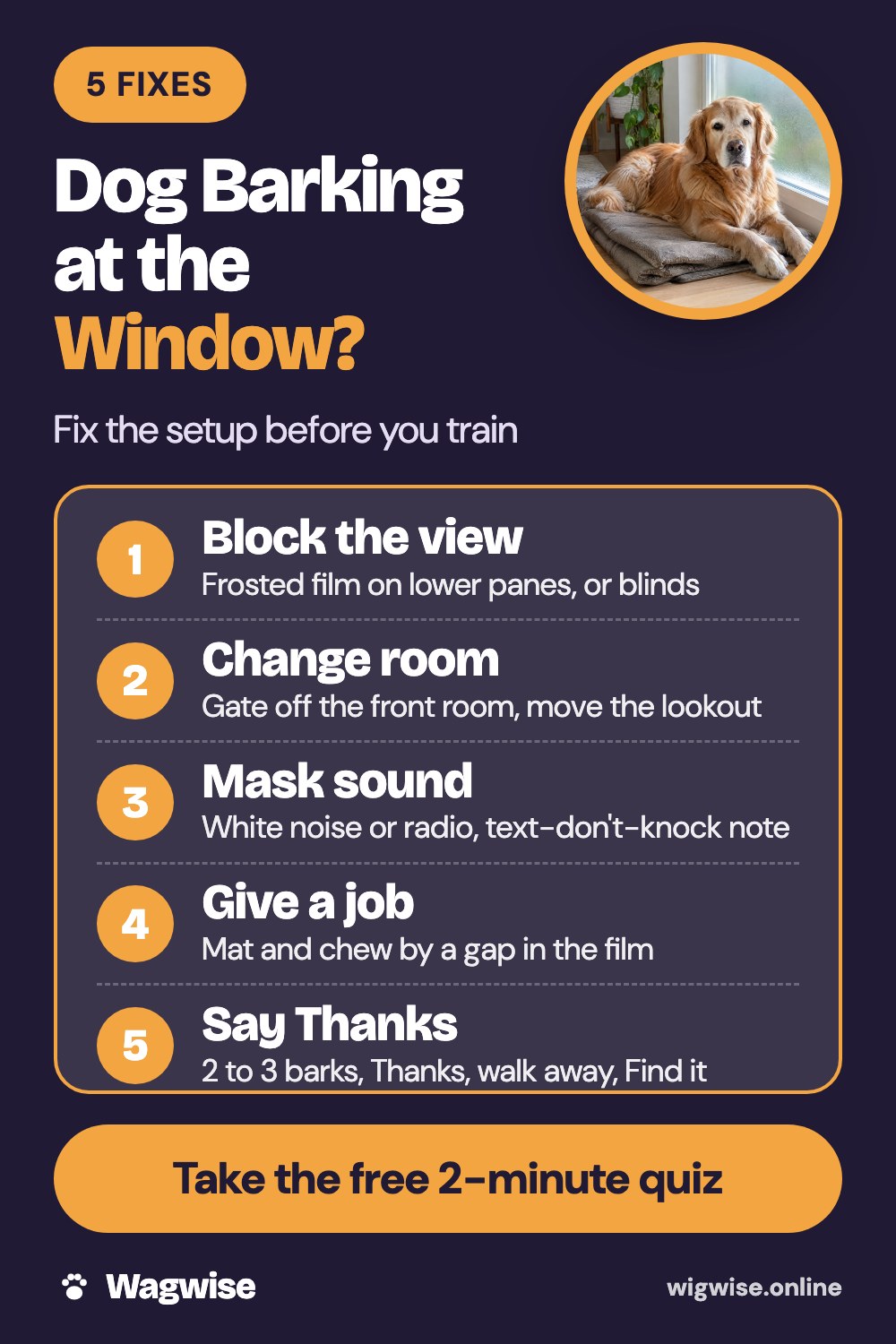
A dog barking at the window is usually on guard duty, and every passer-by who walks away proves the barking worked. Fix it in five steps: block the view, keep your dog out of the front room, mask outside sounds, give a calmer job on a mat, and use the thanks routine for surprises.
- Every time the passer-by leaves, your dog learns barking worked, so removing the view comes first.
- Frosted film on the lower panes lets light in but hides the street.
- Reward calm looking from a mat, and feed 5 to 10 treats, one at a time, when a delivery arrives.
- Skip shouting. It can sound like you are joining in.
A dog barking at the window is usually doing a job: guarding the house. A person or dog walks past, your dog barks, and the passer-by keeps walking. To your dog, that proves the barking worked, so the habit gets stronger every day.
The fix is to change the setup first and teach a calmer job second. Here are five ways to do both, with no collar and no shouting.
Dog barking at the window: why it keeps happening
Each rehearsal makes the habit a little stronger. Every time the truck, the walker or the squirrel leaves, barking gets paid. That is why the first fixes remove the view instead of asking your dog to try harder.
Watch your dog’s body. Alarm barking looks stiff, with the dog leaning forward on each bark. A bouncy, wagging dog is more likely greeting. Keep a quick note of the time and trigger each time it happens, so you can see which window or sound matters most.
Fix 1: Block the view
- Frosted window film on the lower panes. Light still gets in, but the view of the street doesn’t.
- Blinds or curtains closed at busy times, lowered to your dog’s eye height.
- Never leave your dog to guard the window alone. Close a blind or shut the door to the front room.
Fix 2 and 3: Change the room and mask the sound
| Setup change | What it removes |
|---|---|
| A gate across the front room | Easy access to the lookout spot |
| Couch or chair moved away from the glass | A high place to watch from |
| White noise or a radio | Sounds from the street |
| A “please text, don’t knock” note | Knocks that set off real barking |
| An outside parcel box | Delivery visits at the door |
Garden time matters too. Keep yard time supervised, and bring your dog inside at the first bark.
Fix 4: Give your dog a better job
Once the view is blocked, teach what to do instead. Sit by a gap in the film with your dog on a mat and a chew. Reward calm looking. Keep it short and easy, and stop before your dog gets stiff.
For deliveries, send your dog to the mat and feed 5 to 10 treats, one at a time, as the parcel arrives. The truck then predicts treats instead of danger. Keep sessions to 3 to 5 minutes, two or three times a day, and move up a step only after about 8 out of 10 successes.
Fix 5: Use the thanks routine for surprises
You cannot block everything. When a bark happens anyway:
- Skip the shouting. Yelling can sound like you are joining in.
- Allow 2 to 3 barks, then say “Thanks!” once, in a calm, light voice.
- Walk away from the window. Most dogs follow you.
- Say “Find it” and scatter a few treats. A sniffing nose is a quieter nose.
Avoid asking “Who’s there? Who is it?” in an excited voice. It winds your dog up even more.
When window barking needs more help
If your dog refuses treats, barks in 2 of 5 tries or stares fixedly, step back one level for a few sessions. Barking that is new or sudden, or that comes with signs of distress when you are out, needs a vet visit first. The full plan in our guide adds a mat-by-the-door ladder for knocks and the doorbell.
Frequently asked questions
How do I stop my dog barking at the window?
Start by removing the view, because every passer-by who leaves proves that barking worked. Use frosted film or blinds, a gate to the front room, and white noise. Then reward calm behavior on a mat.
Should I yell at my dog for barking at the window?
No. Yelling can sound like you are joining in, and the attention can pay off the bark. Use a calm Thanks, walk away from the window and scatter a few treats instead.
Does window film really help with barking?
It removes the rehearsals. Frosted film on the lower panes lets light in but hides the street, so your dog has less to react to and the habit gets fewer chances to grow.
What about delivery drivers?
Teach a mat spot and feed 5 to 10 treats, one at a time, when a parcel arrives. A note asking visitors to text and an outside parcel box also remove triggers.
More Wagwise guides for dog owners
 Stop Puppy BitingA gentle 4-week plan to stop the nipping and get through teething.$17 · instant PDFSee the guide →
 Get Rid of Dog Pee SmellRemove urine odor for good, then stop the accidents with a 14-day reset.$17 · instant PDFSee the guide →
 Help Your Itchy DogTrack triggers, soothe skin safely and know when to see the vet.$17 · instant PDFSee the guide →
Want all four? Get the complete library for $29.
Sources
This article is general education, not veterinary advice. It does not replace an examination by your vet or help from a qualified behaviourist.