Dog pee smell
Dog Peeing in the House: 7 Signs It's Time to See a Vet
Quick answer
Dog peeing in house can be a health sign. Call your vet before retraining if you see blood in the urine, straining or only drops, much more peeing or drinking, sudden accidents in a trained adult, leaking while asleep, or accidents with vomiting, lethargy, fever or not eating.
- A schedule won't fix a bladder infection, and a dog who is unwell needs a vet before a training plan.
- Seven signs mean vet first: blood, straining, more peeing, more drinking, sudden adult accidents, leaking while asleep, and accidents with other illness signs.
- Straining with nothing coming out needs a vet the same day.
- Leaking in sleep is not naughtiness and not a training problem.
- Pause any retraining plan until your vet gives the all-clear.
Dog peeing in house is not always a training problem. Sometimes it is the first sign that something physical is wrong. This page is general information, not a diagnosis. If you see any of the seven signs below, call your vet before you start retraining.
7 signs your dog peeing in house needs a vet first
- Blood in the urine, or pink or red urine.
- Straining, crying, or only drops coming out.
- Peeing much more often, or in larger amounts.
- Drinking noticeably more water.
- A house-trained adult suddenly having accidents.
- Leaking or wet patches where your dog slept, especially in spayed females.
- Accidents with vomiting, lethargy, fever or not eating.
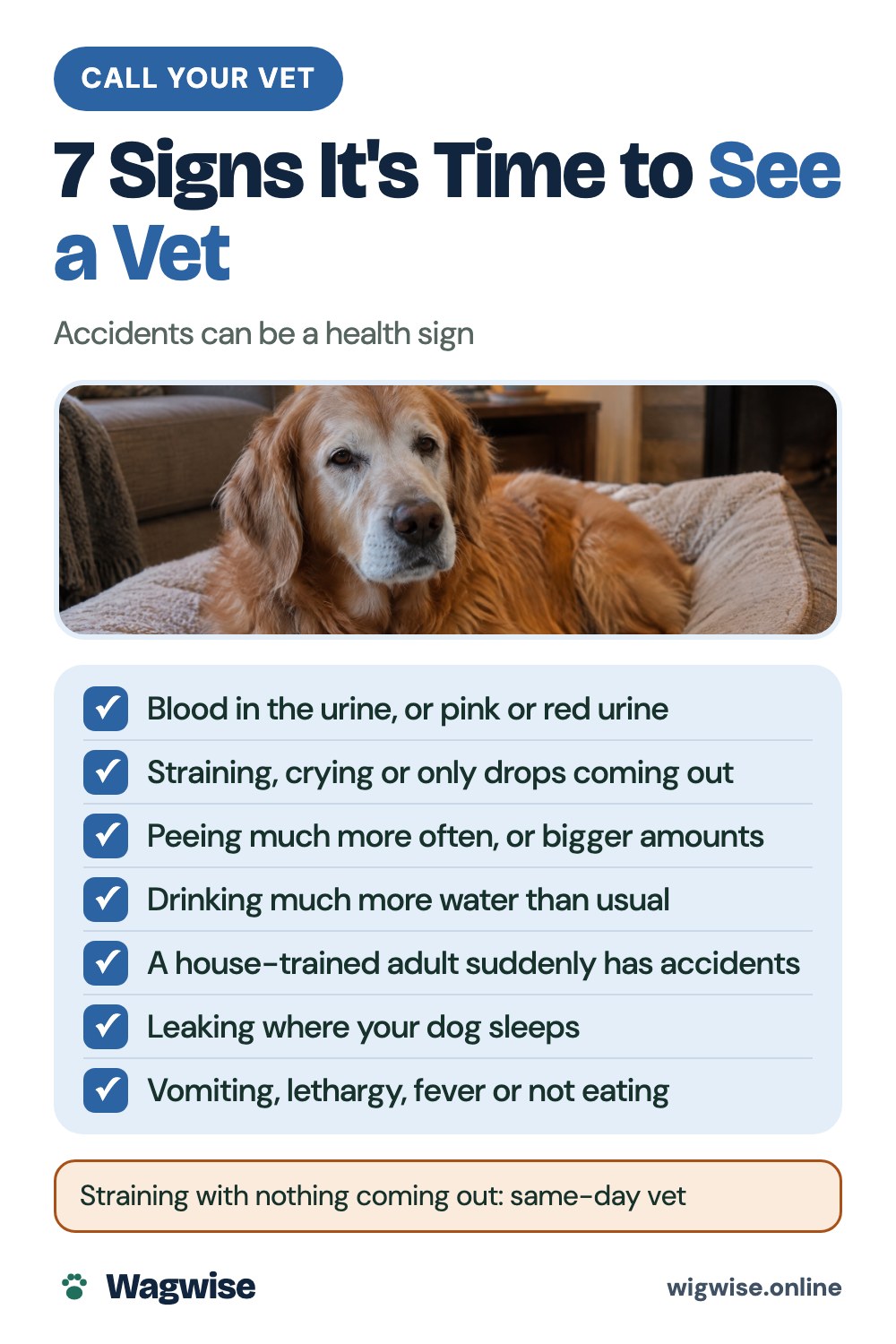
Which sign needs help the same day?
Any of the seven signs deserves a call to your vet, but some are more urgent than others.
Straining with nothing coming out needs a vet the same day. Other signs that can go with a urinary tract infection include frequent small amounts and genital licking, and a urinary tract infection can be an emergency. Don’t wait to see whether it passes.
What else is worth mentioning to your vet?
Two more signs are worth a call:
- A senior dog with accidents plus confusion, night pacing or getting stuck in corners.
- A strong change in urine smell or color.
Up to 1 in 5 spayed female dogs develop urinary incontinence, typically about 2.9 years after spaying. A dog who leaks in her sleep isn’t being naughty, and it isn’t a training problem.
What to bring to the vet visit
A short set of notes makes the appointment more useful.
| Note | What to write down |
|---|---|
| Basics | Age, sex, spayed or neutered |
| Timing | When accidents started and how often |
| Amount | Small or large |
| Warning signs | Any blood or straining |
| Water | Normal, more or much more |
| Changes | Diet or medication changes |
Ask the clinic about a fresh urine sample and how to collect it.
Why a schedule won’t fix it
Veterinary behaviorists group indoor peeing into four causes: a training gap, illness, fear or anxiety, and marking. Find the cause before you retrain. A dog who is unwell needs a vet first, and a dog who had accidents while ill may need full retraining afterward. Our post on 8 causes of peeing in the house helps you read the pattern once your vet has ruled out a medical cause.
What about older dogs?
Senior dogs often need more frequent trips, plus washable mats or pads in a confined area. Ask your vet about a plan for incontinence or cognitive decline, and expect to need lots of patience. A washable bed with a waterproof cover makes life easier for older dogs and their owners. If an older dog leaves wet patches on the bed, wash the bed and book a vet visit too: clean the bed, check the dog.
What to do while you wait
Keep a simple log of every pee, inside and out. Clean accident spots quietly with enzymatic cleaner, and never use bleach or mix cleaning products. Do not punish, shout or rub a nose in a mess. Dogs can’t link it to the earlier act, and anxiety makes indoor peeing more likely. When your vet gives the all-clear, our adult and rescue dog plan shows how to restart.
Frequently asked questions
Why is my house-trained dog suddenly peeing inside?
A house-trained adult suddenly having accidents can be a medical sign. Call your vet before starting any retraining.
What are signs of a urinary tract infection in dogs?
Signs include straining, frequent small amounts, accidents, blood, a stronger odor, more thirst and genital licking. A urinary tract infection can be an emergency, so call your vet.
Is leaking while asleep a training problem?
No. A dog who leaks in her sleep isn't being naughty. Up to 1 in 5 spayed female dogs develop urinary incontinence, typically about 2.9 years after spaying, so talk to your vet.
What should I bring to the vet?
Your dog's age, sex and spay or neuter status, when accidents started, how often, the amount, water intake, any blood or straining, and any diet or medication changes. Ask the clinic about a fresh urine sample and how to collect it.
Can I still clean up while waiting for the vet?
Yes. Blot, rinse and use an enzymatic cleaner, and never use bleach or mix cleaning products. Cleaning the spot also helps stop your dog being drawn back to it.
More Wagwise guides for dog owners
 Stop Puppy BitingA gentle 4-week plan to stop the nipping and get through teething.$17 · instant PDFSee the guide →
 Stop Dog BarkingA quiz finds why your dog barks, then a plan made for that reason.$17 · instant PDFSee the guide →
 Help Your Itchy DogTrack triggers, soothe skin safely and know when to see the vet.$17 · instant PDFSee the guide →
Want all four? Get the complete library for $29.
Sources
This article is general education, not veterinary advice. It does not replace an examination by your vet or help from a qualified behaviourist.