Dog pee smell
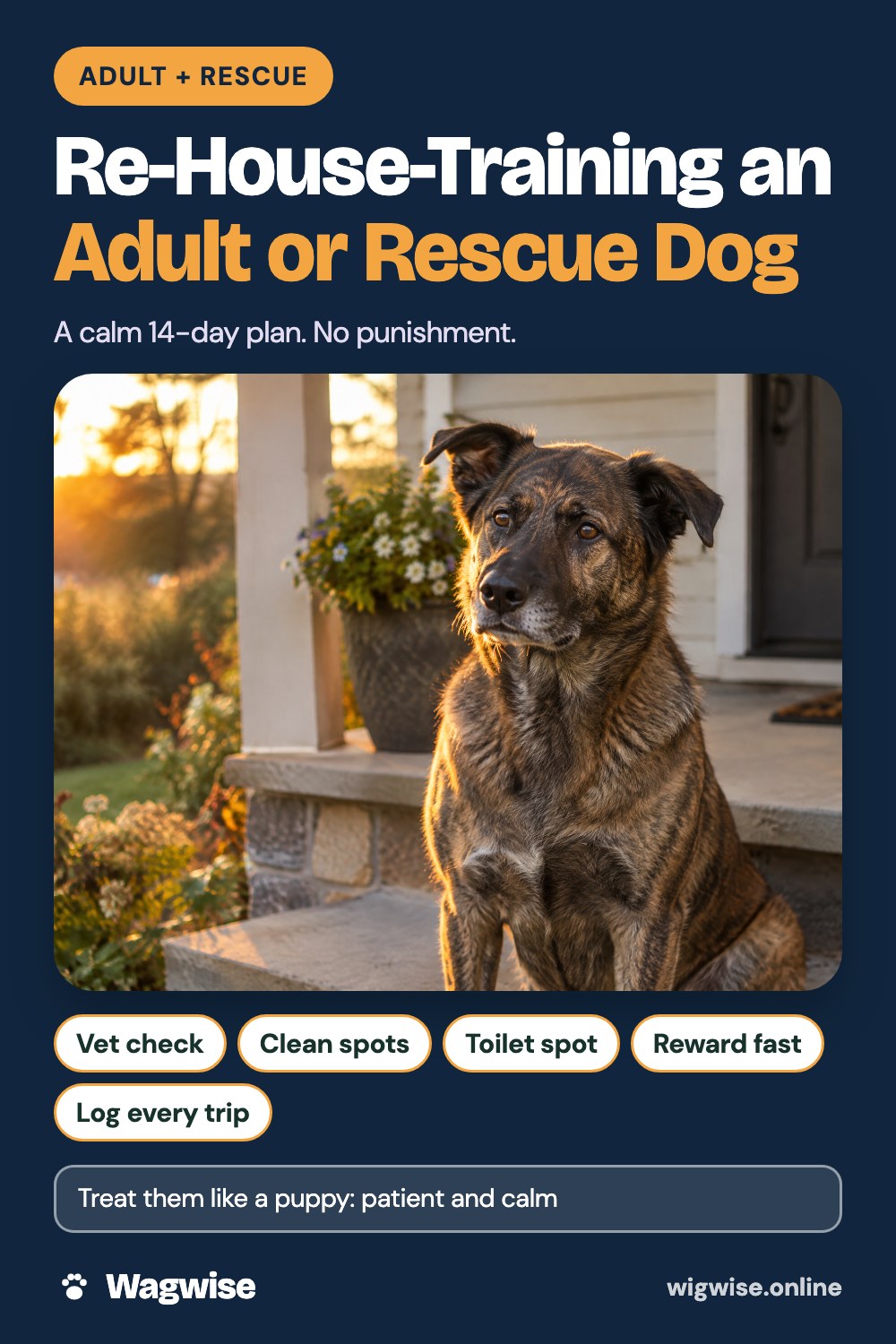
Re-House-Training an Adult or Rescue Dog: A 14-Day Plan
Quick answer
Dog potty training works for adults and rescues too. Rule out illness with your vet, clean every old spot, then restart as if your dog were a puppy: one toilet spot, trips every 2 hours to start, supervision, rewards and a log, for at least two weeks.
- A rescue from a kennel may never have learned indoor rules. Treat them as a puppy, not a bad dog.
- See a vet first if you notice any red flag, because a schedule won't fix a bladder infection.
- Adults start with trips every 2 hours while awake and work toward 3 to 4 hours.
- Reward within 2 seconds of finishing outside. Never punish.
- Keep the routine up for at least two weeks and log every trip.
Dog potty training works for adults and rescues too, with a calm routine and a lot of patience. A dog from a kennel may simply never have learned indoor rules, and a dog who had accidents while unwell may need full retraining. Treat them as a puppy, not as a bad dog.
Where should dog potty training start for an adult dog?
Start with the vet if anything is off. See a vet before retraining if you notice blood in the urine, straining, much more peeing or drinking, or a house-trained adult suddenly having accidents. Then clean every known spot with an enzymatic cleaner, because a smelly spot undoes training. Never use bleach, and never mix cleaning products.
The 14-day plan for adults
The day ranges are our suggested rule of thumb, built on the advice to keep the routine up for at least two weeks.
- Day 1: finish the spot hunt, set up a crate or pen, start the log, and book the vet if any red flag.
- Days 2 to 5: trips on every trigger plus the starting interval. Reward every outdoor pee, supervise fully, then read the log and add a trip 15 minutes before typical accident times.
- Days 6 to 10: keep the same schedule, practice the cue word, allow short supervised free time in one room after a pee, then add 30 minutes to the interval.
- Days 11 to 14: add another 30 minutes, open a second room under supervision, review the log and plan your upkeep.
Use one outdoor toilet spot on leash, a calm cue word, and a tiny treat within 2 seconds of finishing. If nothing happens after 5 minutes, go back in and try again in 10 to 20 minutes.
What does a day look like?
Here is an example day 2 for an adult dog. It’s an example to adapt, not a rule, because your log decides your real times.
| Time | What happens |
|---|---|
| 6:30 am | Wake, straight out on leash, cue word, reward |
| 7:00 am | Breakfast at the fixed time |
| 7:20 am | Out again after the meal |
| 9:20 am | Out (2-hour interval) |
| 10:00 am | Nap in crate or pen, out on waking |
| 12:30 pm | Lunch-time trip, short sniff walk |
| 2:30 pm | Out after play |
| 6:00 pm | Dinner, then out |
| 10:30 pm | Last trip, then bed |
How to troubleshoot an adult dog
- Pees right after coming back in: stay out the full 5 minutes, then try again in 10 to 20 minutes. Seniors who do this need a vet check.
- Accidents always at one time of day: add a trip 15 minutes before that time.
- Goes back to one old spot: re-scan it with a blacklight, re-treat it and block it while it dries.
- One accident: go back one stage, not to day 1. Most setbacks follow too much freedom too soon.
- Three or more accidents in a day: pause and call your vet.
What never to do
No punishment, shouting, shaking, spraying or nose-rubbing, ever. Rubbing a nose in it teaches nothing about where to go and damages trust, and the “guilty look” is appeasement, not guilt. No shock, prong or spray collars. Senior dogs may need more frequent trips, washable mats or pads in a confined area, and a vet plan for incontinence or cognitive decline. If your dog has accidents despite the plan, see why dogs pee in the house.
Frequently asked questions
Can you house train an adult or rescue dog?
Yes. Restart as if your dog were a puppy, with one toilet spot, planned trips, supervision, rewards and a log, and keep it up for at least two weeks.
How often should an adult dog go out when retraining?
Every 2 hours to start, while awake, with a target of 3 to 4 hours. Active dogs need to go more often.
My dog pees right after coming back inside. What now?
Stay out the full 5 minutes, then try again in 10 to 20 minutes. A senior dog who does this needs a vet check.
Is my rescue dog peeing inside out of spite?
No. Dogs don't pee to get back at you. Find the cause: training gap, illness, fear or anxiety, or marking.
What if nothing has improved after 14 days?
Re-read the causes of indoor peeing and talk to your vet or a qualified behaviorist.
More Wagwise guides for dog owners
 Stop Puppy BitingA gentle 4-week plan to stop the nipping and get through teething.$17 · instant PDFSee the guide →
 Stop Dog BarkingA quiz finds why your dog barks, then a plan made for that reason.$17 · instant PDFSee the guide →
 Help Your Itchy DogTrack triggers, soothe skin safely and know when to see the vet.$17 · instant PDFSee the guide →
Want all four? Get the complete library for $29.
Sources
This article is general education, not veterinary advice. It does not replace an examination by your vet or help from a qualified behaviourist.