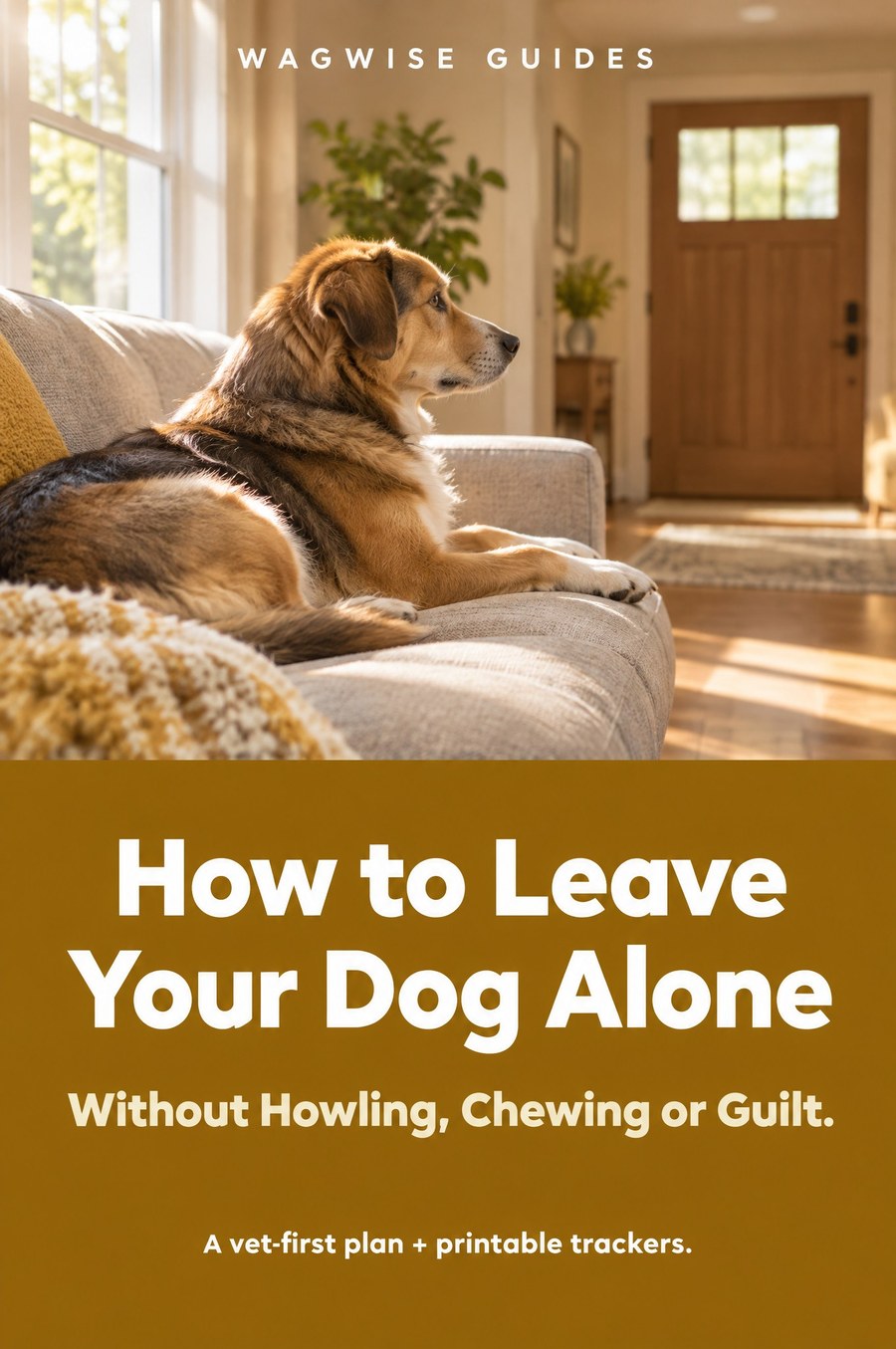
Home alone
Enrichment for the Alone Window
Quick answer
Enrichment for dogs home alone starts before you leave: a sniffy walk, a toilet break and a chance to nap, then a safe chew or food toy. A tired, content dog copes better. But enrichment is not a treatment for distress, and for some dogs no amount of toys will fix it.
- Before you leave: move and sniff for about 30 minutes, give a toilet break, and leave time to rest.
- Ten ideas: lick mat, stuffed rubber toy, snuffle mat, scatter feeding, cardboard shred, long-lasting chew, dig box, puzzle feeder, rotating toys, frozen food toy.
- If your dog ignores food when you're out, switch to a gradual plan rather than buying more toys.
- If your footage points to distress, enrichment is a kind extra, not the plan.
Enrichment for dogs home alone is the sniffing, chewing and napping that fills the hours you’re out. A tired, content dog copes better, and a bored dog needs things to do. But enrichment is not a treatment for distress. For some dogs, no amount of toys will fix it.
What to do before you leave
| Before you go | What to do |
|---|---|
| Move and sniff | At least 30 minutes of aerobic activity a day, ideally just before you leave. A sniffy walk counts. |
| Toilet break | Give your dog the chance before you go. |
| Rest | Most dogs need about 12 to 14 hours of sleep a day, so leave time to nap. |
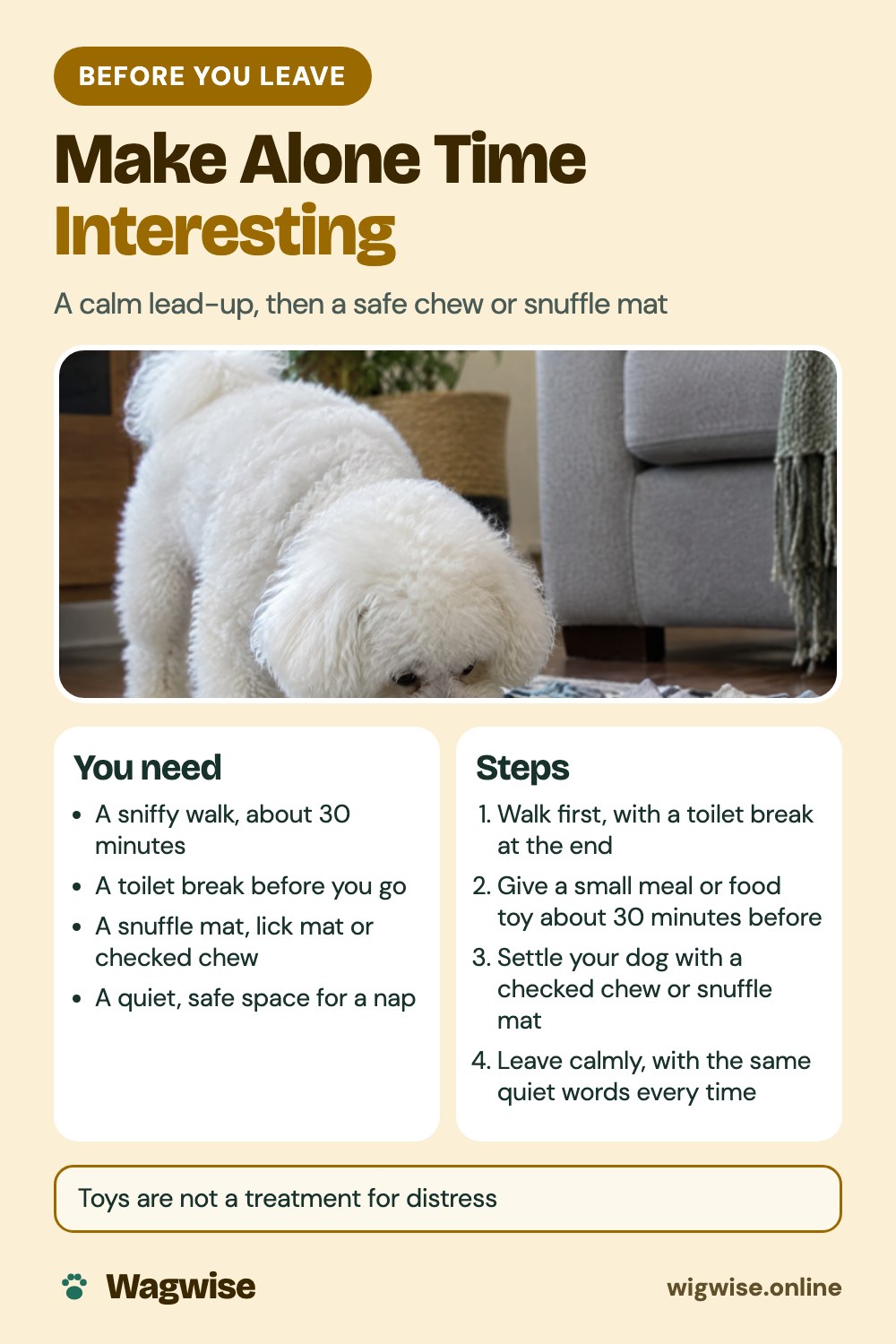
Our usual routine is also to come home about 30 minutes before you leave and give a small meal or a food toy, then settle your dog in the safe space with a chew you have checked is safe.
Enrichment for dogs home alone: 10 ideas
- Lick mat or smear
- Stuffed rubber toy
- Snuffle mat
- Scatter feeding in the grass
- Cardboard box shred
- Long-lasting safe chew
- Dig box for diggers
- Puzzle feeder
- Rotating toy basket
- Frozen food toy
Try a new item while you’re home first, and watch how your dog uses it. Ask your vet which chews are safe for your dog. Take away anything that gets destroyed into swallowable pieces.
When toys are not enough
Food toys are not for every dog. ASPCA notes that a stuffed toy that takes 20 to 30 minutes to empty, given each time you leave, works only for mild cases, because highly anxious dogs often won’t eat alone.
If your dog ignores food when you’re out, switch to a gradual plan rather than buying more toys. That is a sign of worry, not a reason to buy a better chew.
What might an alone window look like?
Here is one simple shape, to adapt to your dog and your day:
- A slow, sniffy walk, with a toilet break at the end.
- A small meal or a food toy about 30 minutes before you go.
- Your dog settled in the safe space with a checked chew, or a snuffle mat.
- A calm goodbye, with the same quiet words every time.
- A nap, which is the real goal.
Rotate the items every few days so they stay interesting, and watch the footage to see which ones your dog actually uses. A toy that goes untouched when you’re out is information, not a failure.
What about adolescent chewers?
Provide teething and chewing items, keep valuables out of reach, and redirect patiently. Rotate toys every few days so they stay interesting. A dig box can suit dogs who dig.
Enrichment is not a treatment
Boredom and distress can look alike. If your footage points to distress, a stuffed toy and a long walk are a kind extra, not the plan. The plan starts with your vet and a qualified behaviorist, then small steps below your dog’s stress point.
Do this today:
- Try one new enrichment item while you’re home and watch how your dog uses it.
- Plan a 30-minute active walk before your next practice session.
- Run through your pre-departure routine before your next outing.
For the room itself, see a safe setup for a dog home alone. If your dog is chewing the house, read what chewing means. The Wagwise home alone guide has the full plan. It is general education and can’t replace advice from your vet.
Frequently asked questions
How much exercise should my dog have before I leave?
ASPCA suggests at least 30 minutes of aerobic activity a day, ideally just before you leave. A sniffy walk counts.
How much sleep does a dog need?
Most dogs need about 12 to 14 hours of sleep a day, so a tired dog needs a chance to nap.
My dog ignores the food toy when I'm out. What now?
That can be a sign of worry. Move to a gradual plan, speak to your vet or behaviorist, and don't buy more toys.
What about a teenage chewer?
Provide teething and chewing items, keep valuables out of reach, redirect patiently, and rotate toys every few days so they stay interesting.
More Wagwise guides for dog owners
 Stop Puppy BitingA gentle 4-week plan to stop the nipping and get through teething.$17 · instant PDFSee the guide →
 Get Rid of Dog Pee SmellRemove urine odor for good, then stop the accidents with a 14-day reset.$17 · instant PDFSee the guide →
 Stop Dog BarkingA quiz finds why your dog barks, then a plan made for that reason.$17 · instant PDFSee the guide →
 Help Your Itchy DogTrack triggers, soothe skin safely and know when to see the vet.$17 · instant PDFSee the guide →
 House-Train Your PuppyA kind 4-week plan with a schedule by age, a night plan and printable trackers.$17 · instant PDFSee the guide →
 Stop Leash PullingA 4-week force-free plan for calmer walks and a loose leash.$17 · instant PDFSee the guide →
 Puppy Sleeps Through the NightA realistic, age-by-age plan for calmer nights, without cry-it-out or crate fights.$17 · instant PDFSee the guide →
 Less Dog Hair, Less SmellA 4-week brushing, bath and home routine for a calmer-smelling house.$17 · instant PDFSee the guide →
Want all four? Get the complete library for $49.
Sources
This article is general education, not veterinary advice. It does not replace an examination by your vet or help from a qualified behaviourist.