
Shedding and smell
Seasonal Shedding: What's Normal
Quick answer
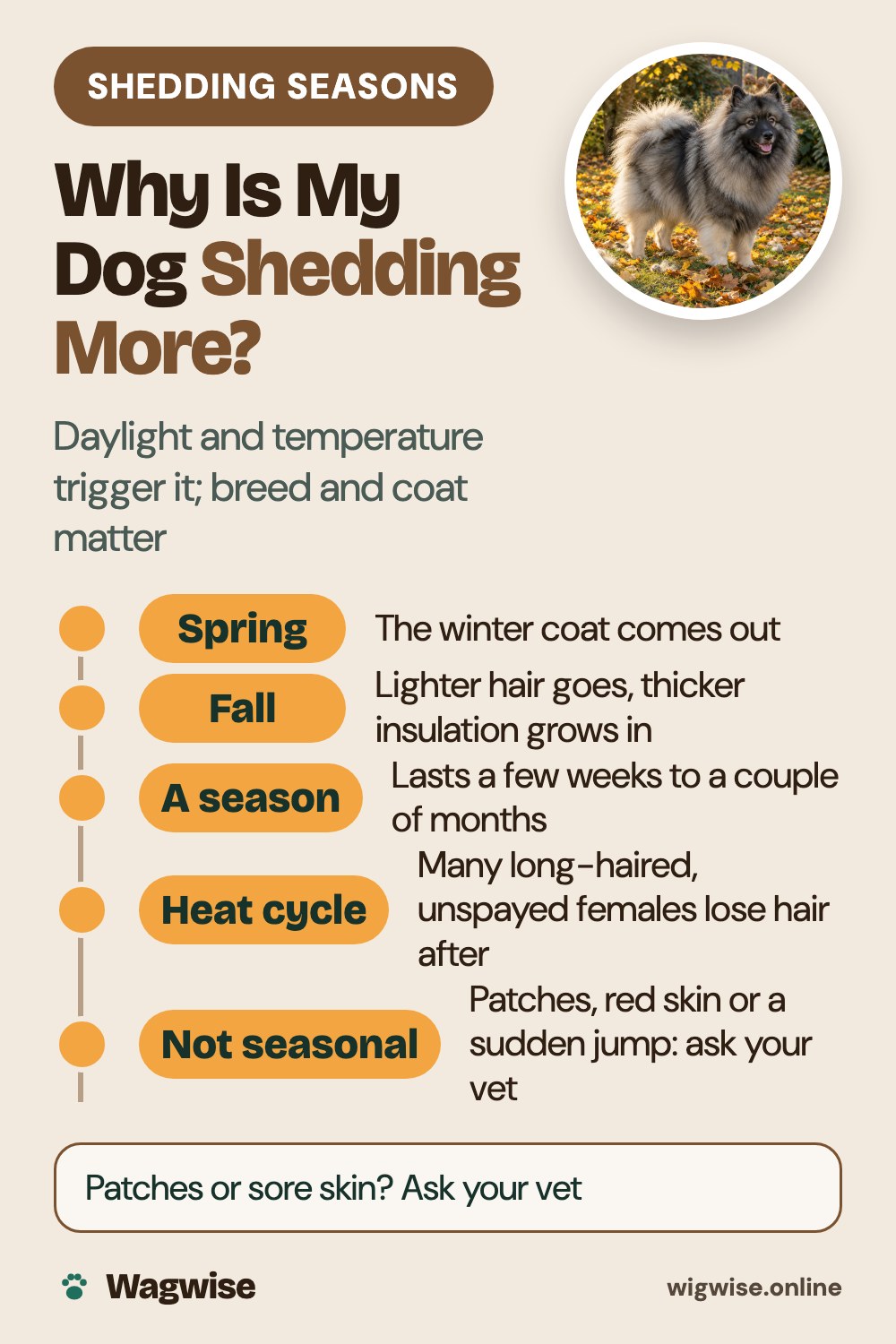
Seasonal shedding in dogs is usually heaviest in spring, when the winter coat comes out, and in fall, when lighter hair goes and thicker insulation grows in. Daylight and temperature trigger it. A season can last from a few weeks to a couple of months, and indoor dogs may shed lightly all year.
- Daylight and temperature trigger the spring and fall shed.
- A heavy season can last from a few weeks to a couple of months.
- Indoor dogs and dogs in warmer climates may shed lightly or continuously all year.
- Patches, sore skin or a sudden jump are different from a seasonal shed. Ask your vet.
Seasonal shedding in dogs follows the calendar, and knowing the pattern makes the heavy weeks easier to plan for. For many dogs the biggest sheds come in spring and fall, triggered by daylight and temperature, and they ease off on their own.
What seasonal shedding in dogs looks like
| When or where | What the sources say |
|---|---|
| Spring | The winter coat comes out |
| Fall | Lighter hair goes out and thicker insulation comes in |
| Cold climates | Undercoat shed mainly in spring and fall |
| Warmer climates | About four times a year, or continuously |
| Indoors | Dogs may shed lightly all year |
How much depends largely on breed and coat type. The table shows the usual pattern, not a promise for your dog.
How long does a shedding season last?
A season can last from a few weeks to a couple of months. Dogs in cold climates may shed their undercoat mainly in spring and fall, according to a groomer quoted by the American Kennel Club. Dogs in warmer climates may shed about four times a year, or continuously.
A thick double coat, such as a Golden Retriever’s, can shed lightly all year. Indoor dogs may too.
Build your own shedding calendar
You don’t need a source to learn your dog’s pattern. Draw twelve boxes for the months. Mark the heavy weeks you remember from last year, then mark the weeks this year. Star the next expected stretch. A friend with the same breed, or a groomer, can tell you when theirs shed.
This is a handy way to tell “same time as last year” from “something new.” If you want to go further and score each day, see is your dog’s shedding normal.
What to do in the heavy weeks
- Brush more often. Heavy shedders may need brushing daily at peak. A few minutes at a time is enough.
- Use the right tool. On double coats, a slicker first and an undercoat rake for the undercoat can help at peak shedding. Use a light touch and brush the hair, not the skin.
- Wash the sofa throw that week. More hair on the brush and in the bin means less on the couch.
- Keep your dog comfortable. Offer shade and fresh water, not a haircut.
None of this stops the shed. It changes where the hair ends up.
Why the season matters to the routine
The calendar tells you when to ramp up. In your heavy weeks, add a few minutes of brushing each day and wash the sofa throw. Outside those weeks, a lighter schedule is fine. Your log will show when to change, and the brush frequency you start with is just a range from the sources, since they differ.
Heat cycles and other reasons for extra hair
Many long-haired, unspayed females lose a lot of hair after a heat cycle. This can look like a seasonal shed but isn’t tied to the calendar. If heavy shedding arrives with other changes, such as weight change or low energy, mention it to your vet.
Seasonal shed or something else?
A seasonal shed has even loss and healthy-looking skin. Patches, thinning that looks the same on both sides, red or scaly skin, a foul smell or a sudden jump in hair loss are different, and they are reasons to ask your vet. The sources we read give no number of weeks after which shedding “needs a vet,” so we don’t print one. Watch the signs, not the calendar.
Shaving is a common shortcut in a heavy season, but it does not stop shedding, and it removes the insulation and sun protection a double coat gives.
Frequently asked questions
Why is my dog shedding more in fall?
For many dogs, fall is when lighter hair goes out and thicker insulation comes in, triggered by daylight and temperature. If the skin looks healthy and the loss is even, it is usually normal.
How long does dog shedding season last?
A season can last from a few weeks to a couple of months. We found no source that sets a number of weeks after which you should see a vet, so use the signs, not the calendar.
Do indoor dogs shed all year?
Indoor dogs may shed lightly all year. A groomer quoted by the AKC says dogs in warmer climates may shed about four times a year or continuously.
Should I shave my dog to stop seasonal shedding?
No. Shaving does not stop shedding, and for a double coat it removes insulation and sun protection. A groomer or your vet decides if a rare exception applies.
More Wagwise guides for dog owners
 Stop Puppy BitingA gentle 4-week plan to stop the nipping and get through teething.$17 · instant PDFSee the guide →
 Get Rid of Dog Pee SmellRemove urine odor for good, then stop the accidents with a 14-day reset.$17 · instant PDFSee the guide →
 Stop Dog BarkingA quiz finds why your dog barks, then a plan made for that reason.$17 · instant PDFSee the guide →
 Help Your Itchy DogTrack triggers, soothe skin safely and know when to see the vet.$17 · instant PDFSee the guide →
 House-Train Your PuppyA kind 4-week plan with a schedule by age, a night plan and printable trackers.$17 · instant PDFSee the guide →
 Stop Leash PullingA 4-week force-free plan for calmer walks and a loose leash.$17 · instant PDFSee the guide →
 Leave Your Dog AloneFilm, sort and build calm alone time with a vet-first plan and a step-by-step ladder.$17 · instant PDFSee the guide →
 Puppy Sleeps Through the NightA realistic, age-by-age plan for calmer nights, without cry-it-out or crate fights.$17 · instant PDFSee the guide →
Want all four? Get the complete library for $49.
Sources
This article is general education, not veterinary advice. It does not replace an examination by your vet or help from a qualified behaviourist.