Itchy dog
Yeasty-Smelling Dog: 5 Things to Note Before the Vet Visit
Quick answer
A sour or musty smell can go with dog yeast infection skin problems, but only a vet can say what is going on, usually by looking at a sample under a microscope. Note the smell, coat, skin color, paws and ears, then book a vet visit.
- A yeasty smell always routes to your vet. Do not guess at home.
- Yeast normally lives on dog skin and can overgrow when allergy or another problem weakens the skin.
- Write down five things: smell, coat, skin color and thickness, paws and ears.
- Vets usually take a tape or swab sample to look at under a microscope.
- Skip vinegar, DIY shampoos and 'anti-yeast' diets.
A yeasty-smelling dog needs a vet, not a home experiment. A sour or musty smell can go with dog yeast infection skin problems, but only a vet can confirm that. What you can do tonight is notice five things and write them down so the visit is more useful.
Why does a dog smell yeasty?
Yeast (called Malassezia) normally lives on dog skin. It can overgrow when allergy or another problem weakens the skin, and it usually follows another problem rather than appearing alone. That is why the smell is a reason to look for the underlying cause with your vet, not just to wash the smell away.
What 5 things should you note before the vet visit?
| Note this | What to write down |
|---|---|
| 1. Smell | Sour or musty? Which areas? Score it 0 to 3 each evening. |
| 2. Coat | Greasy, flaky, or sticky to the touch? |
| 3. Skin color and thickness | Darker or thicker skin in any spot? |
| 4. Paws | Red skin between the toes, licking or chewing? |
| 5. Ears | Brown ear wax, head shaking, discharge, redness? |
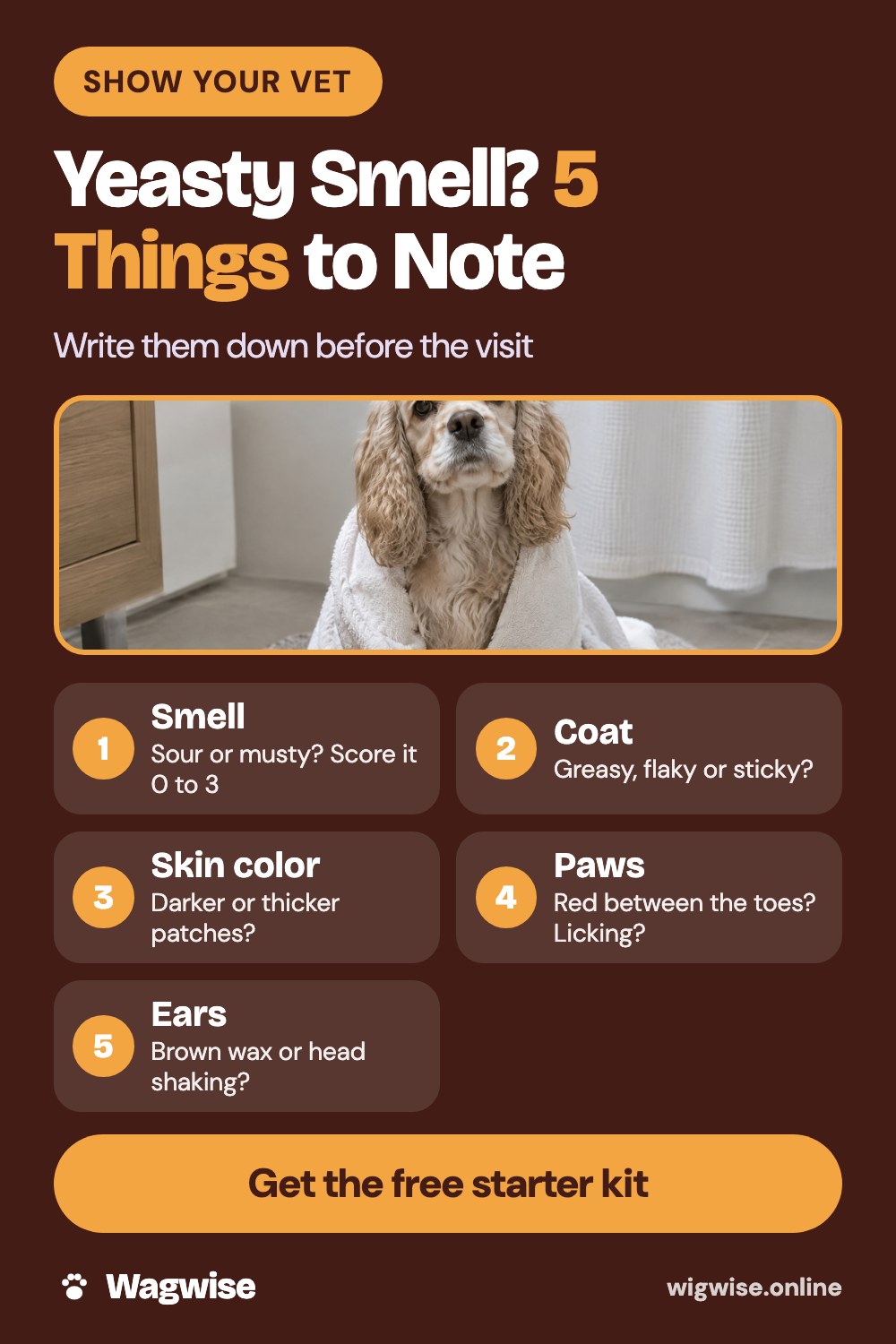
Add the date each thing started, any new product or food, and a photo of the same spots each week. Count paw licking in one chosen 30-minute window each day. Evening licking is easy to miss.
What will the vet do?
Your vet will examine your dog and usually take a tape or swab sample to look at under a microscope. They will also look for the cause behind it, which can include fleas, allergy or another problem. Your vet may suggest a bath schedule or other options. Ask what each one does and when you would expect a change.
If baths are advised, follow the schedule and the full contact time exactly, and dry the paws and skin folds well.
What should you skip?
Some popular ideas can do more harm than good:
- Vinegar rinses. Vets warn vinegar mixtures can worsen ear swelling and infection, and vinegar should not go on broken skin.
- DIY shampoos. Dish soap, baking soda or human shampoo can irritate skin that is already sore.
- An “anti-yeast” diet. We found no source supporting starving skin yeast with food. Do not change your dog’s diet unless your vet advises it.
- Human creams. Licking them can cause vomiting and diarrhea, and some can be much more dangerous.
How can the free starter kit help?
A smell is hard to describe in a ten-minute appointment, and a daily note makes it easier. The free itchy dog starter kit has a 7-day itch score tracker, a red-flags card and a 5-minute flea check. Add your smell score, 0 (none) to 3 (strong), to the tracker each evening.
Fleas are one of the usual suspects behind itchy, smelly skin, so do the flea check too. Ask your vet about year-round flea control for every pet in the home.
How should you plan for the visit?
- Write your main worry in one sentence.
- Bring your scores, photos and a list of everything that touches your dog, including shampoo, wipes and bedding detergent.
- Bring a list of everything your dog eats, including treats and chews.
- Ask: “Is there an infection now? Did you check a sample?” and “What do I do if it flares at night or on a weekend?”
Frequently asked questions
Why does my dog smell like yeast?
A sour or musty smell can go with yeast overgrowth on the skin or in the ears. Yeast normally lives on skin and can overgrow when allergy or another problem weakens it. Only a vet can confirm the cause.
How does a vet check for yeast?
Vets usually take a tape or swab sample and look at it under a microscope. They may then suggest a bath schedule or other options.
Can I use vinegar or a special diet?
We do not recommend either. Vets warn vinegar mixtures can make ear swelling and infection worse, and no source we checked supports starving skin yeast with food.
How often will baths be needed?
That is up to your vet. Yeasty skin may need medicated baths one to three times a week, used with a set contact time.
More Wagwise guides for dog owners
 Stop Puppy BitingA gentle 4-week plan to stop the nipping and get through teething.$17 · instant PDFSee the guide →
 Get Rid of Dog Pee SmellRemove urine odor for good, then stop the accidents with a 14-day reset.$17 · instant PDFSee the guide →
 Stop Dog BarkingA quiz finds why your dog barks, then a plan made for that reason.$17 · instant PDFSee the guide →
Want all four? Get the complete library for $29.
Sources
This article is general education, not veterinary advice. It does not replace an examination by your vet or help from a qualified behaviourist.