
Shedding and smell
The 60-Second Coat Safety Check
Quick answer
A dog coat safety check takes 60 seconds. Read three groups from the top and stop at the first match: red means call a vet now, amber means book a vet visit within a few days, and green means you can start a brushing and cleaning plan. If you're not sure, book a routine check.
- Read red first, then amber, then green, and stop at the first group that matches.
- Bald patches, greasy sour-smelling coats, ear smell and any change in breath are amber signs.
- Heavy hair in spring or fall with healthy-looking skin is a green sign.
- Any plan you start runs alongside your vet's advice, never instead of it.
A dog coat safety check takes 60 seconds and tells you whether to call a vet, book a visit or simply start a routine. Read the three groups from the top and stop at the first one that matches your dog. It is general education, not a diagnosis, and it never replaces a vet exam.
Red: call a vet or emergency vet now
- Face swelling, hives or trouble breathing.
- Blood or pus coming from the skin.
- Foul breath together with vomiting or not eating.
- Breath that smells of ammonia or is sweet, and your dog seems unwell.
- Your dog ate or licked an essential oil, a pine cleaner or a medicated cream. Call your vet or a poison line.
Some of this red list is standard safety wording that our sources did not cover in full, so treat it as a minimum, not a complete list. When in doubt, call.
Amber: book a vet visit within a few days
- Bald or thin patches, a sudden increase in hair loss, or thinning that looks the same on both sides.
- A greasy coat with a sour or pungent smell, or scaly, crusted skin.
- Ear smell, discharge or head shaking.
- Any change in your dog’s breath.
- Scooting, licking or biting at the rear, or a fishy smell.
- A skin problem that hasn’t cleared in a few days.
- A new fear of being touched, or growling when touched, since pain can be the cause.
Green: start the plan
- Heavy hair in spring or fall, with healthy-looking skin.
- Light shedding all year.
- A mild dog smell that clears after a bath.
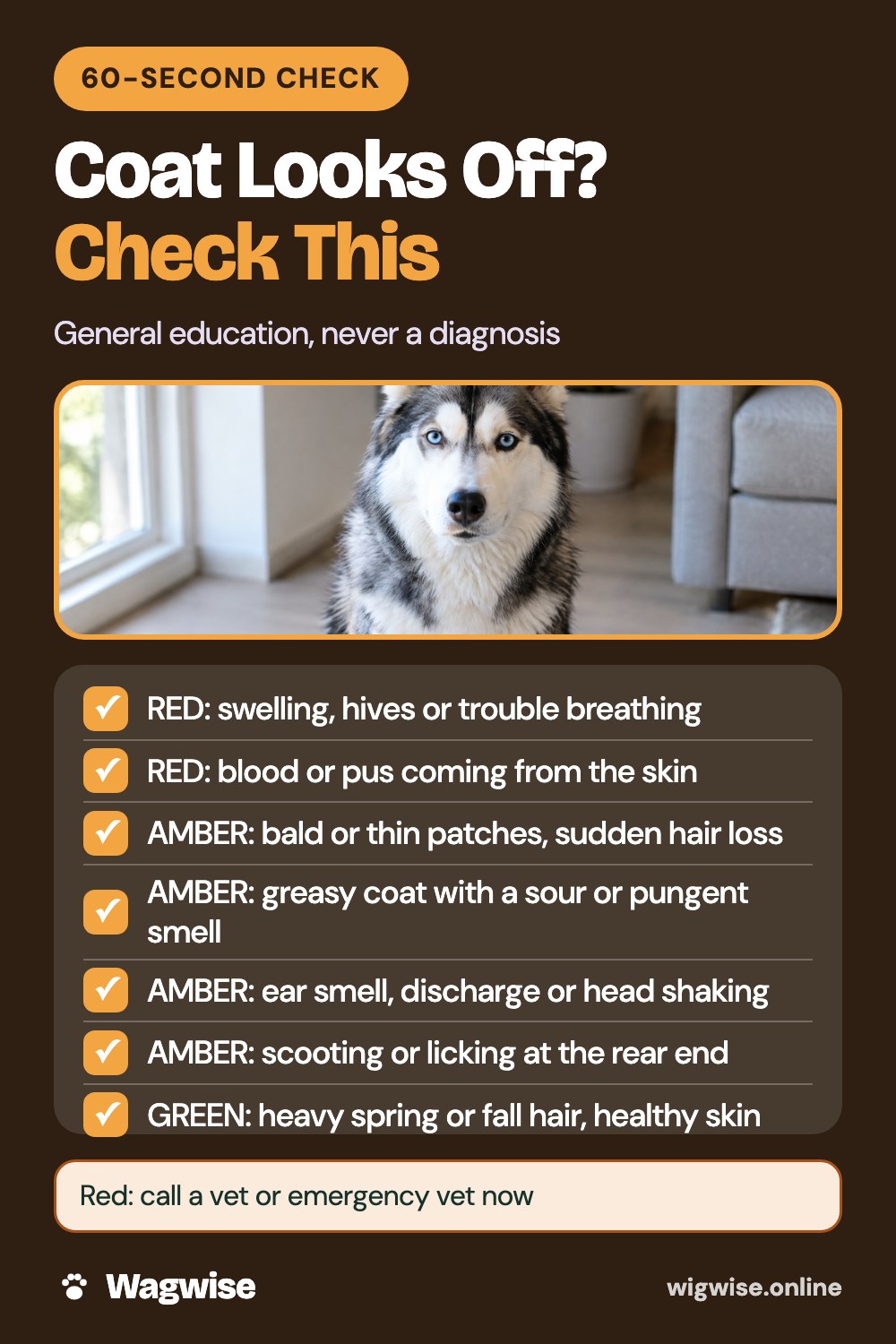
Not sure? Book a routine check. Vets would rather hear from you early.
The dog coat safety check at a glance
| Group | What you see | What to do |
|---|---|---|
| Red | Swelling, trouble breathing, blood or pus, poison exposure | Call a vet or emergency vet now |
| Amber | Patches, greasy sour coat, ear smell, breath change, scooting | Book a vet visit within a few days |
| Green | Seasonal heavy hair, light year-round shedding, mild smell | Start the brushing and cleaning plan |
How to use the check well
Do it with your dog calm and in good light. Part the fur and look at the skin on the flanks, the base of the tail, the neck under the collar and behind the ears. Take a dated photo of anything that looks off.
If your dog lands in amber, bring your notes and photos to the vet. If green, the normal shedding guide and a short brushing routine are the next step. Either way, any plan you start runs alongside your vet’s advice, never instead of it. A smell from the ears, mouth or rear end goes to the vet first.
Save your vet’s number and a pet poison line in your phone now, so you are not searching for them in a hurry.
What each group is based on
The amber list comes from published veterinary advice. PDSA says to contact your vet if a skin problem does not clear up in a few days, and to see a vet as soon as possible if you see blood or pus coming from the skin. The AKC lists causes of hair loss that a vet checks, including infection, allergies, fleas and ticks, mange mites, genetics, nutrition, hormonal disorders and aging. A hormonal cause such as an underactive thyroid can only be confirmed with lab tests, not by looking at the coat.
A fridge-card routine
Print or copy the three groups onto a card and stick it on the fridge. Add three phone numbers: your vet, an emergency vet and a pet poison line. If you can’t decide where your dog fits, the safe move is to ask.
Frequently asked questions
When should I take my dog to the vet for hair loss?
Book a visit for bald or thin patches, a sudden increase in hair loss, or thinning that looks the same on both sides. Blood or pus coming from the skin needs a vet as soon as possible.
Is heavy shedding in spring and fall a concern?
Heavy hair for weeks in spring and fall, with healthy-looking skin, is a green sign. Light shedding all year is also common.
What if my dog ate an essential oil or pine cleaner?
Call your vet or a pet poison line right away. Do not make your dog vomit at home after an oil exposure. In the US, Pet Poison Helpline is (855) 764-7661.
What if I'm not sure which group my dog is in?
Book a routine check. Vets would rather hear from you early, and nothing is too small to ask.
More Wagwise guides for dog owners
 Stop Puppy BitingA gentle 4-week plan to stop the nipping and get through teething.$17 · instant PDFSee the guide →
 Get Rid of Dog Pee SmellRemove urine odor for good, then stop the accidents with a 14-day reset.$17 · instant PDFSee the guide →
 Stop Dog BarkingA quiz finds why your dog barks, then a plan made for that reason.$17 · instant PDFSee the guide →
 Help Your Itchy DogTrack triggers, soothe skin safely and know when to see the vet.$17 · instant PDFSee the guide →
 House-Train Your PuppyA kind 4-week plan with a schedule by age, a night plan and printable trackers.$17 · instant PDFSee the guide →
 Stop Leash PullingA 4-week force-free plan for calmer walks and a loose leash.$17 · instant PDFSee the guide →
 Leave Your Dog AloneFilm, sort and build calm alone time with a vet-first plan and a step-by-step ladder.$17 · instant PDFSee the guide →
 Puppy Sleeps Through the NightA realistic, age-by-age plan for calmer nights, without cry-it-out or crate fights.$17 · instant PDFSee the guide →
Want all four? Get the complete library for $49.
Sources
This article is general education, not veterinary advice. It does not replace an examination by your vet or help from a qualified behaviourist.