Itchy dog
'Yeast Diet' for Dogs: What to Know Before You Start
Quick answer
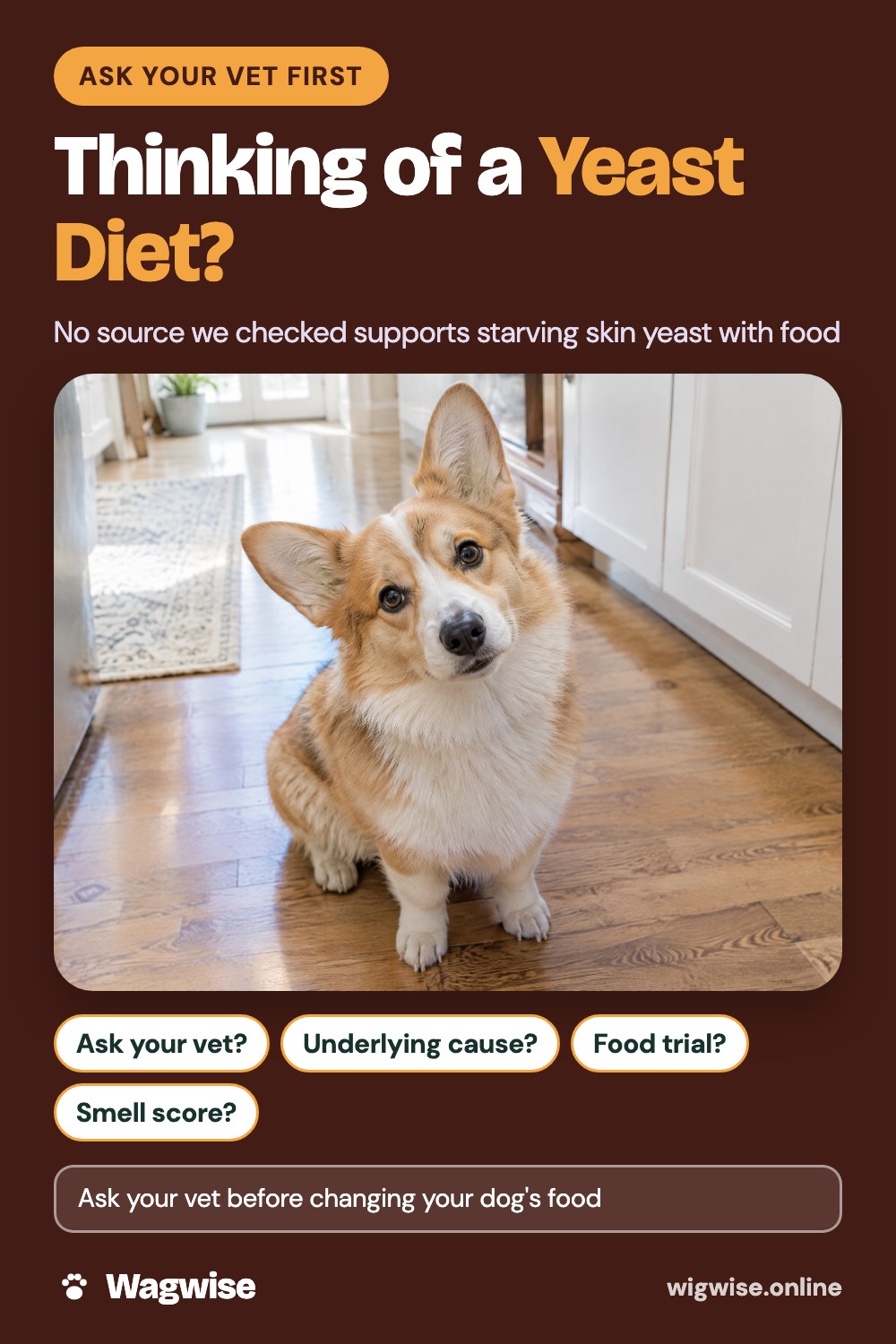
Anti yeast dog food recipes are popular online, but no source we checked supports starving skin yeast with food. Yeast normally lives on dog skin and overgrows when allergy or another problem weakens it. Talk to your vet before changing what your dog eats.
- Yeast normally lives on dog skin. The question is what is weakening the skin.
- We found no source supporting an 'anti-yeast diet' that starves skin yeast.
- Do not use internet recipes. Many are missing key nutrients.
- If food is suspected, your vet runs a strict elimination trial. That is different from a 'yeast diet'.
Anti yeast dog food recipes are popular online, but no source we checked supports the idea that food can starve skin yeast. If your dog smells sour or musty, a recipe is not the next step. A vet visit is. Here is what to know before you change anything in the bowl.
What is the “yeast diet” idea?
The idea online is that cutting certain foods will starve the yeast on your dog’s skin or in the ears. It sounds simple and it is shared widely. But no source we checked supports it, and that is why we do not give recipes or lists of foods to cut.
Why does yeast overgrow on dog skin?
Yeast (Malassezia) normally lives on dog skin. It overgrows when allergy or another problem weakens the skin, and so it usually follows another problem. Signs can include a sour or musty smell, a greasy coat, darkened or thickened skin, red skin between the toes and brown ear wax.
| Claim online | What we found | What to do |
|---|---|---|
| “An anti-yeast diet starves the yeast” | No source we checked supports this | Ask your vet about the underlying allergy |
| “A recipe from the internet is healthier” | 95% of 200 online and book recipes lacked an essential nutrient | Do not cook from internet recipes |
| “Grain is always the culprit” | Proteins such as beef, dairy and chicken are among the most common triggers | Ask your vet about a proper food trial |
How is a food trial different?
If food allergy is suspected, vets use a strict elimination diet trial of 8 to 12 weeks. Your vet chooses the diet and the length. Treats, chews, flavored medicines and supplements are all managed during the trial. It is a careful process with a recheck, not a set of recipes. See our food trial tracker article for how to log it with your vet.
What should you ask your vet?
- Is there an infection now? Did you take a sample to look at?
- What do you think is the main cause, and what else could be adding to it?
- Is food part of the picture, and is a food trial right for us?
- Is our flea control good enough for every pet in the house?
- Which shampoo, how often and how long should it stay on?
- What do I do if it flares at night or on a weekend?
What can you do in the meantime?
- Write down everything your dog eats, including treats, chews and toothpaste.
- Score the itch each evening from 0 to 10, and rate the smell from 0 to 3.
- Take photos of the same spots each week.
- Check fleas with a flea comb over a white towel.
- Add nothing new to the skin or the food until your vet has seen your dog.
If your vet advises baths, follow the schedule and the full contact time. Dry the paws and skin folds well. If a diet change is recommended, your vet will explain what, why and for how long.
For the full plan, see the itchy dog guide.
Frequently asked questions
Does a yeast diet work for dogs?
No source we checked supports starving skin yeast with food. Ask your vet about the underlying problem, such as allergy, that lets yeast overgrow.
Why does my dog have yeast on the skin?
Yeast (Malassezia) normally lives on skin and can overgrow when allergy or another problem weakens the skin. Only your vet can say what is happening.
What is the difference between a yeast diet and a food trial?
A food trial is a strict, vet-chosen elimination diet used to check for food allergy. A 'yeast diet' is an internet idea that skin yeast can be starved with food, and we found no support for it.
Should I change my dog's food while waiting for the vet?
No. Keep things as they are, write down everything your dog eats and take the list to your appointment.
More Wagwise guides for dog owners
 Stop Puppy BitingA gentle 4-week plan to stop the nipping and get through teething.$17 · instant PDFSee the guide →
 Get Rid of Dog Pee SmellRemove urine odor for good, then stop the accidents with a 14-day reset.$17 · instant PDFSee the guide →
 Stop Dog BarkingA quiz finds why your dog barks, then a plan made for that reason.$17 · instant PDFSee the guide →
Want all four? Get the complete library for $29.
Sources
This article is general education, not veterinary advice. It does not replace an examination by your vet or help from a qualified behaviourist.