Home alone
A 4-Week Home-Alone Plan and Setbacks
Quick answer
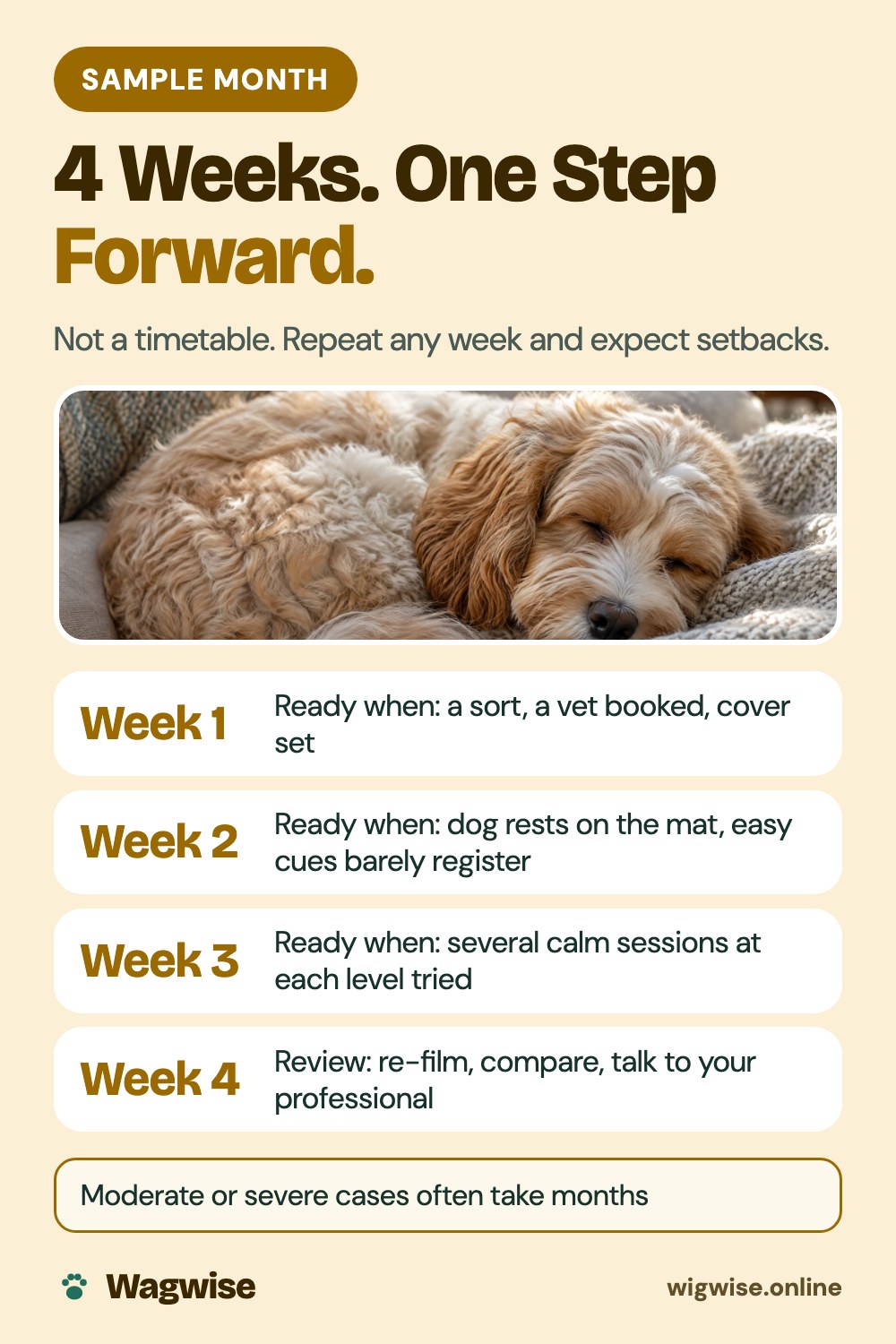
A dog home alone training plan can start with four sample weeks: sort and set up, foundations and cues, begin the ladder, then review. Treat it as a start, not a timetable. Repeat any week, expect setbacks, and remember that moderate or severe cases often take months.
- Week 1 sort and set up. Week 2 foundations and cues. Week 3 begin the ladder. Week 4 review.
- Progress that counts: a relaxed body, eating the chew, sleeping on the footage and faster recovery. Not just silence.
- Setbacks are normal. Drop a level, rebuild, and add cover rather than pushing through.
- No change after four weeks of consistent work? Ask your vet or behaviorist for more help.
A dog home alone training plan needs a calendar you can follow on a tired Tuesday. Here is a sample month to get you started. It is not a timetable. Repeat any week, expect setbacks, and remember that moderate or severe cases often take months.
Your first four weeks
| Week | Focus | Ready to move on when |
|---|---|---|
| 1. Sort and set up | Film twice. Red-flag check. Book your vet. Cover plan. Safe room. Stop all punishment. | You have a sort, a vet booked and cover for the long hours |
| 2. Foundations and cues | The “I’m busy” signal. Chew test. Cue scoring and daily cue practice. Levels 1 and 2 only if all is calm. | Your dog rests on the mat and barely reacts to the easy cues |
| 3. Begin the ladder | Levels 2 to 4 as your dog allows, one or two sessions a day. Log every session. | Several sessions in a row stay calm at each level you try |
| 4. Review | Re-film. Compare with week 1. Talk to your vet or behaviorist. Decide what the next month looks like. | You’ve compared the footage and spoken to your professional |
What to log in a dog home alone training plan
A short log keeps you honest. Write down:
- The level and length
- Stress signs, if any
- Whether the chew was eaten (yes or no)
- How fast your dog settled again
- Whether cover was used
Here is a made-up example, just to show the idea.
| Day | Level | Length | Stress signs | Next step |
|---|---|---|---|---|
| Mon | 2 | 5 sec | None | Same |
| Tue | 2 | 8 sec | Yawning | Shorter |
| Wed | 2 | 4 sec | None | Same |
What does progress look like?
Progress that counts is a relaxed body, eating the chew, sleeping on the footage and faster recovery after you leave. Not just silence. Some dogs stop calling out and suffer in silence, so count relaxed behavior instead.
Setbacks are normal
New places, new noises, a holiday, a bad week or a cold can undo a few steps. When it happens, drop a level, rebuild, and don’t read the setback as a verdict on you or your dog. Dogs Trust notes that long absences can make things worse, so a bad stretch is a cue to add cover, not to push through.
A bad-day plan can be as simple as one short practice a level or two down, extra cover, a good walk and a quiet evening. Log it, and move on.
How do you keep the skill going?
Once your dog is coping, keep practicing short and medium absences regularly. Prevention advice favors regular short-to-medium absences over very long ones or none at all. A few short absences a week, a settle on the mat and calm goodbyes keep the skill alive. Boring is the goal.
When to ask for more help
Ask soon if there is no change after four weeks of consistent work, your dog is going backwards, you’re overwhelmed, or a complaint keeps escalating. Call now for self-injury, escape attempts, panic, a bite or a sudden change.
Read more about the ladder itself and a printable log. The Wagwise home alone guide includes the log and a household rules card. It is general education and can’t promise how things will go for your dog.
Frequently asked questions
How long does it take to teach a dog to be alone?
It varies. A mild case can take weeks, and moderate or severe cases often take months. Your dog sets the pace, and no guide can promise how it will go.
What should I log?
The level and length, any stress signs, whether the chew was eaten, how fast your dog settled again, and whether cover was used.
What do I do after a bad day?
Do one short practice a level or two down, add extra cover, give a good walk and a quiet evening. Log it and move on.
What counts as progress?
A relaxed body when you go, the chew getting eaten, naps on the footage, and quicker settling. A dog who has gone quiet isn't necessarily a dog who is coping.
More Wagwise guides for dog owners
 Stop Puppy BitingA gentle 4-week plan to stop the nipping and get through teething.$17 · instant PDFSee the guide →
 Get Rid of Dog Pee SmellRemove urine odor for good, then stop the accidents with a 14-day reset.$17 · instant PDFSee the guide →
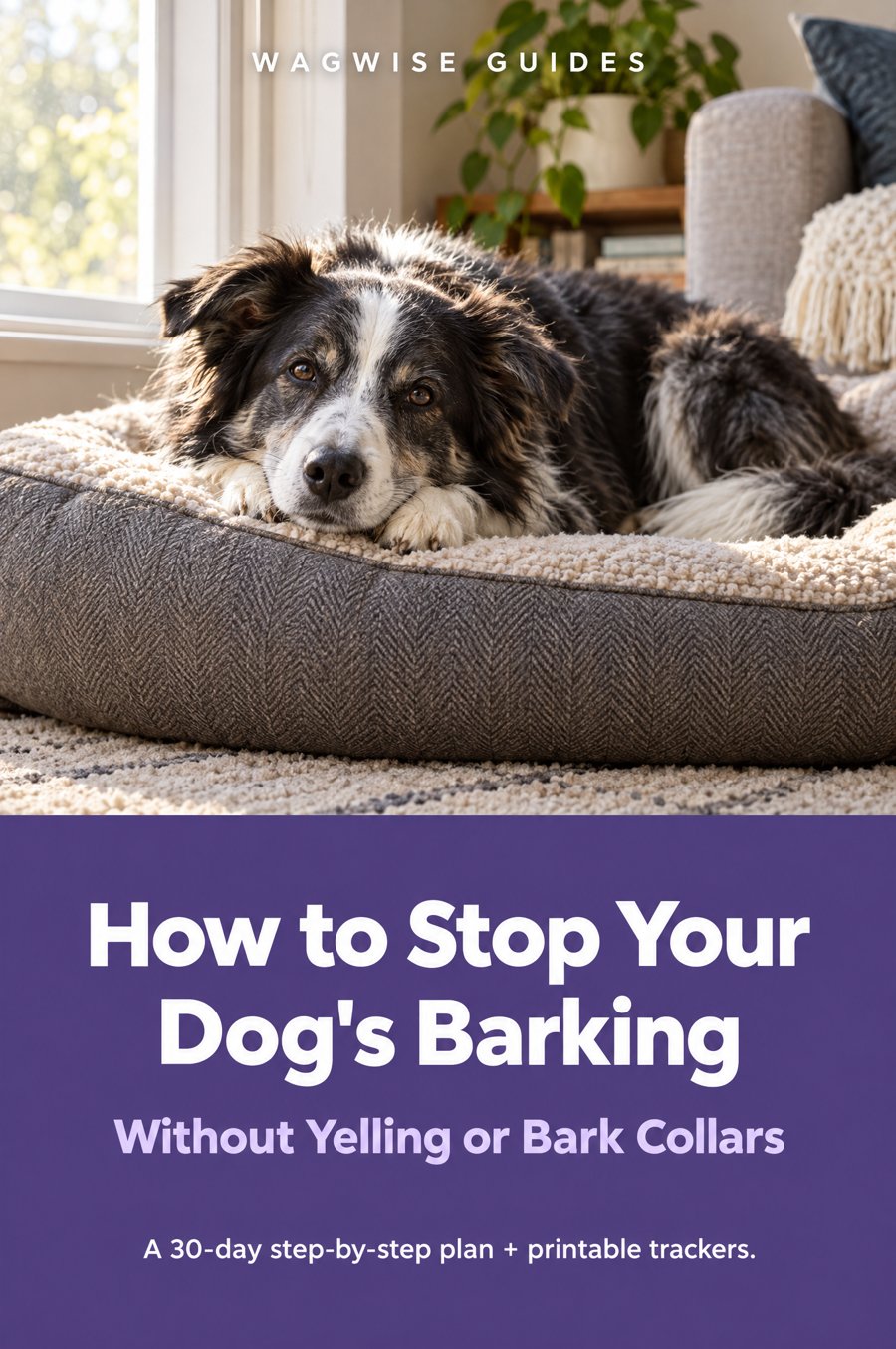 Stop Dog BarkingA quiz finds why your dog barks, then a plan made for that reason.$17 · instant PDFSee the guide →
 Help Your Itchy DogTrack triggers, soothe skin safely and know when to see the vet.$17 · instant PDFSee the guide →
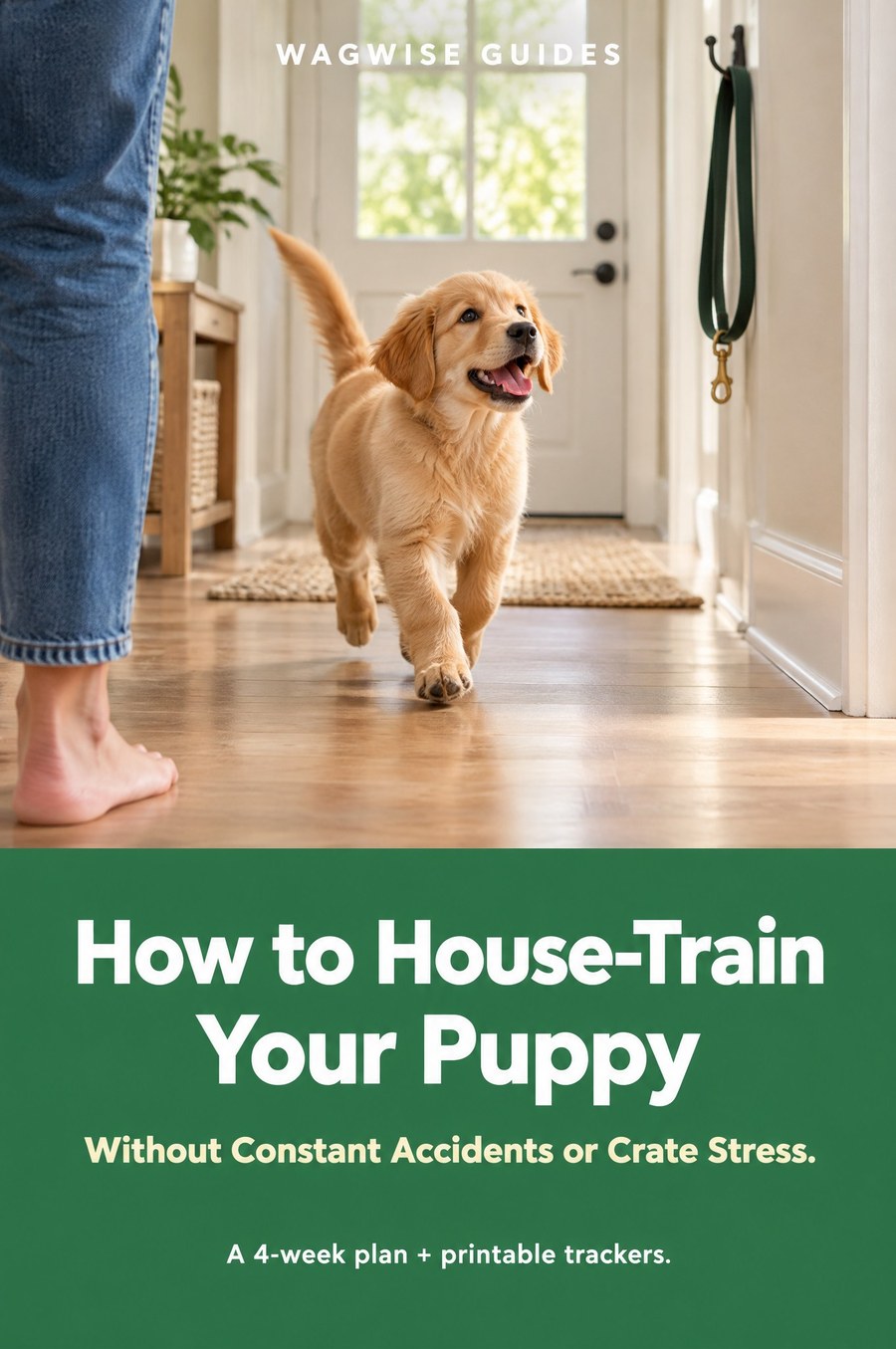 House-Train Your PuppyA kind 4-week plan with a schedule by age, a night plan and printable trackers.$17 · instant PDFSee the guide →
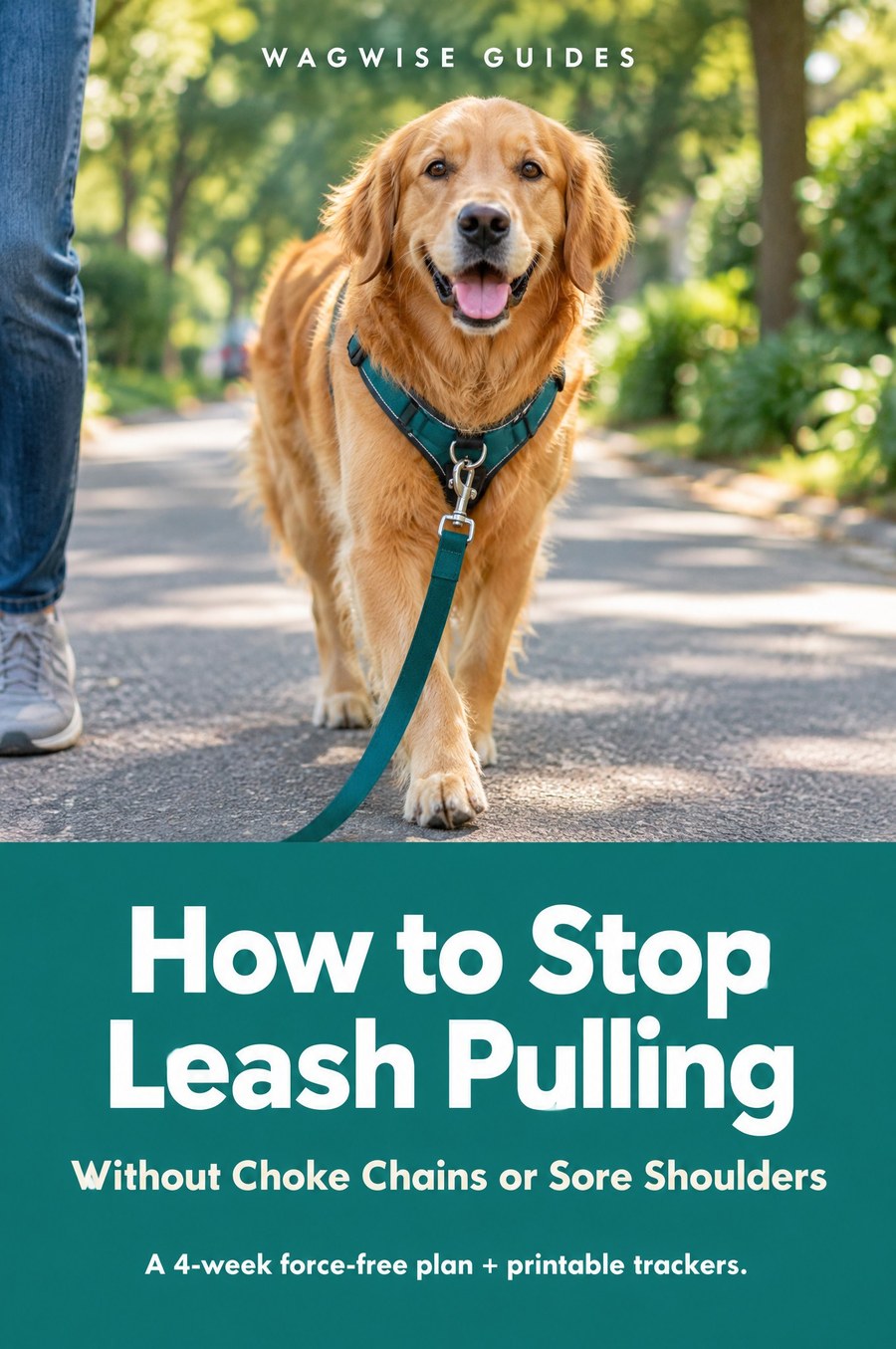 Stop Leash PullingA 4-week force-free plan for calmer walks and a loose leash.$17 · instant PDFSee the guide →
 Puppy Sleeps Through the NightA realistic, age-by-age plan for calmer nights, without cry-it-out or crate fights.$17 · instant PDFSee the guide →
 Less Dog Hair, Less SmellA 4-week brushing, bath and home routine for a calmer-smelling house.$17 · instant PDFSee the guide →
Want all four? Get the complete library for $49.
Sources
This article is general education, not veterinary advice. It does not replace an examination by your vet or help from a qualified behaviourist.