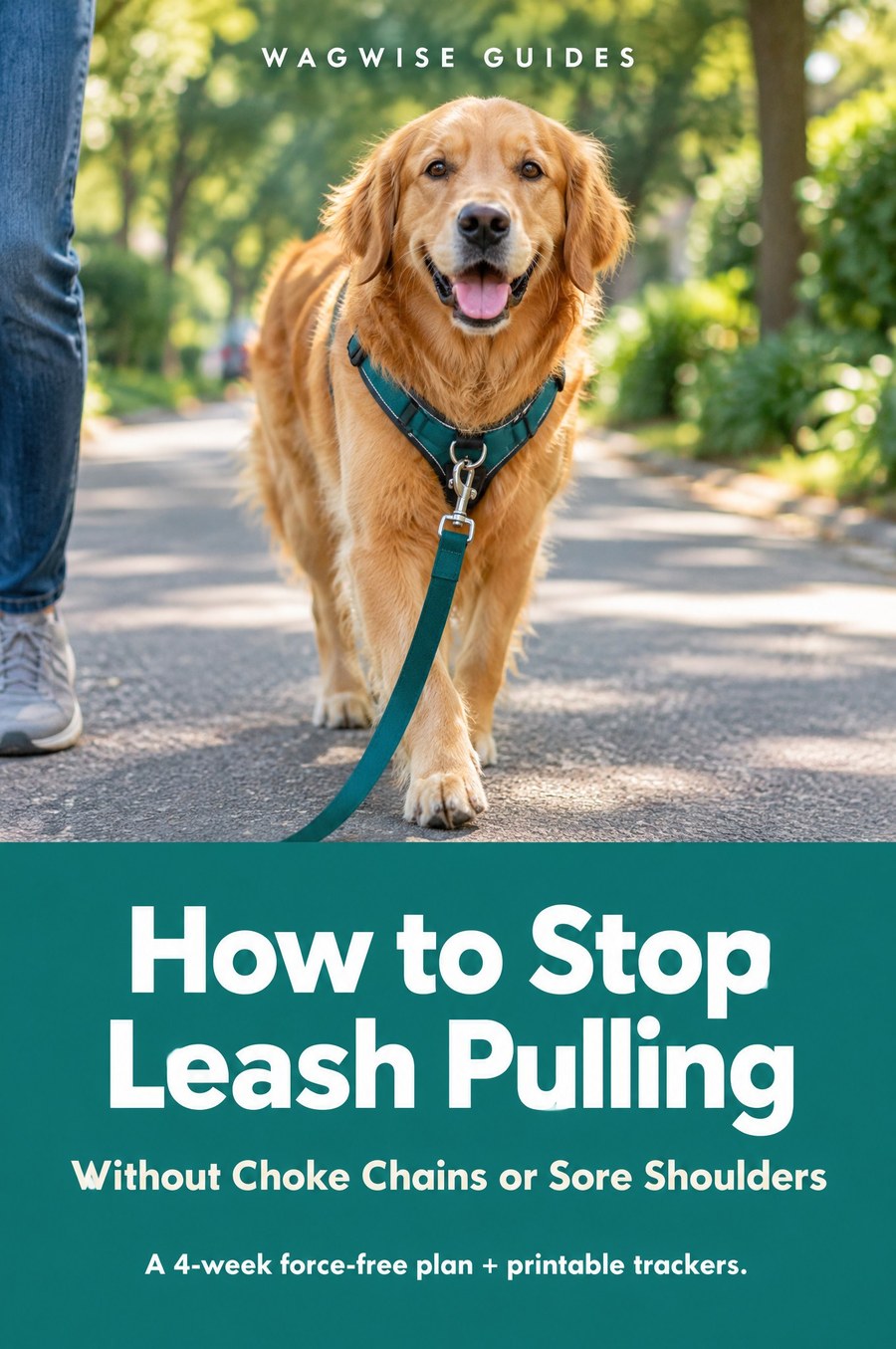
Leash pulling
A 4-Week Leash Walking Plan
Quick answer
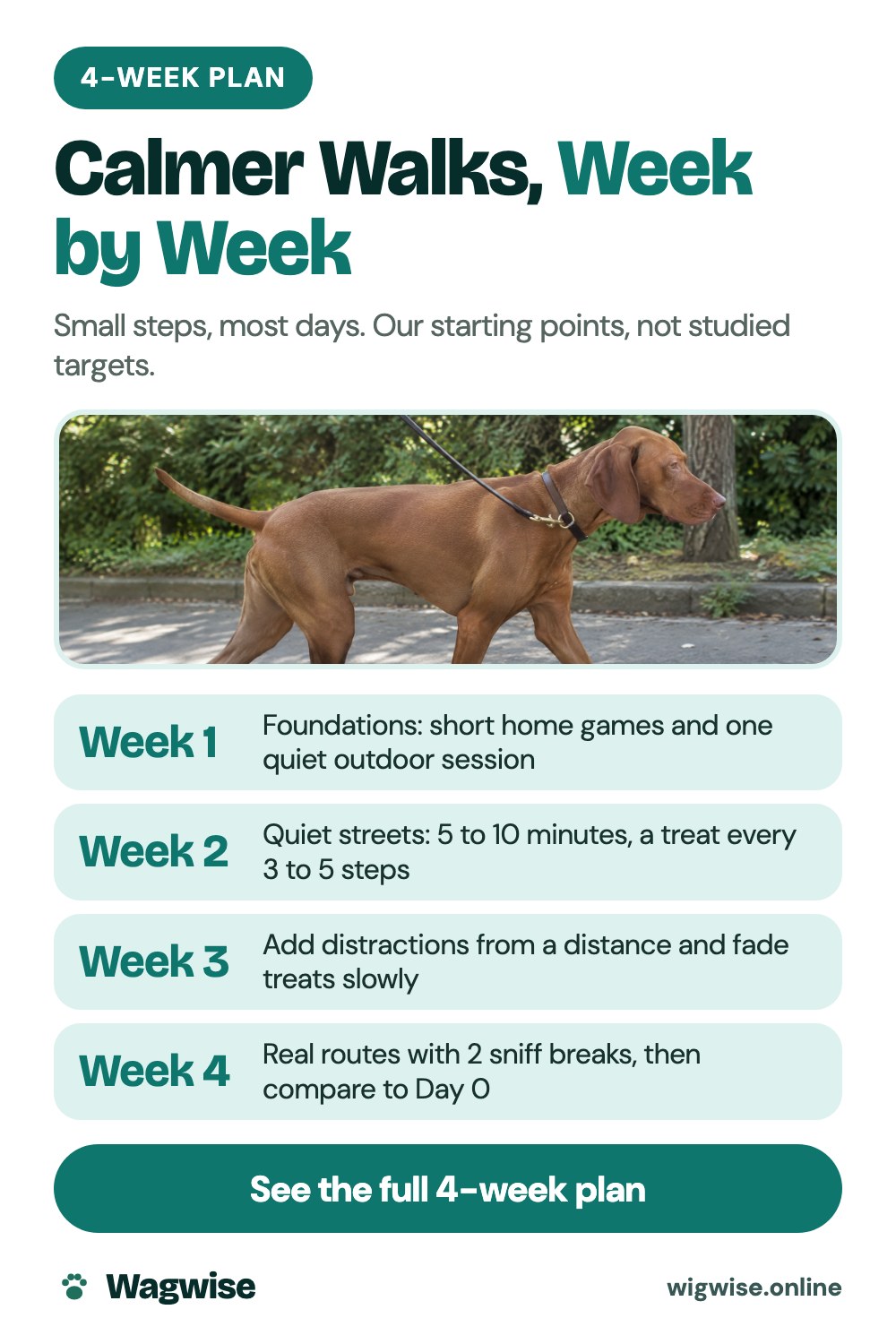
A leash training plan works best in small steps, most days. Spend week 1 on foundation games at home, week 2 on quiet streets, week 3 adding distractions from a distance and week 4 on real routes. The numbers are our starting points, not studied targets, and results vary by dog.
- Take a Day 0 baseline first, so progress is visible.
- Week 1 is foundations, week 2 quiet streets, week 3 distractions, week 4 real routes.
- Move up at 8 good reps out of 10, stay put at 5 to 7 and step back if your dog stops eating or lunges.
- Bad days happen. Drop one level, keep one easy win per walk and carry on.
A good leash training plan is small steps, most days. Start at home, take the skills to quiet streets, add distractions slowly, then practice on real routes. The numbers here are starting points from us, not studied targets, and results vary by dog, history and consistency.
Day 0: take your baseline
Walk the same 5-minute route you usually do and write down how far you got with a loose leash, how many stops you made, the place, and the distraction level (1 is quiet, 3 is busy). It makes your progress visible later.
What does each week look like?
| Week | Focus | What to do |
|---|---|---|
| 1 | Foundations | Three 2 to 3 minute home sessions a day, plus one 5-minute outdoor session in your quietest place |
| 2 | Quiet streets | Red light, green light or reward position for 5 to 10 minutes, a treat every 3 to 5 steps, a sniff release every 10 to 20 feet |
| 3 | Add distractions | Start from a distance, redirect before your dog notices, fade treats gradually |
| 4 | Real routes | One real route a day with 2 planned sniff breaks and one decompression walk |
Other walks in week 1 can stay short, sniffy and relaxed. Your daily minimum is small: 2 to 3 short home games, one training walk, 10 to 20 small treats and one easy win.
When do I move up, stay put or step back?
- 8 of 10 reps are loose: move up one step, such as a longer walk, a busier place or a smaller treat.
- 5 to 7 of 10: stay put and repeat the same level for another day or two.
- Your dog stops eating treats, whines or lunges: step back one level. The place is too hard right now.
What does a good day look like?
By day 3 you might do two 3-minute sessions in the kitchen and one 5-minute session on the driveway, with several stops that you reward. By day 12 you might manage 8 minutes on a quiet street with a treat every 4 steps and one sniff release at the mailbox. These are examples, not targets.
Bad days happen. A squirrel appears, a night goes badly, you try a new place, and your dog forgets everything. Drop one level, keep one easy win per walk and carry on. A bad Tuesday doesn’t undo a good month.
Troubleshooting a leash training plan
| If this happens | Try this |
|---|---|
| Getting worse in week 2 | Common when a habit stops paying. Stay consistent and use better treats. |
| Fine at home, pulling outdoors | The place is too hard. Go back a level and shorten the walk. |
| Won’t take treats outdoors | Too excited or too far from the quiet place. Add distance and try tastier food. |
| One family member still gets pulled | Share the cue cards and agree household rules. |
Everyone who walks your dog should use the same rules: a tight leash means we stop, one marker word, one side, and treats kept in the same place.
If there is little change after 4 weeks of consistent training, book a vet check and then a reward-based trainer. See When to Get a Trainer for Leash Pulling, or follow the whole schedule with the Stop Leash Pulling guide. For the games in week 1, start with Seven Foundation Games to Play at Home.
Frequently asked questions
How long does leash training take?
Loose-leash walking is a skill, not a switch. It takes weeks of practice, and longer on busy streets or for a dog who has pulled for years.
What if my dog gets worse in week 2?
That is common when a habit stops paying. Stay consistent and use better treats.
My dog is fine at home but pulls outdoors. Why?
The place is too hard. Go back a level and shorten the walk.
What if nothing changes after 4 weeks?
See your vet, then a reward-based trainer. No change after 4 weeks of consistent training is our rule of thumb for getting help.
More Wagwise guides for dog owners
 Stop Puppy BitingA gentle 4-week plan to stop the nipping and get through teething.$17 · instant PDFSee the guide →
 Get Rid of Dog Pee SmellRemove urine odor for good, then stop the accidents with a 14-day reset.$17 · instant PDFSee the guide →
 Stop Dog BarkingA quiz finds why your dog barks, then a plan made for that reason.$17 · instant PDFSee the guide →
 Help Your Itchy DogTrack triggers, soothe skin safely and know when to see the vet.$17 · instant PDFSee the guide →
 House-Train Your PuppyA kind 4-week plan with a schedule by age, a night plan and printable trackers.$17 · instant PDFSee the guide →
 Leave Your Dog AloneFilm, sort and build calm alone time with a vet-first plan and a step-by-step ladder.$17 · instant PDFSee the guide →
 Puppy Sleeps Through the NightA realistic, age-by-age plan for calmer nights, without cry-it-out or crate fights.$17 · instant PDFSee the guide →
 Less Dog Hair, Less SmellA 4-week brushing, bath and home routine for a calmer-smelling house.$17 · instant PDFSee the guide →
Want all four? Get the complete library for $49.
Sources
This article is general education, not veterinary advice. It does not replace an examination by your vet or help from a qualified behaviourist.