Leash pulling
When to Get a Trainer for Leash Pulling
Quick answer
Start with your vet when anything is new, sudden or painful. Get a reward-based trainer for leash pulling when the plan stalls, your dog is very strong or you want help with fit. See a qualified behavior professional if your dog lunges, growls or has bitten.
- Vet first for anything new, sudden or painful, such as a cough, limping or skin changes.
- A reward-based trainer helps when the plan has stalled, a dog is very strong or you want help with fit.
- Lunging with growling, any bite or dog-on-dog contact needs your vet, then a qualified behavior professional.
- Walk away from anyone who pushes choke, prong or shock tools.
Knowing when to bring in a trainer for leash pulling can save weeks of frustration. Start with your vet when anything is new, sudden or painful. Use a reward-based trainer when the plan stalls, and a qualified behavior professional when your dog lunges, growls or has bitten. You’re not failing by asking for help.
Who should I call?
| Call | When |
|---|---|
| Your vet | Sudden change in pulling, limping, stiffness or lagging, cough, gagging or noisy breathing, eye redness or squinting, rubbed skin or swelling |
| A reward-based trainer | The plan has stalled, a very strong dog, you want help with fit, teens and busy places |
| A vet behaviorist or qualified behavior professional | Lunging, growling or snapping, any bite or dog-on-dog contact, fear of the leash or going out |
What are the red flags?
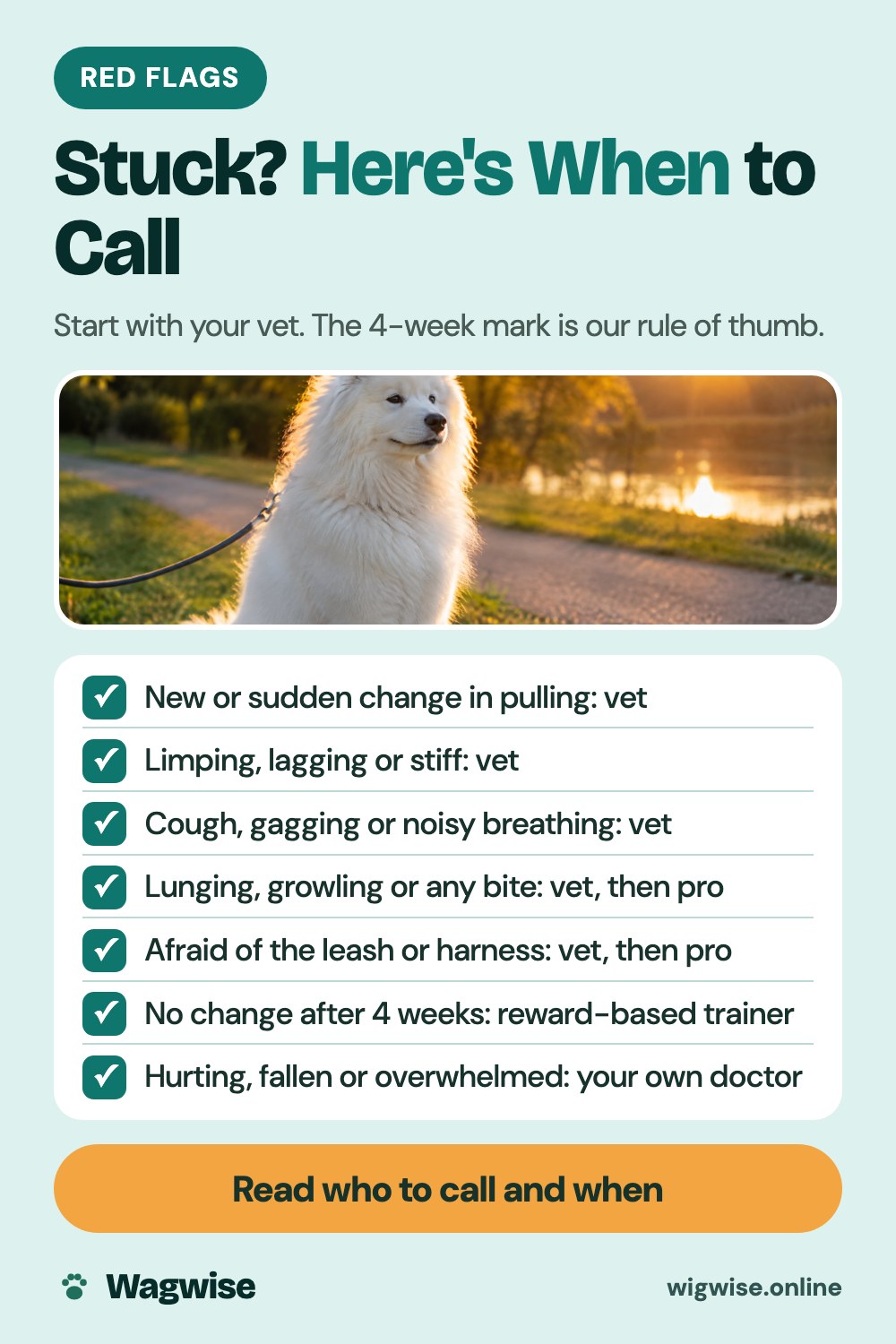
Stop and get help if you see any of these:
- A new or sudden change in pulling, lagging, reluctance or limping: vet.
- Coughing, gagging, wheezing or noisy breathing on the leash: vet.
- Eye redness or squinting after pulling, or raw skin or swelling at the neck, chest or armpits: vet.
- Lunging with growling, barking or snapping, or any bite or dog-on-dog contact: vet, then a behavior professional.
- Your dog is afraid of the leash or harness: vet, then a behavior professional.
- No change after 4 weeks of consistent training (our rule of thumb): a reward-based trainer.
- You’re hurting, have fallen or feel overwhelmed: your own doctor.
When should I get a trainer for leash pulling?
When the plan has stalled. If you’ve done the foundation games, taken the skills to quiet streets and seen no change after 4 weeks of consistent training, book your vet, then a reward-based trainer. Teenagers, very strong dogs and busy places are also good reasons to get hands-on help. A trainer who can see your dog in the gear can also help with fit.
How do I choose a trainer?
When you call around:
- Ask what methods they use and what happens when a dog pulls.
- Look for reward-based, force-free training.
- Ask to watch a class or session first.
- Walk away from anyone who pushes choke, prong or shock tools, or says to “show the dog who’s boss”.
What should I bring to the visit?
Film 30 seconds of your normal walk from the side, including the moment of pulling, lagging, coughing or limping. Bring close-ups of the gear on your dog. Write down when it happens, the time of day, the place and the trigger, any changes in appetite, toileting, activity or sleep, and what you’ve tried so far. The 2-minute check in Pulling or Something Else? gives you the right questions to note.
What can I do while I wait for an appointment?
If a vet visit is pending, keep walks short, easy and low-pressure, and skip the training plan until your vet has seen your dog. A sniff in the yard counts as exercise. If your vet has given the all clear and you are waiting for a trainer, carry on with the home games and keep your stops count going, so the trainer can see what has changed. Never be tempted by quick fixes: a painful tool will not replace a plan.
If you feel overwhelmed: Pulling can wear you down, especially if your shoulders or hands hurt or you’ve had a near fall. Tell your own doctor about pain, falls or balance, and ask a reward-based trainer to help with the dog side. On a bad day, a yard sniff or a scent game is a fine replacement for a walk. Asking for help is part of the plan, not a sign it failed.
If it might be reactivity: If your dog lunges, growls or snaps, read When Pulling Is Really Reactivity and don’t try to train through it. The Stop Leash Pulling guide includes a printable vet sheet to fill in before your visit.
Frequently asked questions
When should I get a trainer for leash pulling?
When the plan has stalled, your dog is very strong, you want help with fit, or you're dealing with teens and busy places. Our rule of thumb is no change after 4 weeks of consistent training.
Should I see the vet or a trainer first?
The vet, if anything is new, sudden or painful. Pain can drive behavior, so rule it out before you train.
How do I choose a trainer?
Ask what methods they use and what happens when a dog pulls. Look for reward-based, force-free training and ask to watch a class or session first.
What should I bring to a vet or trainer visit?
Filmed footage of 30 seconds of your normal walk from the side, your gear, and notes on when and where it happens.
More Wagwise guides for dog owners
 Stop Puppy BitingA gentle 4-week plan to stop the nipping and get through teething.$17 · instant PDFSee the guide →
 Get Rid of Dog Pee SmellRemove urine odor for good, then stop the accidents with a 14-day reset.$17 · instant PDFSee the guide →
 Stop Dog BarkingA quiz finds why your dog barks, then a plan made for that reason.$17 · instant PDFSee the guide →
 Help Your Itchy DogTrack triggers, soothe skin safely and know when to see the vet.$17 · instant PDFSee the guide →
 House-Train Your PuppyA kind 4-week plan with a schedule by age, a night plan and printable trackers.$17 · instant PDFSee the guide →
 Leave Your Dog AloneFilm, sort and build calm alone time with a vet-first plan and a step-by-step ladder.$17 · instant PDFSee the guide →
 Puppy Sleeps Through the NightA realistic, age-by-age plan for calmer nights, without cry-it-out or crate fights.$17 · instant PDFSee the guide →
 Less Dog Hair, Less SmellA 4-week brushing, bath and home routine for a calmer-smelling house.$17 · instant PDFSee the guide →
Want all four? Get the complete library for $49.
Sources
This article is general education, not veterinary advice. It does not replace an examination by your vet or help from a qualified behaviourist.