
House-training
A Calm 4-Week Potty Training Plan
Quick answer
A puppy potty training plan can run in four calm weeks: set up and measure, find the pattern, stretch the gaps, then consolidate. The week targets are our suggestions. The real finish line is weeks with no accidents, which usually takes longer, and experts differ on how long.
- Four weeks builds a routine you can keep. It does not promise a finished puppy.
- Experts differ: one says 1 to 2 months for most owners, another says 4 to 6 months is typical.
- A veterinary behaviorist's benchmark for house-trained is 8 weeks or more with no accidents.
- Not meeting a week's target is fine. Repeat the week.
A puppy potty training plan helps because it turns a vague goal into four calm weeks. This is our suggestion, not a clinical standard. The real finish line is weeks with no accidents, and that usually takes longer than four weeks.
How long does house-training take?
Experts differ, so we promise no deadline.
| Source | Time |
|---|---|
| A veterinary behaviorist, for most owners with good guidance | 1 to 2 months |
| An animal-welfare charity, typical | 4 to 6 months |
| Dogs with long histories of soiling | Several months of careful management |
Judge progress by clean weeks, not days. One veterinary behaviorist’s benchmark for house-trained is no accidents for 8 weeks or more, in different rooms, with guests, and when you are out.
What does each week look like?
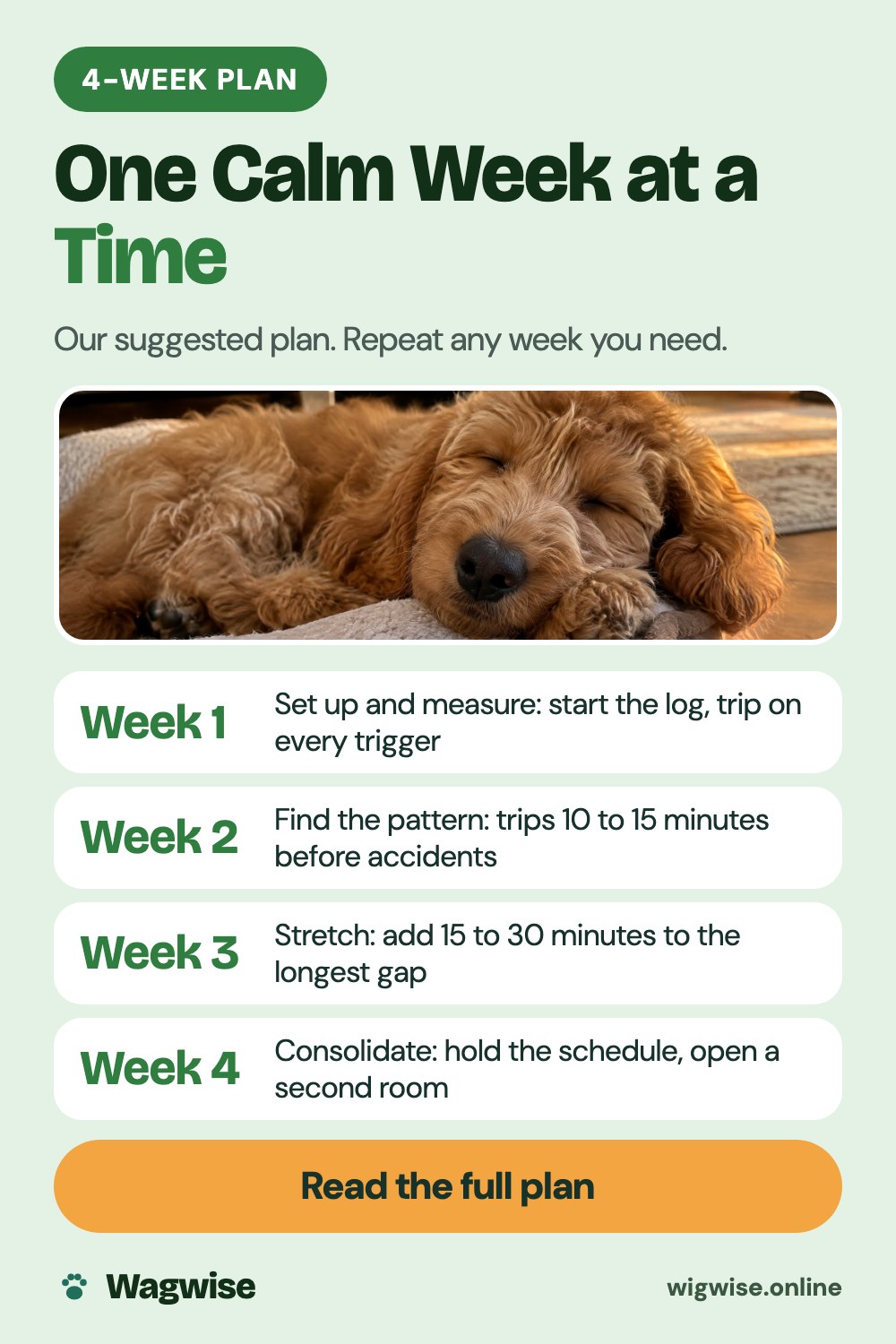
Week 1: set up and measure. Book the health check if needed. Start the log. Go out on every trigger. Introduce the crate or pen. Start the night plan. Move on when the log is complete for 3 days.
Week 2: find the pattern. Read the log. Set trips 10 to 15 minutes before typical accident times. Start the cue word at the moment of going. Move on at fewer than 1 accident a day.
Week 3: stretch. Add 15 to 30 minutes to the longest gap. Allow supervised free time after a trip. Open one more room. Move on after 3 accident-free days.
Week 4: consolidate. Hold the schedule. Open a second room. Practice away from home. Keep rewarding. Move on after 7 days with no accidents.
After: maintain. Keep the routine. Extend freedom slowly. Reduce trips gradually. Aim for 8 weeks with none.
How often should we go out each week?
Always go out on the six triggers. Between triggers, use the age table as a starting point and let the log decide when to stretch:
- 8 to 12 weeks: about every 45 to 60 minutes
- 3 to 4 months: every 1.5 to 2 hours
- 4 to 6 months: every 2 to 3 hours
- 6 months and up: every 3 to 4 hours
These are our suggested starting points, not a rule. If accidents happen, go out sooner. Sources differ on how often, so ask your vet if you are not sure.
What is the daily minimum?
On any day, however messy, these five things count:
- Every trigger gets a trip
- Every trip is logged
- Every minute is eyes-on or confined
- Every success is rewarded
- Every accident is answered calmly
If you do only these, you are on track. A calm response to a puddle matters more than a perfect schedule.
What if my puppy misses the target?
Not meeting a target is fine. Repeat the week. If one accident happens, step back one stage, not to day one. Ask three questions: Was my puppy watched? Was a trip overdue? Too much space, too soon? The freedom ladder shows how to give rooms back, and the 3-day potty log is the tool that makes week 2 work.
When should I ask for help?
Some accidents are a training gap. Some are a health problem. Blood in the urine, straining, drinking much more, tiredness or sudden-onset accidents mean a vet visit, not a tighter schedule. Several accidents in a row with no clear reason call for a vet visit this week. If the accidents happen only when your puppy is left alone and they seem distressed, ask about a qualified behavior professional. Walk away from anyone who recommends punishment, shock, spray, prong or choke tools, or promises results in days.
The House-Train Your Puppy guide includes the plan, a daily planner and the printables. Ask your vet what is reasonable for your puppy’s age and breed.
Frequently asked questions
How long does it take to potty train a puppy?
Experts differ. One veterinary behaviorist says most owners house-train within 1 to 2 months, while an animal-welfare charity says 4 to 6 months is typical. Plan for weeks to months and go at your puppy's pace.
When is a puppy house-trained?
One veterinary behaviorist's benchmark is no accidents for 8 weeks or more, in different rooms, with guests, and when you are out.
What if my puppy is not meeting the targets?
That is fine. The week lengths and move-on targets are our suggestions, not a clinical standard. Repeat the week.
What is the daily minimum?
Every trigger gets a trip, every trip is logged, every minute is eyes-on or confined, every success is rewarded and every accident is answered calmly.
More Wagwise guides for dog owners
 Stop Puppy BitingA gentle 4-week plan to stop the nipping and get through teething.$17 · instant PDFSee the guide →
 Get Rid of Dog Pee SmellRemove urine odor for good, then stop the accidents with a 14-day reset.$17 · instant PDFSee the guide →
 Stop Dog BarkingA quiz finds why your dog barks, then a plan made for that reason.$17 · instant PDFSee the guide →
 Help Your Itchy DogTrack triggers, soothe skin safely and know when to see the vet.$17 · instant PDFSee the guide →
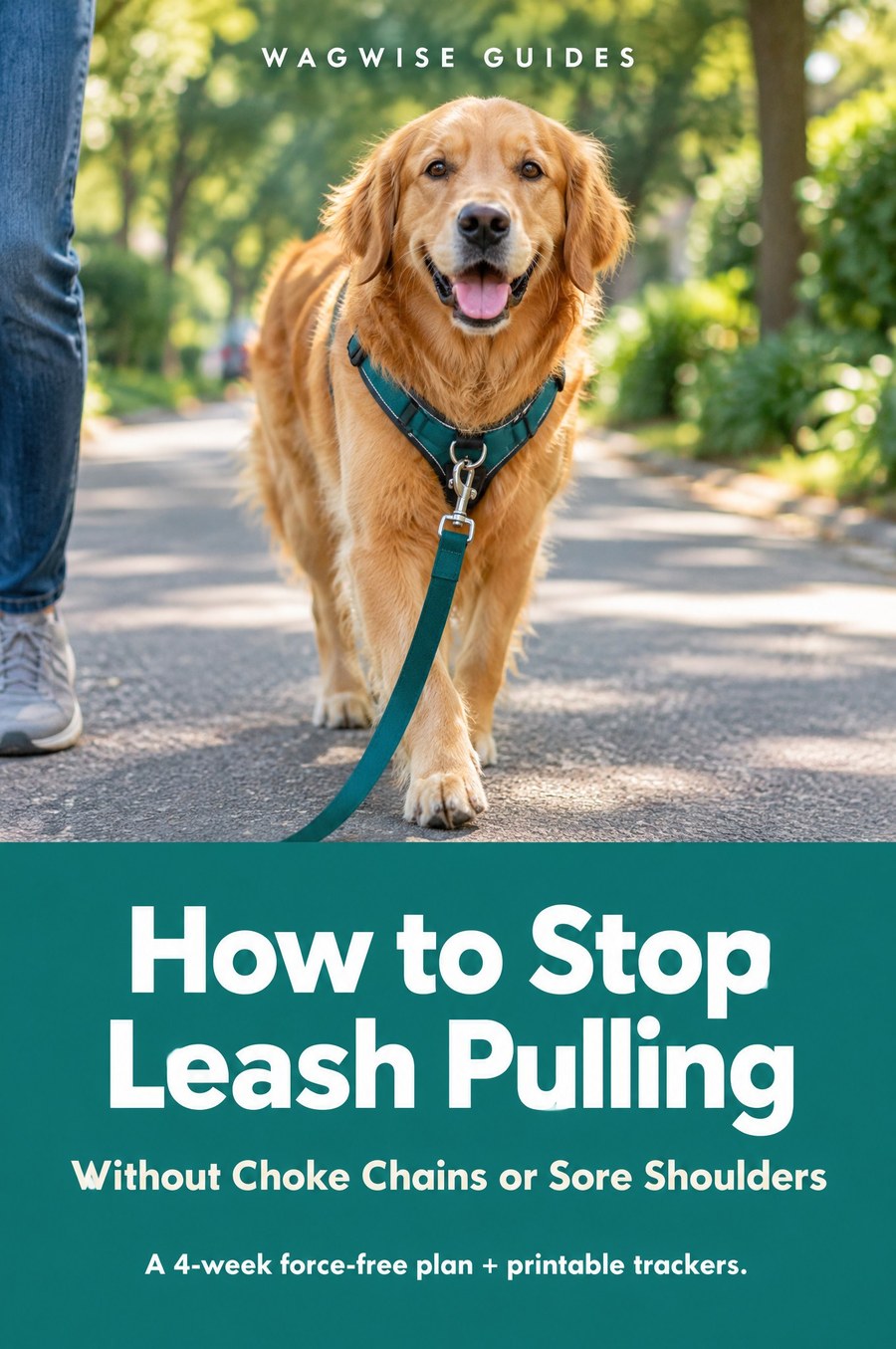 Stop Leash PullingA 4-week force-free plan for calmer walks and a loose leash.$17 · instant PDFSee the guide →
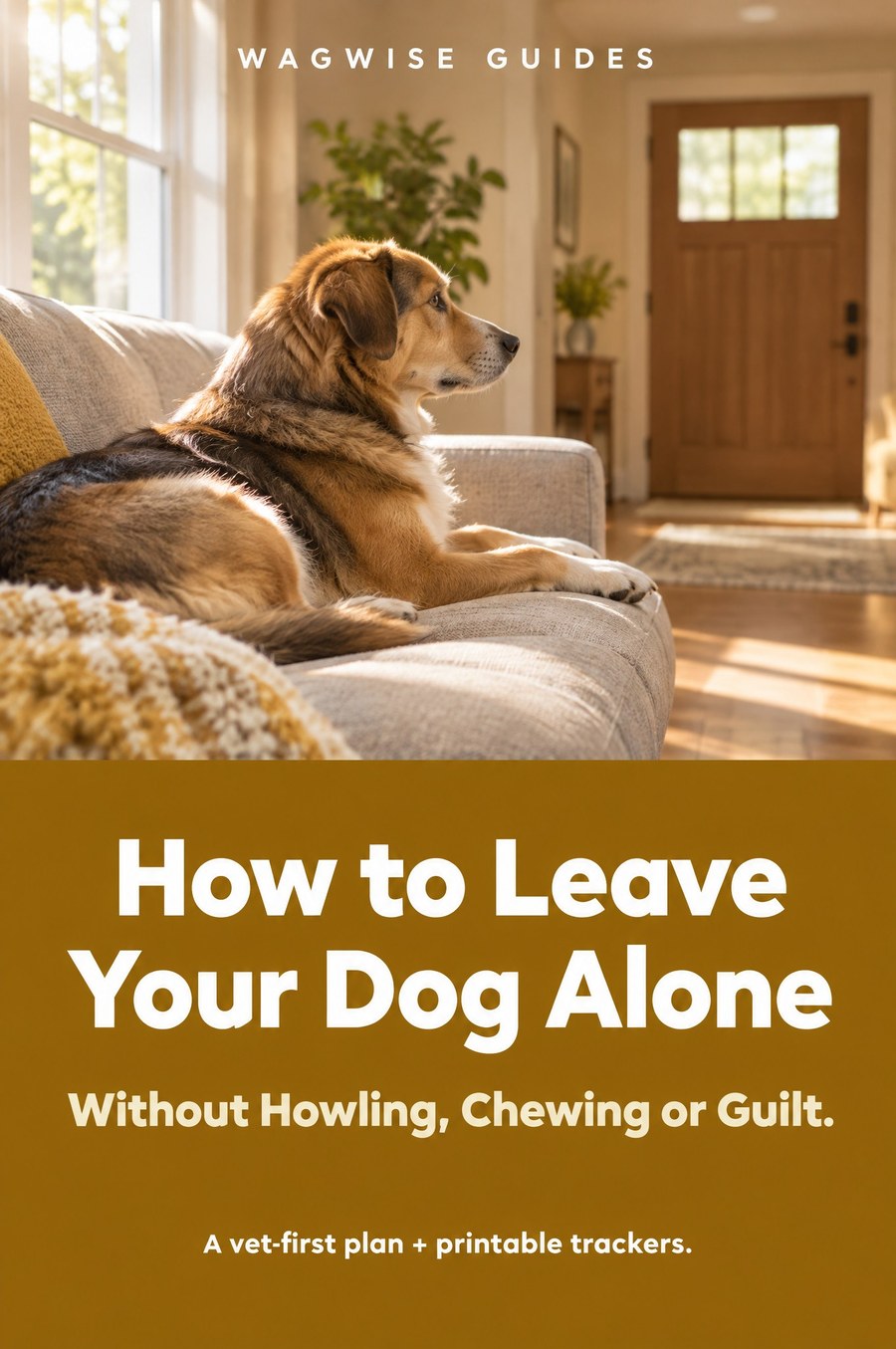 Leave Your Dog AloneFilm, sort and build calm alone time with a vet-first plan and a step-by-step ladder.$17 · instant PDFSee the guide →
 Puppy Sleeps Through the NightA realistic, age-by-age plan for calmer nights, without cry-it-out or crate fights.$17 · instant PDFSee the guide →
 Less Dog Hair, Less SmellA 4-week brushing, bath and home routine for a calmer-smelling house.$17 · instant PDFSee the guide →
Want all four? Get the complete library for $49.
Sources
This article is general education, not veterinary advice. It does not replace an examination by your vet or help from a qualified behaviourist.