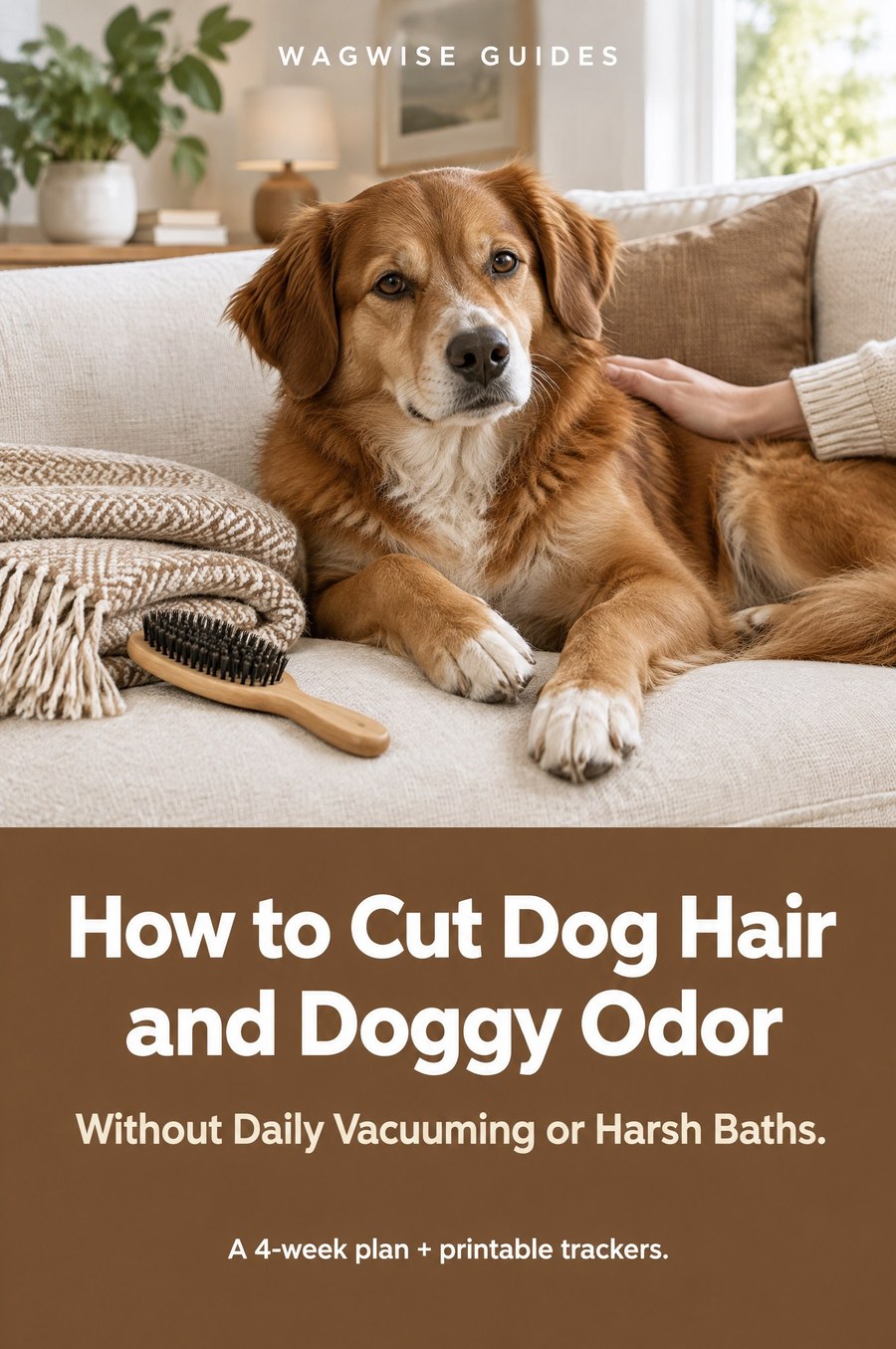
Shedding and smell
A Dog Bath Routine for Smell, Without Over-Bathing
Quick answer
A good dog bath routine is brush first, use lukewarm water and dog shampoo, rinse twice and towel dry thoroughly. Experts differ on how often to bathe, so wash when your dog is dirty or smelly and ask your vet or groomer. A smell that returns within days needs a nose check, not another bath.
- Bathe when your dog is dirty or smelly, and use dog shampoo, not human shampoo or dish soap.
- Experts differ on how often to bathe, so there is no single right number.
- Rinse well and dry thoroughly, including skin folds and between the toes.
- Skip the bath and call your vet for a hot spot, open wound or smelly ear.
A calm dog bath routine can freshen a dog without stripping the coat. Brush first, use dog shampoo and lukewarm water, rinse twice and dry thoroughly. The tricky part is how often, because the experts don’t agree.
How often to follow a dog bath routine? Experts differ
| Source | What it says |
|---|---|
| ASPCA | At least every three months; more often for dogs outdoors a lot or with skin problems |
| AKC groomer | Only when dirty or smelly, because over-bathing strips natural oils |
| WSU vet school | Generally safe weekly with a veterinary shampoo; too often can strip protective oils |
| PDSA | Use a special dog shampoo; check with your vet first if your dog has sensitive skin |
Our own starting point, which is not from a source: bathe when your dog is dirty or smelly, and begin by spacing baths at least three to four weeks apart. Want to bathe more often, or does the smell keep coming back? Ask your vet or groomer first. If your dog has a skin condition, follow your vet’s schedule. Your vet’s number beats any chart.
Dog shampoo, not human shampoo
Human shampoo is not typically toxic, but it may contain fragrances or other things that irritate. Dish soap and human shampoo can strip natural oils. Dog and human skin differ, so use a shampoo made for dogs.
Medicated shampoos are for your vet to choose. For seborrhea, the Merck manual says never to use a shampoo made for people without your vet’s consent.
The eight-step maintenance bath
Use this for a healthy coat. For skin conditions, follow your vet’s plan.
- Brush first. Comb long coats, because wet fur mats more.
- Set up. Non-slip mat, towels, dog shampoo and treats within reach.
- Use lukewarm water. It should feel comfortable on the inside of your wrist.
- Shampoo. Keep it out of the eyes and ears.
- Rinse, then rinse again. Leftover shampoo can irritate.
- Towel dry thoroughly. Dry skin folds and between the toes.
- Keep warm in a draft-free room until fully dry.
- Treat and calm. End on something your dog enjoys.
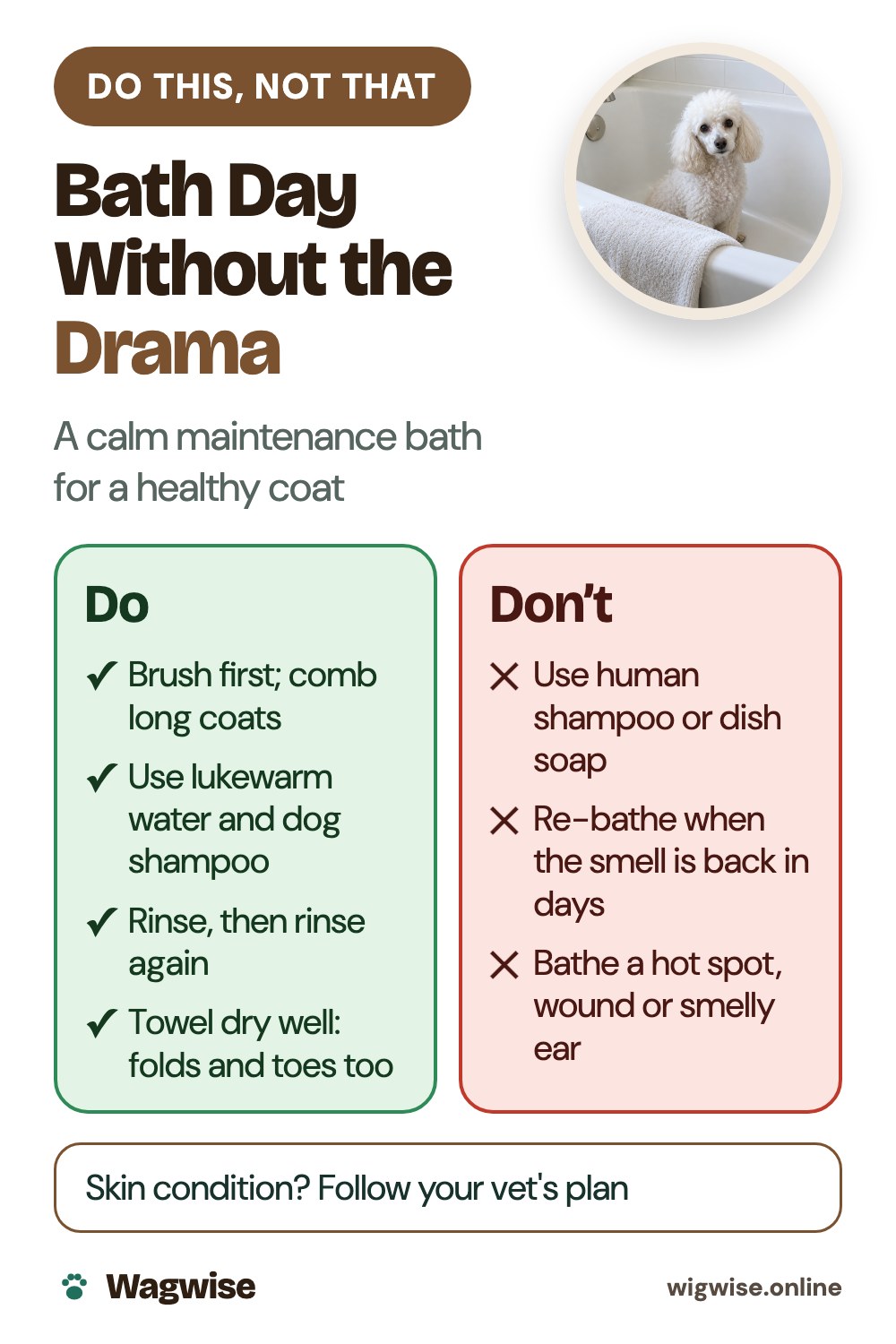
The water temperature and set-up details are our advice, not from a cited source. Ask your groomer or vet whether cotton in the ears before a bath suits your dog.
When to skip the bath
A hot spot, an open wound or a smelly ear means no bath. Call your vet instead. If the smell returns within days of a bath, it points to skin, ears or mouth, not to a dirty coat. The dog smell nose check shows where to look first. After muddy walks, a damp cloth on paws and belly and a dry towel often save a full bath, and a dry brush between baths helps too.
What if my dog is scared of the bath?
Use the same small-step approach as for brushing. Each step ends with a treat, and you go back a step if your dog worries. These bath steps are our extension of the Dogs Trust handling method.
- Sit by the tub. Treats on the floor, no water.
- Paws on the mat. A treat on the dry tub mat, then step out.
- A little water. A trickle on the feet, then a treat.
- More water. Wet the legs, then a treat.
- Whole body. One quick wet-down, then out.
- The full bath, with treats throughout.
A lick mat can keep a dog busy, but check the label for xylitol (also called birch sugar), which is toxic to dogs, and never use peanut butter without checking it.
Frequently asked questions
How often should you bathe a dog?
Experts differ. ASPCA says at least every three months, an AKC groomer says only when dirty or smelly, and a veterinary school says weekly can be safe with a veterinary shampoo. Ask your vet or groomer what suits your dog.
Can you over-bathe a dog?
Bathing too often can strip protective oils, according to a groomer quoted by the AKC and a veterinary school. If the smell keeps coming back, do the nose check before another bath.
Can I use human shampoo on my dog?
Human shampoo is not typically toxic, but it can contain fragrances or other things that irritate, and dish soap or human shampoo can strip natural oils. Use a dog shampoo. For medicated needs, your vet chooses the shampoo.
Should I use a hair dryer?
We found no veterinary source on dryers, so we give no settings. Towel drying is enough for most dogs. If you want to use a dryer, ask your groomer first.
More Wagwise guides for dog owners
 Stop Puppy BitingA gentle 4-week plan to stop the nipping and get through teething.$17 · instant PDFSee the guide →
 Get Rid of Dog Pee SmellRemove urine odor for good, then stop the accidents with a 14-day reset.$17 · instant PDFSee the guide →
 Stop Dog BarkingA quiz finds why your dog barks, then a plan made for that reason.$17 · instant PDFSee the guide →
 Help Your Itchy DogTrack triggers, soothe skin safely and know when to see the vet.$17 · instant PDFSee the guide →
 House-Train Your PuppyA kind 4-week plan with a schedule by age, a night plan and printable trackers.$17 · instant PDFSee the guide →
 Stop Leash PullingA 4-week force-free plan for calmer walks and a loose leash.$17 · instant PDFSee the guide →
 Leave Your Dog AloneFilm, sort and build calm alone time with a vet-first plan and a step-by-step ladder.$17 · instant PDFSee the guide →
 Puppy Sleeps Through the NightA realistic, age-by-age plan for calmer nights, without cry-it-out or crate fights.$17 · instant PDFSee the guide →
Want all four? Get the complete library for $49.
Sources
This article is general education, not veterinary advice. It does not replace an examination by your vet or help from a qualified behaviourist.