Shedding and smell
The Dog Smell Detective: Bath or Vet?
Quick answer
A dog smell is not always a coat smell. Sniff in the same order every time: coat, ears, breath, rear end, paws, then bedding. A mild smell that clears after a bath is normal. A greasy sour coat or a smell from the ears, mouth or rear end is a reason to call your vet, not to bathe again.
- Do the nose check before you bathe. A bath doesn't answer a medical question.
- Sniff in the same order each time and write down what you find.
- Ears, mouth, rear end and a greasy sour coat go to the vet.
- Never cover a smell with sprays or perfume, because that can hide a sign.
A dog smell is not always a coat smell, so a bath is not always the answer. Before you reach for the shampoo, play detective: sniff in the same order every time and let the result tell you whether to wash, wait or call the vet.
The dog smell nose check, in order
Do it on a day when your dog hasn’t been bathed for a week, and keep the mood calm and unhurried. Your dog should enjoy this part.
- Coat: shoulders, belly and any skin folds.
- Ears: sniff the opening and look for discharge.
- Breath: notice it when your dog yawns or pants.
- Rear end: a quick sniff while brushing.
- Paws: between the toes.
- Bedding: the dog’s bed and blankets.
Write what you find in a simple log with the day, the zone and what you noticed. It turns “my dog smells” into something you can show a vet.
Why does my dog smell? What each zone is telling you
| Zone | Usually fine | Book the vet |
|---|---|---|
| Coat and skin | A mild doggy smell that clears after a bath | A greasy coat with a sour smell, a pungent smell with red patches, or scaly, crusted skin |
| Ears | Clean, pale ears with little or no smell | Head shaking, a foul smell or discharge |
| Mouth | Breath you barely notice | Any change in breath |
| Rear end | A brief fishy smell when scared | A regular fishy smell, scooting, licking or straining |
| Paws and other places | A muddy-paw smell that goes with a wipe | A fishy or foul smell from the genital area or with urine |
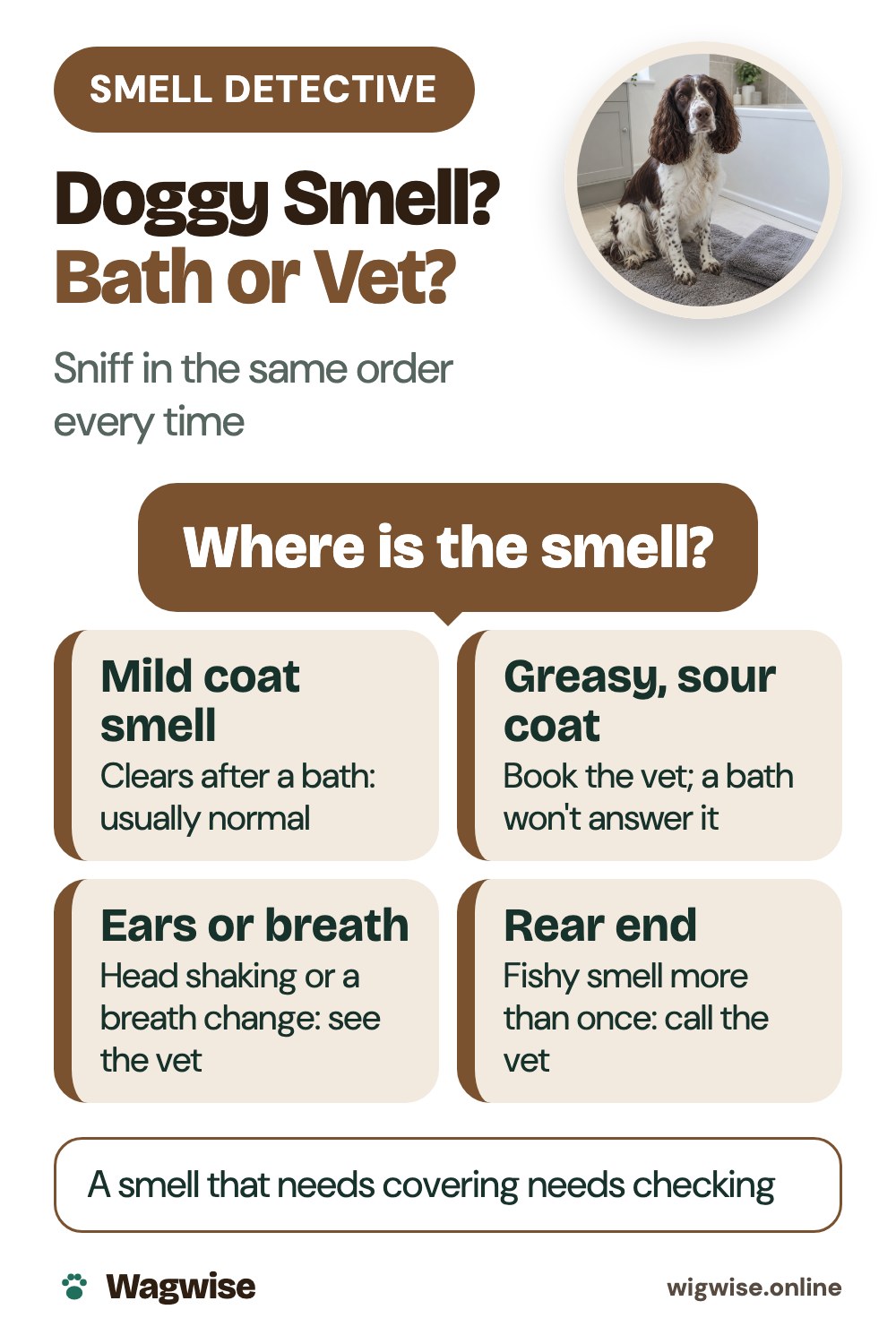
Bacterial skin infection often smells pungent, and yeast overgrowth may give a greasy coat and a sour smell. Excess greasiness and scale are a vet matter, and a medicated shampoo is the vet’s choice, never a guess from home.
When to call the vet instead of running a bath
If any zone lands in the vet column, book once and bring your notes. If two or more zones look off, don’t wait for the next bath. A bath doesn’t answer any of these questions.
Two safety notes from the sources:
- Ears: don’t use cotton swabs, powders, home mixtures or vinegar. Use only a cleaner your vet recommends.
- Rear end: never squeeze the anal glands yourself. PDSA says never to empty them unless your vet has shown you how, because doing it wrongly can cause trauma and damage the duct.
Is it the dog, or the stuff around the dog?
If the nose check finds nothing, sniff the things that touch your dog before you blame the coat. A bed or blanket that hasn’t been washed this week, towels and throws that stay damp, the car seat, muddy paws after walks, a recent roll in something smelly, and skin folds that stay damp are all worth a sniff. Dogs with loose or wrinkled skin need the folds dried completely after baths and wet walks.
What to do after the check
Fix what is simple: wash the bed, dry the folds, wipe the paws. Book the vet for anything in the vet column. Only then decide on a bath, and keep it a maintenance bath, not a reflex. Don’t cover a smell with scented sprays or perfume. Covering it can hide a medical sign.
A sample week of notes
A log doesn’t need to be fancy. A few lines like these are enough to show a pattern:
- Monday, coat: mild doggy smell on the shoulders. Brushed.
- Thursday, ears: right ear smells sour and your dog is shaking their head. Call the vet.
- Saturday, bedding: bed smells musty. Washed it.
- Tuesday, rear end: fishy smell again and scooting on the rug. Call the vet.
Notes like these give your vet a clear starting point.
Frequently asked questions
Why does my dog smell even after a bath?
A smell that returns within days of a bath points to skin, ears or mouth, not a dirty coat. Do the nose check before you bathe again, and book your vet if any zone is off.
What does a dog ear infection smell like?
Head shaking, a foul smell and discharge are key signs of an ear problem. See your vet, and don't use cotton swabs, powders, home mixtures or vinegar in the ears.
Is a fishy smell from my dog normal?
A brief fishy smell when a dog is scared can happen, because stress can release anal sac fluid. A regular fishy smell, scooting, licking at the rear or straining needs your vet.
Can I cover a dog smell with a spray?
We don't recommend it. Covering a smell can hide a medical sign. If a smell needs covering, it needs the nose check first.
More Wagwise guides for dog owners
 Stop Puppy BitingA gentle 4-week plan to stop the nipping and get through teething.$17 · instant PDFSee the guide →
 Get Rid of Dog Pee SmellRemove urine odor for good, then stop the accidents with a 14-day reset.$17 · instant PDFSee the guide →
 Stop Dog BarkingA quiz finds why your dog barks, then a plan made for that reason.$17 · instant PDFSee the guide →
 Help Your Itchy DogTrack triggers, soothe skin safely and know when to see the vet.$17 · instant PDFSee the guide →
 House-Train Your PuppyA kind 4-week plan with a schedule by age, a night plan and printable trackers.$17 · instant PDFSee the guide →
 Stop Leash PullingA 4-week force-free plan for calmer walks and a loose leash.$17 · instant PDFSee the guide →
 Leave Your Dog AloneFilm, sort and build calm alone time with a vet-first plan and a step-by-step ladder.$17 · instant PDFSee the guide →
 Puppy Sleeps Through the NightA realistic, age-by-age plan for calmer nights, without cry-it-out or crate fights.$17 · instant PDFSee the guide →
Want all four? Get the complete library for $49.
Sources
This article is general education, not veterinary advice. It does not replace an examination by your vet or help from a qualified behaviourist.