
Puppy sleep
Day Sleep, Alone Time and the 4-Week Plan
Quick answer
Puppy day sleep matters for night sleep: young puppies sleep about 16 to 20 hours a day, and an overtired puppy is harder to settle. Add tiny alone-time practice by day, then follow a simple 4-week plan and judge it by fewer, shorter wake-ups.
- Young puppies sleep about 16 to 20 hours a day, and overtired puppies are harder to settle.
- Do not try to wear your puppy out. Short, targeted play beats long, strenuous sessions.
- Teach alone time in tiny steps by day and step back if your puppy struggles.
- In the 4-week plan, wins are fewer wake-ups and shorter crying, not a particular number of hours.
Puppy day sleep is part of the night plan. Young puppies sleep about 16 to 20 hours a day, and an overtired puppy is harder to settle. So good nights start with good days.
Why does puppy day sleep matter for nights?
A full day of walks, play and short training sessions, with naps in between, helps your puppy be tired at night. But do not try to “wear the puppy out.” Short, targeted play beats long, strenuous sessions for a growing puppy. For the nap and play pattern, use the free puppy nap schedule.
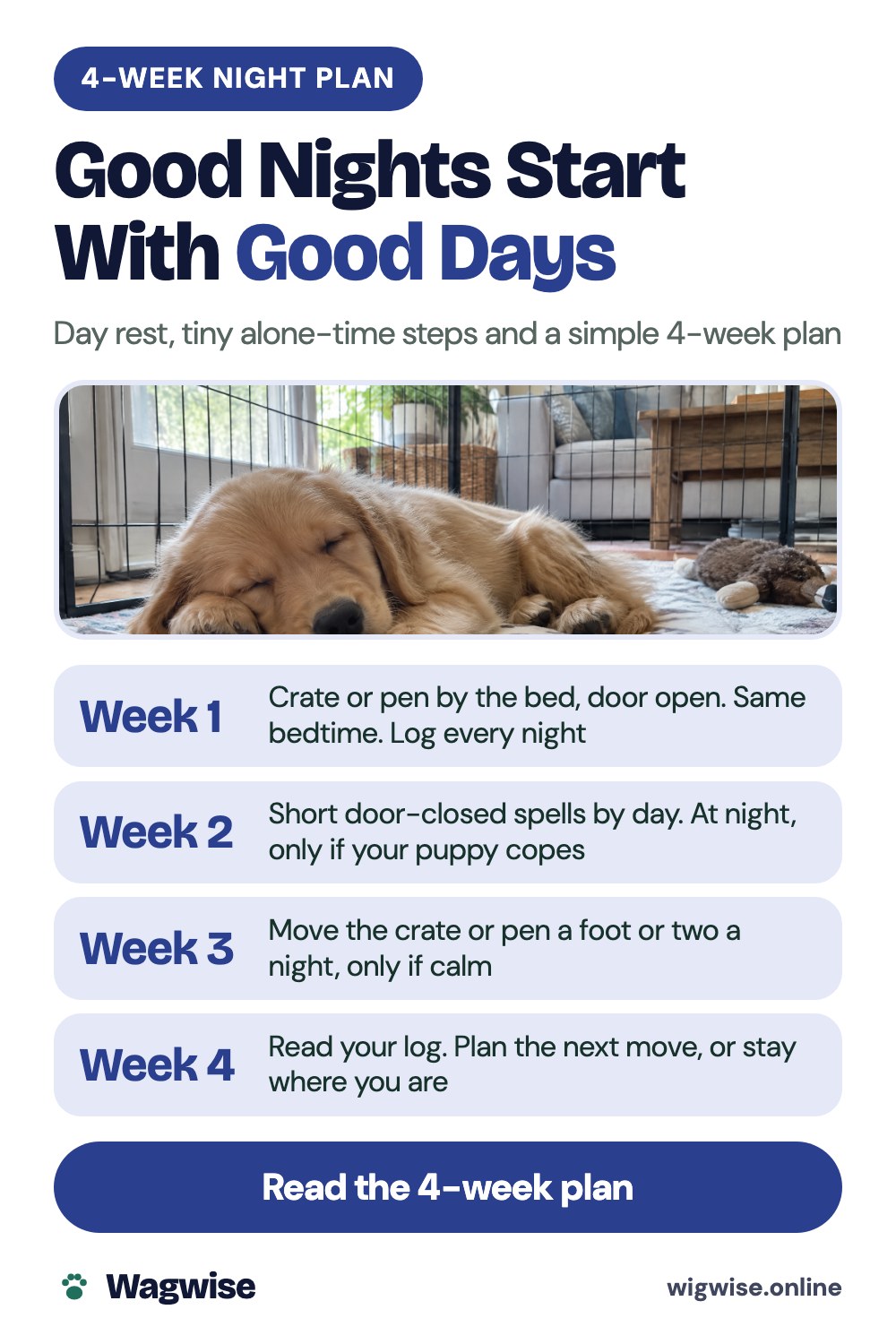
How do I teach a puppy to be alone, gently?
The best time to teach a dog to be relaxed when left is as a puppy. Start with a few minutes and add time only when your puppy is relaxed. Puppies often need company and support for the first few days or weeks.
- Seconds first. Step out of sight for a moment, then come back before your puppy worries.
- Settle practice. A chew, a calm cue, a barrier, then lengthen and vary the waits.
- Step back if they struggle. Go back to the last length of time that felt easy.
Signs your puppy is settling: relaxed body language, normal appetite, playing and resting comfortably, and anticipating routines.
What does the 4-week night plan look like?
Wins in this plan are fewer wake-ups, shorter crying and a faster return to sleep, not a specific number of hours.
| Week | Focus | What to do |
|---|---|---|
| 1 | Settle and routine | Crate or pen beside the bed, door open. Same bedtime and six steps. Log every night. |
| 2 | Add a little more | Door closed for short periods by day. If your puppy copes, try the door closed at night with you close. If not, keep it open. |
| 3 | Start to move | Move the crate or pen a foot or two per night, only if your puppy is calm. Stay put if they struggle. |
| 4 | Review and choose | Read your log. Plan the next move, or stay where you are. |
What if nothing improves?
Worse in week 2 is common after a change, so go back a step. Still lots of wake-ups? Check the bedtime, the last meal and the age chart. If crying is not easing after a few weeks, call your vet first.
What about going back to work?
Plan it before day 1. Ask your vet how long a puppy of your puppy’s age can be left, and do not promise yourself a number. This is not a separation-anxiety plan. If your puppy panics when left, ask your vet.
How does day sleep link to what happens at night?
Overtired puppies behave worse and are harder to settle, so guide your puppy to rest before they get overtired. A well-rested puppy settles more easily at night. Evening zoomies usually mean a tired puppy, not an energetic one, and a calm wind-down handles that better than another game.
At night, in the first weeks, you stay close. That is different from nap time, when you may walk away calmly from a wound-up puppy. Both fit together: naps teach rest, and nights teach that you are nearby and safe. Count how many hours your puppy slept in the day, and look at the nap pattern again tomorrow.
How do I read my log like a coach?
Fewer wake-ups, even one fewer, is progress. Minutes of crying matter more than hours. A quick settle after a toilet trip is a win. A bad night after two good ones does not erase the progress. To build a log, read Puppy Night Log.
Frequently asked questions
How many hours should a puppy sleep in a day?
Sources give about 16 to 20 hours a day for a young puppy, in short blocks.
Should I wear my puppy out to help them sleep?
No. Too much strenuous exercise can harm growing puppies. A full day of walks, play and short training sessions with naps in between helps your puppy be tired at night.
When should I start teaching alone time?
RSPCA UK suggests starting short periods alone from 8 to 12 weeks. Start with a few minutes and add time only when your puppy is relaxed.
What if my puppy gets worse in week 2?
That is common after a change. Go back a step.
More Wagwise guides for dog owners
 Stop Puppy BitingA gentle 4-week plan to stop the nipping and get through teething.$17 · instant PDFSee the guide →
 Get Rid of Dog Pee SmellRemove urine odor for good, then stop the accidents with a 14-day reset.$17 · instant PDFSee the guide →
 Stop Dog BarkingA quiz finds why your dog barks, then a plan made for that reason.$17 · instant PDFSee the guide →
 Help Your Itchy DogTrack triggers, soothe skin safely and know when to see the vet.$17 · instant PDFSee the guide →
 House-Train Your PuppyA kind 4-week plan with a schedule by age, a night plan and printable trackers.$17 · instant PDFSee the guide →
 Stop Leash PullingA 4-week force-free plan for calmer walks and a loose leash.$17 · instant PDFSee the guide →
 Leave Your Dog AloneFilm, sort and build calm alone time with a vet-first plan and a step-by-step ladder.$17 · instant PDFSee the guide →
 Less Dog Hair, Less SmellA 4-week brushing, bath and home routine for a calmer-smelling house.$17 · instant PDFSee the guide →
Want all four? Get the complete library for $49.
Sources
This article is general education, not veterinary advice. It does not replace an examination by your vet or help from a qualified behaviourist.