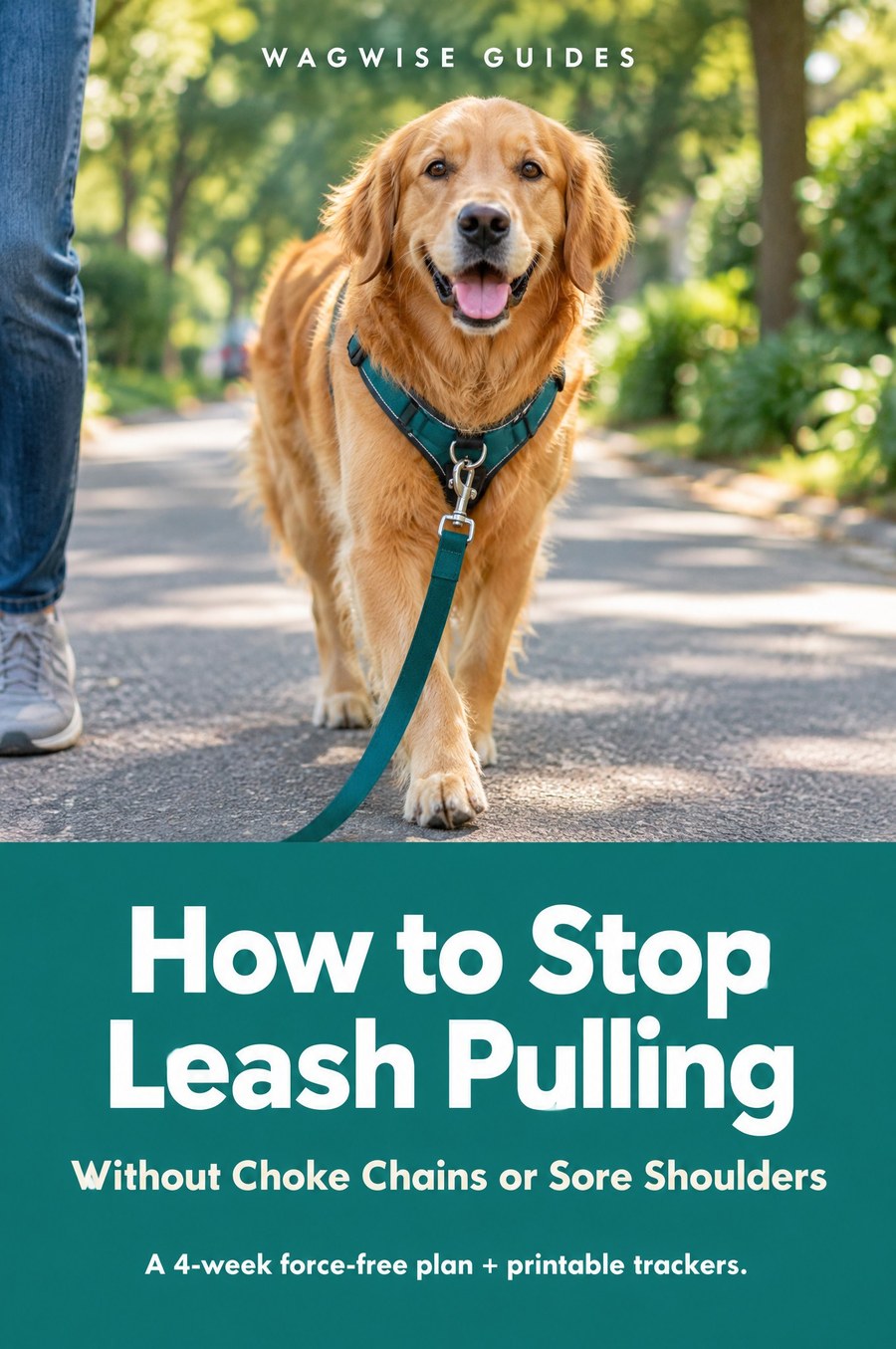
Leash pulling
Leash Gear That Helps and Gear to Skip
Quick answer
A harness for dogs that pull should be comfortable and well fitted, but gear manages pulling and training changes it. Experts disagree on harness designs, so we don't name a best one. Ask a trainer or the shop to check the fit, and skip choke, prong, shock and retractable gear.
- Gear manages pulling. Training changes it.
- A well-fitted harness or flat collar should leave two fingers of room and never cause pain.
- Experts differ on harness design, so have a reward-based trainer or the shop check the fit on your dog.
- Skip choke, prong, shock, vibration and spray gear, retractable leashes and leash jerks.
The right harness for dogs that pull is one that fits well and never causes pain, but no gear teaches loose-leash walking on its own. Gear manages pulling. Training changes it. Be wary of anyone who says one harness will fix the problem.
This page covers what to keep, what to ask a trainer about and what to skip.
How should a harness or collar fit?
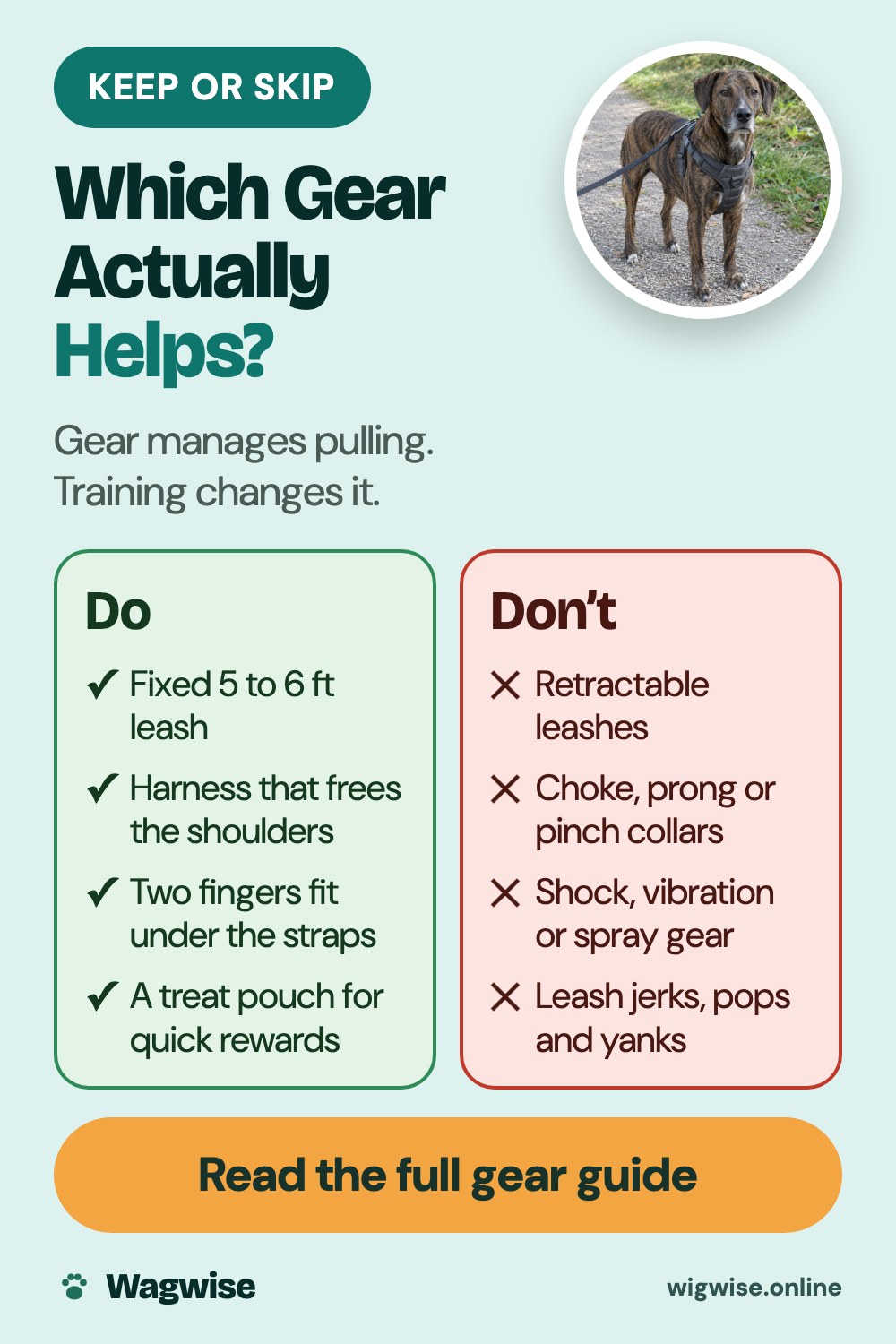
Fit comes first. You should be able to slide two fingers under a collar or harness strap. Puppies grow fast, so recheck often, and look over any harness for rips and fraying.
Use this quick checklist:
- It doesn’t restrict shoulder movement.
- It doesn’t tighten when your dog pulls.
- It doesn’t rub, twist or pinch.
- You check skin after each walk.
If you aren’t sure, ask your vet, a reward-based trainer or the shop to look at the fit on your dog.
Is there a best harness for dogs that pull?
We don’t name one, because experts differ. RSPCA Australia calls a front-attach harness a gentle aid for strong pullers, used with a double-ended leash and ideally with a reward-based trainer helping with the fit. Cornell says to consider a front-clipping harness. Dogs Trust says a flat harness or collar is fine, as long as nothing causes pain or tension on sensitive areas.
A 2025 review summarized by Faunalytics found that all harnesses changed a dog’s gait, and that some designs restricted shoulder and elbow movement more than others. So the right choice depends on your dog’s body. A well-fitted harness or flat collar, checked by someone who can see your dog wearing it, is a safe starting point.
Keep, maybe or skip?
| Group | Gear |
|---|---|
| Keep | A fixed 5 to 6 foot leash, a well-fitted harness that frees the shoulders and doesn’t tighten, a treat pouch, a flat collar for ID tags |
| Maybe, with a trainer | A front-attach harness with a double-ended leash, a head collar only if a reward-based trainer recommends it, a hands-free belt |
| Skip | Retractable leashes, choke chains, prong or pinch collars, shock, vibration or spray gear, tightening collars, leash jerks |
Why skip choke, prong and shock gear?
RSPCA Australia says choke and prong collars must not be used because they cause pain and distress. Wood Green says to avoid anything painful. Dogs Trust says equipment that hurts when a dog pulls is “unnecessary and can be unpleasant and confusing”. Veterinary behavior groups such as AVSAB recommend reward-based training instead.
Studies here are limited. In a 5-minute test of 23 shelter dogs, no gear replaced training. That doesn’t show any tool is harmless. It shows the tool wasn’t the answer.
Why skip retractable leashes?
They reduce control, can teach dogs to pull, and raise the risk of entanglement, trips and accidental slips. A plain fixed leash of about 5 to 6 feet is easier to hold and easier to train with.
Eyes and collars
In one study, pressure inside the eye rose when tension was applied through a collar, but not significantly through a harness. The authors advise a harness for dogs with glaucoma or weak corneas. If your dog has an eye problem, ask your vet.
Check the fit today, put away any choke, prong, shock or retractable gear for good, and read the full gear chapter for the printable fit check. Then see our list of leash pulling mistakes to skip.
Frequently asked questions
What is the best harness for a dog that pulls?
There is no single best one. RSPCA Australia, Cornell and Dogs Trust give different advice, and a 2025 review found all harnesses change a dog's gait. Ask a trainer or the shop to fit one to your dog's body.
How do I check a harness or collar fits?
You should be able to slide two fingers under the strap, the shoulders should move freely, and nothing should rub, twist or pinch. Check skin after each walk.
What leash length should I use?
A plain, fixed leash of about 5 to 6 feet (1.5 to 1.8 meters). Sources vary from 1.5 meters to a lightweight 6 feet.
Why are retractable leashes not recommended?
RSPCA Australia, Wood Green, AKC and Cornell advise against them because they reduce control, can teach dogs to pull, and raise the risk of entanglement, trips and accidental slips.
More Wagwise guides for dog owners
 Stop Puppy BitingA gentle 4-week plan to stop the nipping and get through teething.$17 · instant PDFSee the guide →
 Get Rid of Dog Pee SmellRemove urine odor for good, then stop the accidents with a 14-day reset.$17 · instant PDFSee the guide →
 Stop Dog BarkingA quiz finds why your dog barks, then a plan made for that reason.$17 · instant PDFSee the guide →
 Help Your Itchy DogTrack triggers, soothe skin safely and know when to see the vet.$17 · instant PDFSee the guide →
 House-Train Your PuppyA kind 4-week plan with a schedule by age, a night plan and printable trackers.$17 · instant PDFSee the guide →
 Leave Your Dog AloneFilm, sort and build calm alone time with a vet-first plan and a step-by-step ladder.$17 · instant PDFSee the guide →
 Puppy Sleeps Through the NightA realistic, age-by-age plan for calmer nights, without cry-it-out or crate fights.$17 · instant PDFSee the guide →
 Less Dog Hair, Less SmellA 4-week brushing, bath and home routine for a calmer-smelling house.$17 · instant PDFSee the guide →
Want all four? Get the complete library for $49.
Sources
This article is general education, not veterinary advice. It does not replace an examination by your vet or help from a qualified behaviourist.