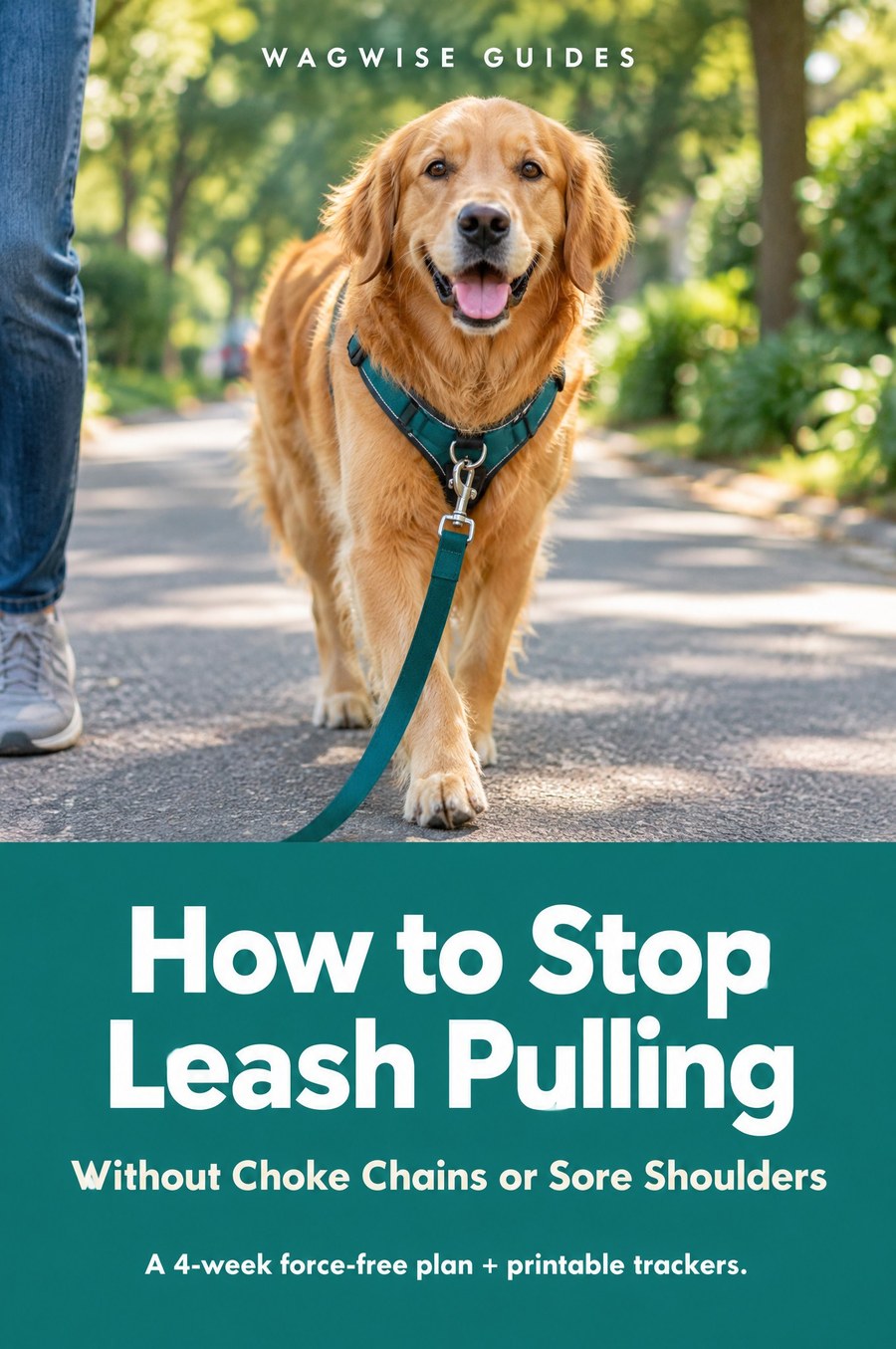
Leash pulling
Pulling or Something Else? A 2-Minute Check
Quick answer
A dog suddenly pulling on leash, or lagging, stiff, coughing or lunging, may not be a training problem. Answer six questions about sudden change, pain, cough, lunging, bites and fear. A yes to any of them means calling your vet before you start any leash training plan.
- Most pulling is excitement and habit, but pain, a cough or fear can look like bad leash manners.
- A new or sudden change in pulling, lagging, stiffness or limping is a reason to call your vet first.
- A cough on the leash is a vet question, not a gear question.
- Lunging with barking, growling or snapping is more than pulling and needs professional help.
A dog suddenly pulling on leash, lagging or acting differently on walks needs a check for pain, cough and fear before you blame bad manners. Most pulling is just excitement and habit. But a few things can look like it, and they need a vet, not a training plan.
This check takes about two minutes. It is general education, not a diagnosis. Only a vet can say what is going on.
Six questions to answer before you train
Answer yes or no to each one:
- New or sudden? Did the pulling start suddenly, or did appetite, toileting, activity or the way your dog walks change?
- Lagging, stiff or limping? Is your dog reluctant to go out, slow to get up or stiff after a walk?
- Coughing or gagging on the leash? Any wheezing or noisy breathing?
- Lunging with barking, growling or snapping? At people, dogs or other triggers?
- Any bite or dog-on-dog contact on a walk, now or in the past?
- Fear of the leash, the harness or going out? Any rubbed skin, hair loss or swelling under straps?
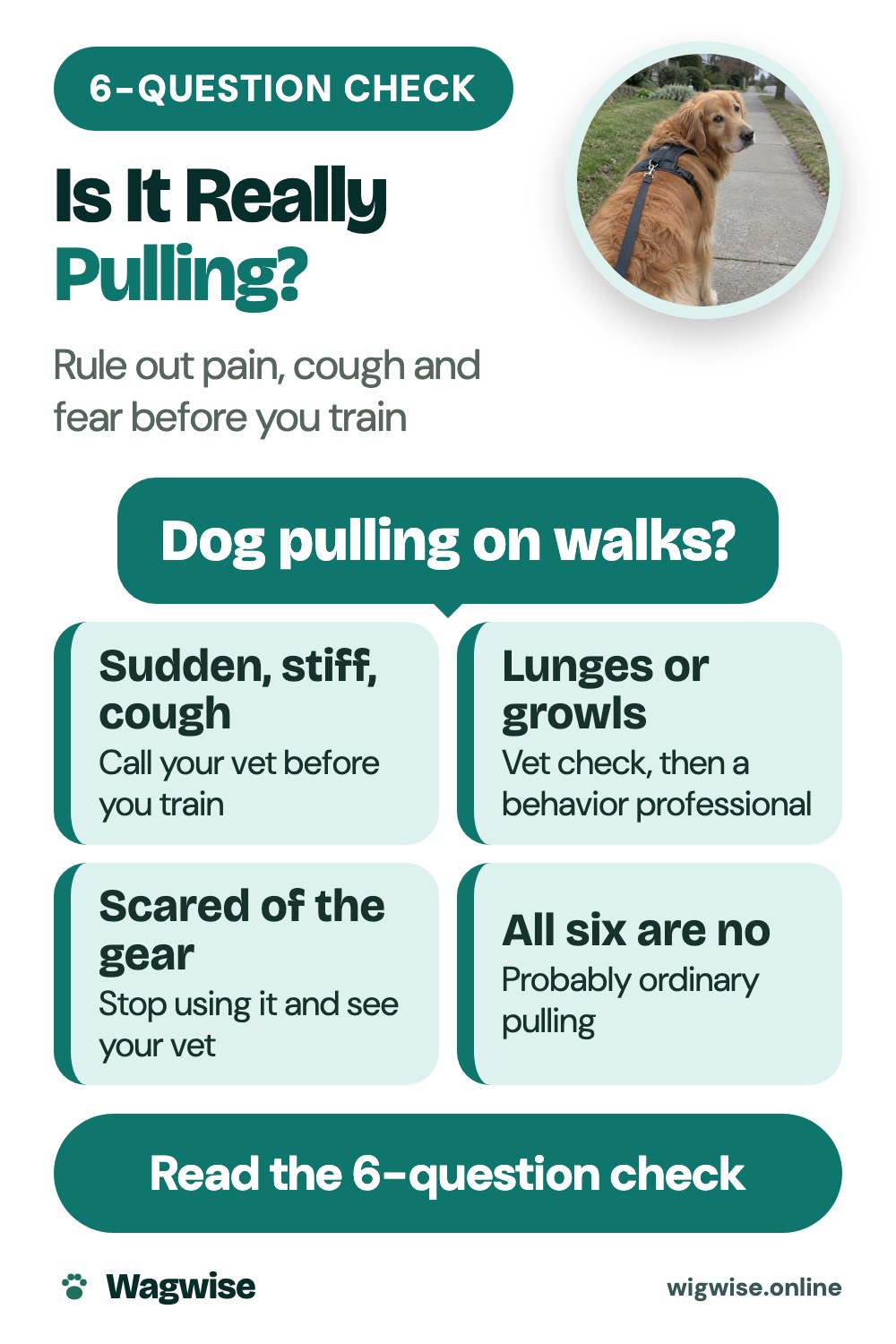
What your answers mean
| Your answer | What to do |
|---|---|
| Yes to 1, 2 or 3 | Call your vet before you train. Dogs Trust advises a vet check first for any sudden change, because pain can drive behavior. |
| Yes to 4 or 5 | This is more than pulling. Get a vet check, then a qualified behavior professional. Don’t “train through” it. |
| Yes to 6 | Stop using that gear and see your vet about any skin changes. If your dog is afraid, make the gear a good thing first: gear on, treat, gear off. |
| No to all six | Probably ordinary pulling. Your vet can still confirm at your next regular check. |
A cough on the leash is a vet question, not a gear question. Don’t buy a different harness and hope.
Is it pulling or reactivity?
A dog who drags you toward a friend, a squirrel or a smell is pulling. A dog who lunges, barks or growls at something is doing something different. Dogs Trust describes reactivity as a heightened response to a trigger, driven by fear, frustration or overarousal. We unpack it in When Pulling Is Really Reactivity.
Here is how the two tend to look:
- Probably pulling: pulls toward smells, people or dogs to say hello, has a wiggly and loose body, and is easy to interrupt with a treat.
- Possibly reactivity: lunges with barking, growling or snapping, is hard to interrupt even with great treats, and is worse near particular triggers.
Red, amber or green: when to see a vet
- Red: call your vet or an emergency clinic right away for struggling to breathe, collapse, a bite wound or obvious pain.
- Amber: book a vet visit soon and pause training walks for coughing or gagging, limping or reluctance to walk, a sudden change in behavior, red or squinting eyes after walks, raw skin or swelling at the neck, chest or armpits, or a new fear of the leash.
- Green: carry on if you have a healthy, excited dog who pulls toward things she wants and settles when she gets a treat.
What to do while you wait for the vet
Keep walks short, easy and low-pressure. Skip the training plan until your vet has seen your dog. Jot down when it happens, where and what your dog was doing, and film 30 seconds of a normal walk from the side to show your vet.
If every answer was no, you are dealing with ordinary pulling. Start with why dogs pull on the leash, then follow the plan in the Stop Leash Pulling guide.
Frequently asked questions
Why is my dog suddenly pulling on the leash?
Sometimes it is just excitement or a new habit, but a sudden change in pulling can be linked to pain. Dogs Trust advises a vet check first for any sudden change.
My dog coughs when the leash tightens. Is it the harness?
Do not assume it is gear. A cough or gagging on the leash is a vet question. Pause training walks until your vet has seen your dog.
Can I still walk my dog while I wait for the vet?
Keep walks short, easy and low-pressure, and skip the training plan until your vet has seen your dog. A sniff in the yard counts as exercise.
How do I tell pulling from reactivity?
A dog who pulls toward smells, people or dogs to say hello is loose and easy to interrupt with a treat. A dog who lunges, barks or growls is doing something different.
More Wagwise guides for dog owners
 Stop Puppy BitingA gentle 4-week plan to stop the nipping and get through teething.$17 · instant PDFSee the guide →
 Get Rid of Dog Pee SmellRemove urine odor for good, then stop the accidents with a 14-day reset.$17 · instant PDFSee the guide →
 Stop Dog BarkingA quiz finds why your dog barks, then a plan made for that reason.$17 · instant PDFSee the guide →
 Help Your Itchy DogTrack triggers, soothe skin safely and know when to see the vet.$17 · instant PDFSee the guide →
 House-Train Your PuppyA kind 4-week plan with a schedule by age, a night plan and printable trackers.$17 · instant PDFSee the guide →
 Leave Your Dog AloneFilm, sort and build calm alone time with a vet-first plan and a step-by-step ladder.$17 · instant PDFSee the guide →
 Puppy Sleeps Through the NightA realistic, age-by-age plan for calmer nights, without cry-it-out or crate fights.$17 · instant PDFSee the guide →
 Less Dog Hair, Less SmellA 4-week brushing, bath and home routine for a calmer-smelling house.$17 · instant PDFSee the guide →
Want all four? Get the complete library for $49.
Sources
This article is general education, not veterinary advice. It does not replace an examination by your vet or help from a qualified behaviourist.