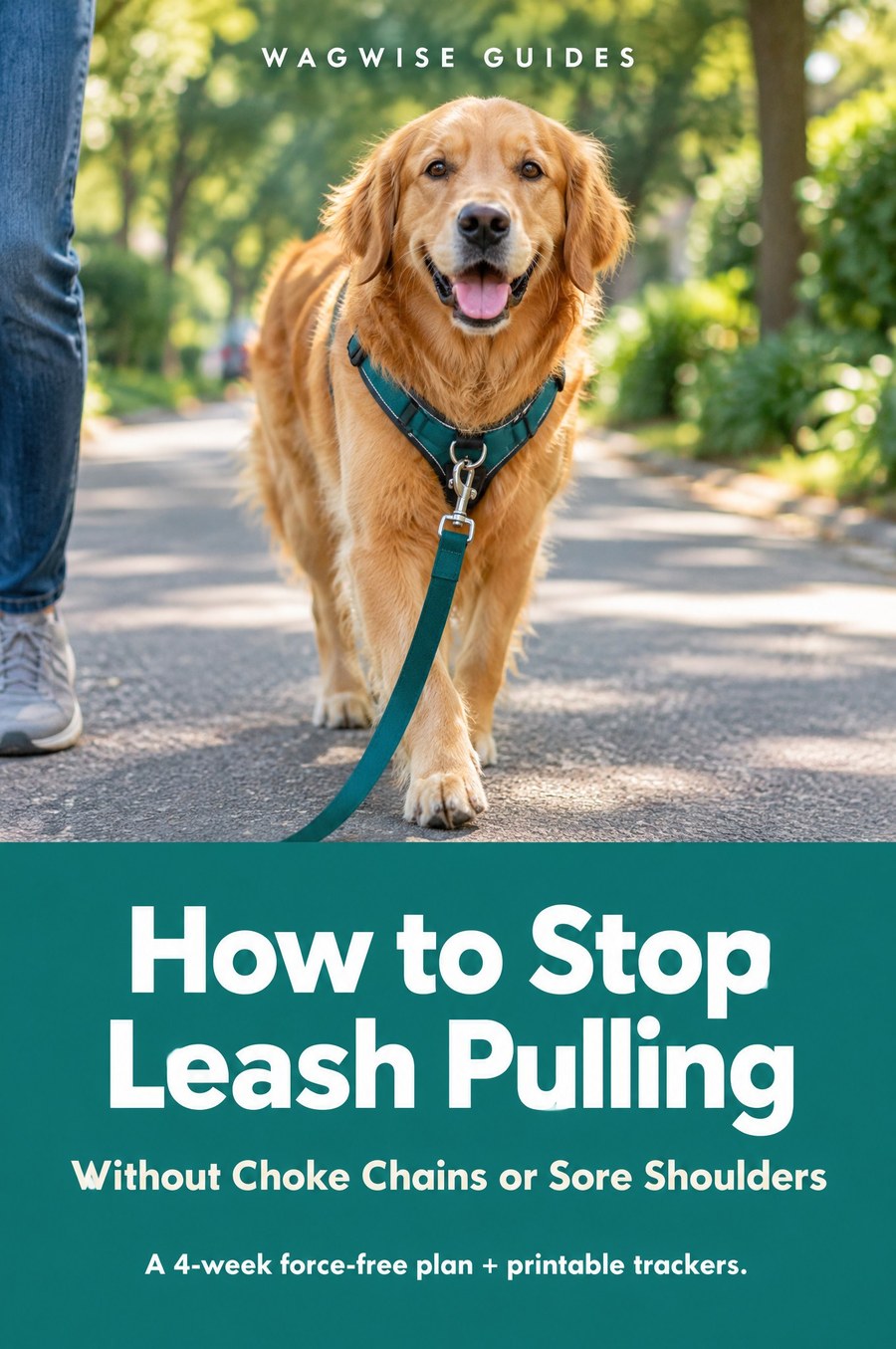
Leash pulling
Why Dogs Pull on the Leash
Quick answer
Why dogs pull on the leash comes down to two things: pulling is natural, and it works. Dogs walk faster than people and want to reach smells and sights, and the walk speeds up the moment the leash goes tight. Change what pays off and the pulling changes with it.
- Pulling is normal dog behavior, not dominance or defiance.
- Every step you take on a tight leash pays your dog for pulling.
- Young dogs find self-control hard, and teenagers often seem to forget what they knew.
- Gear can add comfort, but training changes the habit. Expect weeks, not days.
Why dogs pull on the leash has a simple answer: it is natural, and it works. Dogs walk faster than we do, and the world is full of things they want to reach. When the leash goes tight and the walk speeds up, the pull gets paid.
If your arm got yanked on the last walk, you didn’t do anything wrong. Pulling isn’t dominance and it isn’t defiance. It is a habit, and habits can change.
Why do dogs pull on walks? Four common reasons
| Reason | What it looks like |
|---|---|
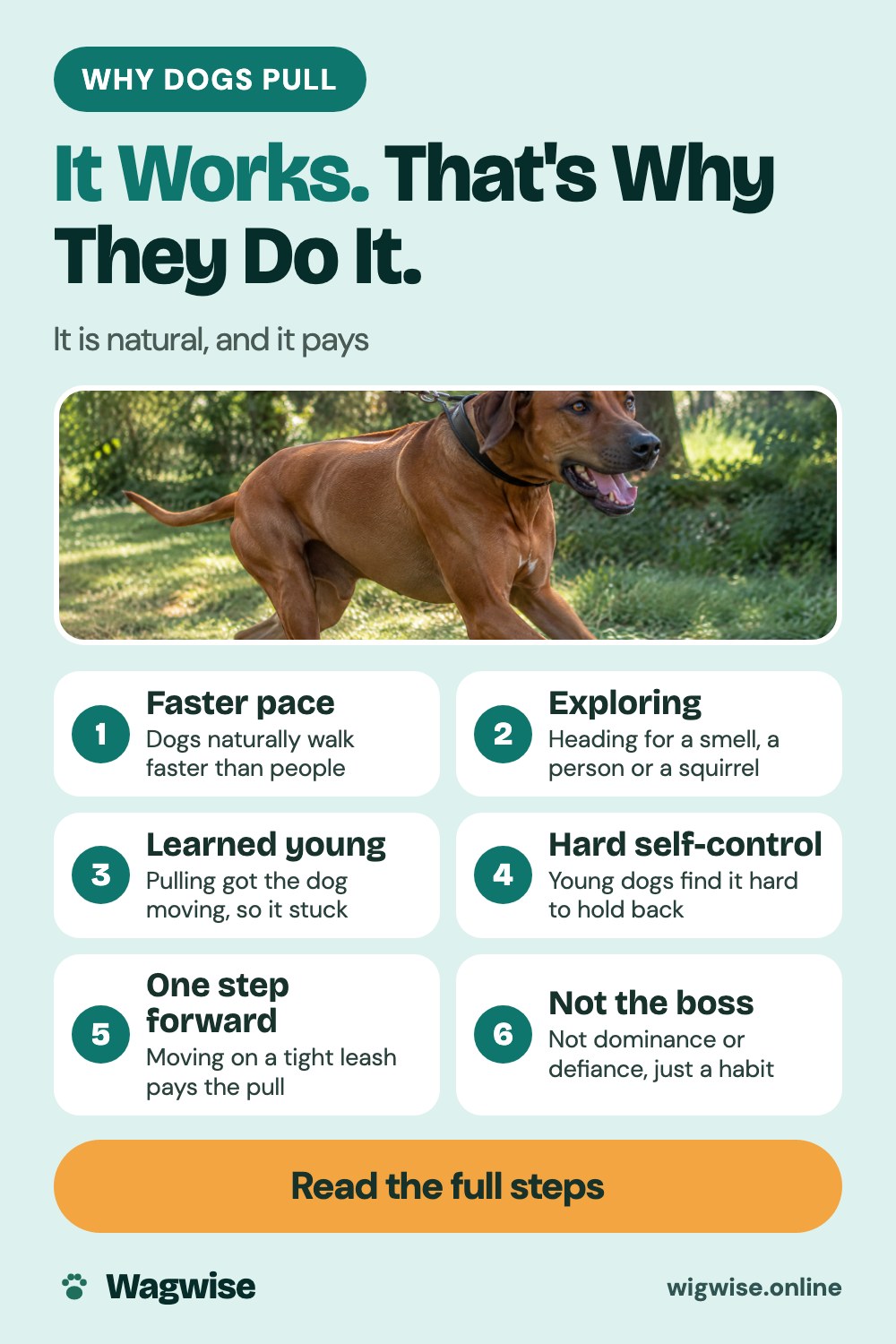
| Faster pace | Your dog naturally walks faster than you do |
| Excitement or exploring | The dog is heading for a smell, a person or a squirrel |
| Habit learned young | Pulling got the dog moving, so it stuck |
| Hard self-control | Young dogs find it difficult to hold back |
None of these are about being the boss. They are about wanting to get somewhere, and finding out that tension gets them there.
The loop that keeps leash pulling going
Pulling keeps going because of a four-step loop:
- Your dog spots a smell and the leash goes tight.
- You step forward. Even one step counts.
- Your dog gets there, so the pull just paid off.
- Next time, your dog pulls again, often harder.
Dogs Trust Ireland puts it plainly: taking one step forward when your dog pulls reinforces the pulling. The fix isn’t force. It is making a loose leash the thing that moves you forward.
Is my dog trying to be the boss?
No. PDSA describes pulling as natural behavior and advises against punishment. Scolding or yanking adds stress and doesn’t teach your dog what to do instead. Your dog isn’t being defiant. Your dog has learned, many times over, that pulling works.
Your body language matters too. AKC trainer Stephanie Gibeault notes that a tense or distracted handler can raise a dog’s excitement or anxiety. Loosen your grip, breathe out and slow down.
Why is my dog pulling harder as a teenager?
Pulling, jumping and poor impulse control are common from about 6 months and can last until around 24 months. If your adolescent dog seems to have forgotten everything, that is normal. We cover that phase in Teenage Dog Pulling: The Adolescent Phase.
Will a different harness fix it?
Gear can add comfort, but it doesn’t teach the habit. In a study of 52 shelter dogs, dogs pulled harder in a back-connection harness than in a collar when food was the lure, and there was no difference when a toy was the lure. That is one small study, so don’t read too much into it. The takeaway is simple: choose a well-fitted harness or flat collar, ask a trainer or the shop to check the fit, and put your effort into training.
What to do on your next walk
Try these three small things before you change anything else:
- Notice the moment the leash goes tight, and what your dog was going toward.
- Count how many times you step forward on a tight leash. That number is your starting point.
- Tell everyone who walks your dog: from now on, a tight leash means we stop.
Before you start a training plan, rule out pain with the 2-minute check. The full plan, with gear fit, seven short games and a 4-week schedule, is in the Stop Leash Pulling guide. Expect weeks, not days, and longer if the habit is years old.
Frequently asked questions
Why does my dog pull on walks?
Dogs walk faster than people and want to reach smells and sights. Pulling also gets them moving, so it can become a habit learned young.
Is my dog trying to be the boss when he pulls?
No. PDSA describes pulling as natural behavior and advises against punishment. Your dog has learned that pulling works.
Does taking one step forward on a tight leash really matter?
Yes. Dogs Trust Ireland says taking one step forward when your dog pulls reinforces the pulling, so even one step counts.
How long does it take to change?
Weeks, not days, and longer if the habit is years old. Loose-leash walking is a skill your dog learns by being paid for it.
More Wagwise guides for dog owners
 Stop Puppy BitingA gentle 4-week plan to stop the nipping and get through teething.$17 · instant PDFSee the guide →
 Get Rid of Dog Pee SmellRemove urine odor for good, then stop the accidents with a 14-day reset.$17 · instant PDFSee the guide →
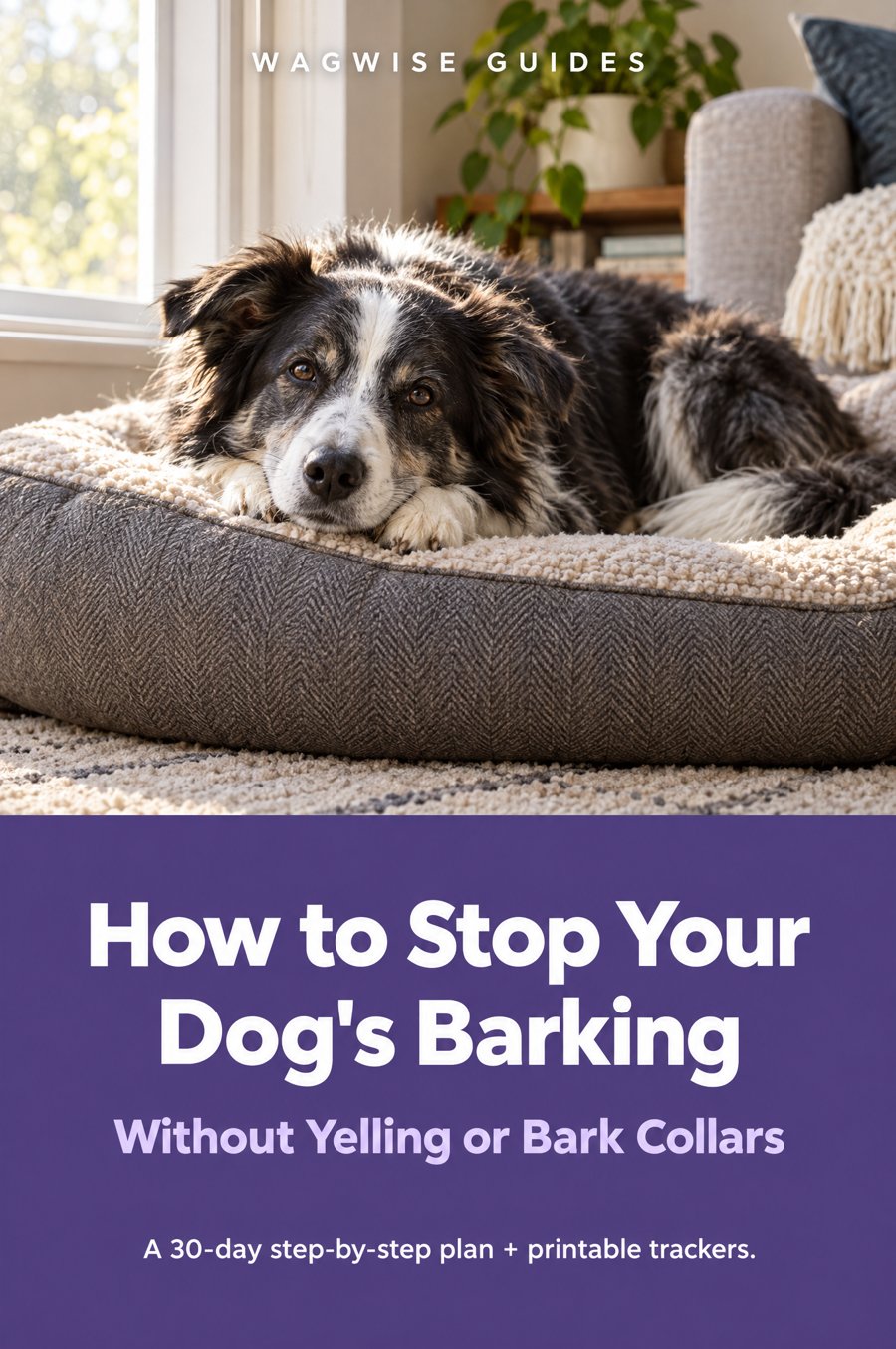 Stop Dog BarkingA quiz finds why your dog barks, then a plan made for that reason.$17 · instant PDFSee the guide →
 Help Your Itchy DogTrack triggers, soothe skin safely and know when to see the vet.$17 · instant PDFSee the guide →
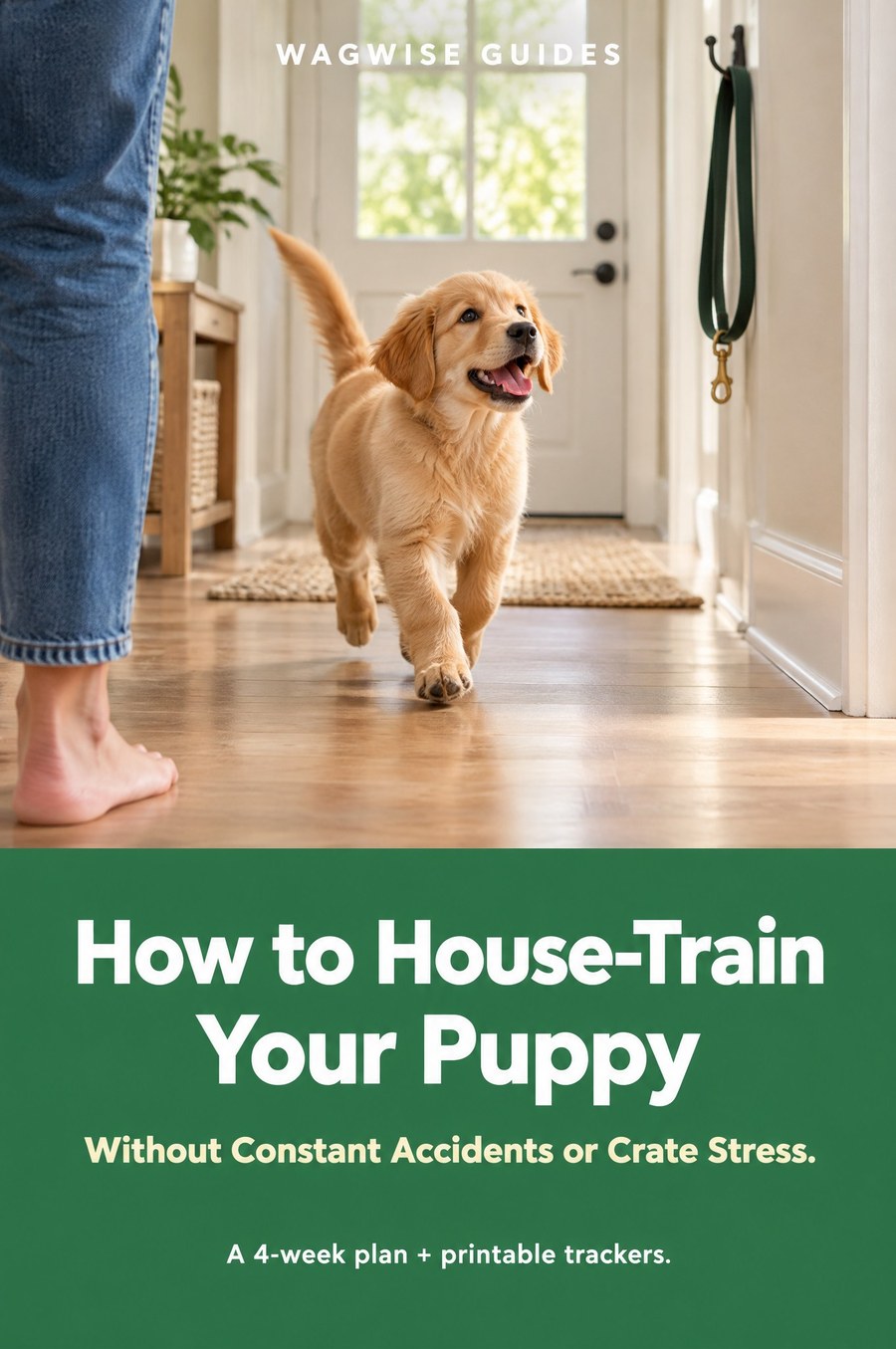 House-Train Your PuppyA kind 4-week plan with a schedule by age, a night plan and printable trackers.$17 · instant PDFSee the guide →
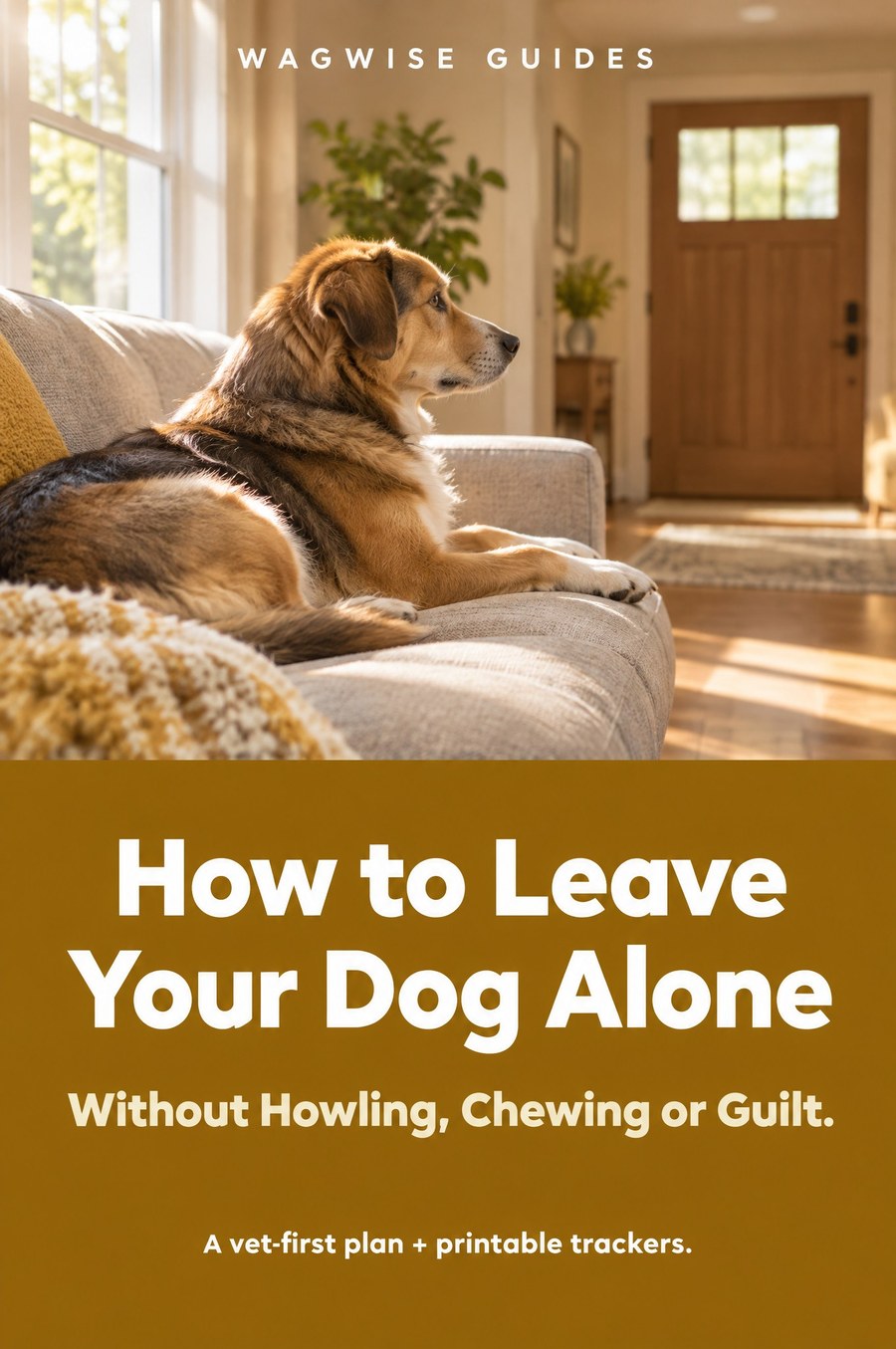 Leave Your Dog AloneFilm, sort and build calm alone time with a vet-first plan and a step-by-step ladder.$17 · instant PDFSee the guide →
 Puppy Sleeps Through the NightA realistic, age-by-age plan for calmer nights, without cry-it-out or crate fights.$17 · instant PDFSee the guide →
 Less Dog Hair, Less SmellA 4-week brushing, bath and home routine for a calmer-smelling house.$17 · instant PDFSee the guide →
Want all four? Get the complete library for $49.
Sources
This article is general education, not veterinary advice. It does not replace an examination by your vet or help from a qualified behaviourist.