
Puppy sleep
Puppy Was Fine, Now Crying More
Quick answer
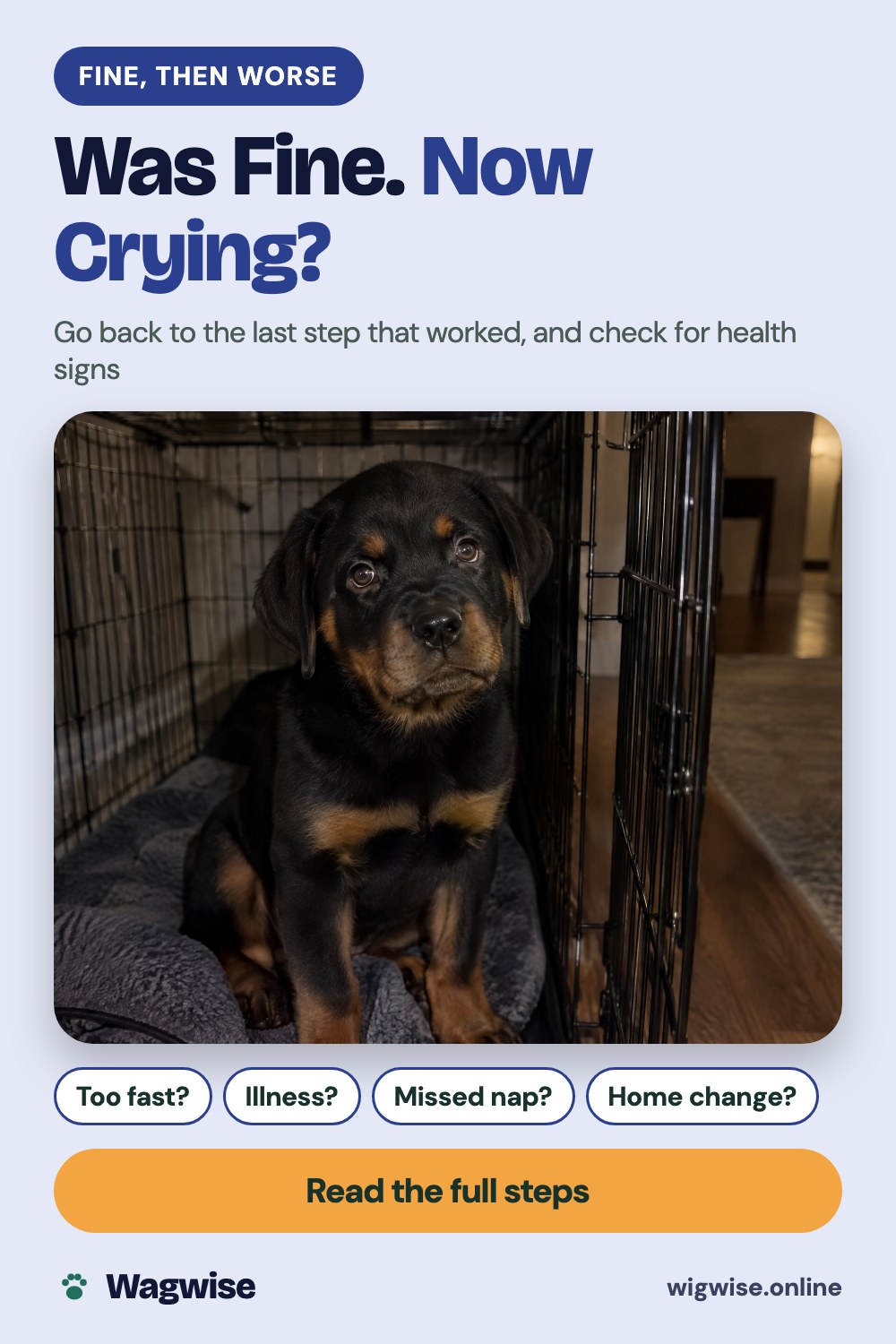
A puppy crying more at night after settling well usually has one of these causes are a move that went too fast, illness, a missed nap or a change at home. Go back to the last step that worked, and call your vet first if the change was sudden, since the vet checks for illness.
- A bad night after two good ones does not erase progress.
- Common causes: a move too fast, illness, a missed nap or a change at home.
- Go back to the last step that worked, and change one thing at a time.
- A sudden change in a settled puppy means vet first.
When you see a puppy crying more at night after doing well, it is usually a step that went too fast or something that changed. Go back to the last step that worked, and check the health signs. A bad night after two good ones does not erase the progress.
Why is my puppy crying more at night after being fine?
| Likely cause | What to check |
|---|---|
| A move that went too fast | Did you move the crate or pen, or leave the room, sooner than your puppy was ready? |
| Illness | Any vomiting, diarrhea, low energy or refusing food? |
| A missed nap | Was daytime rest short? Overtired puppies are harder to settle. |
| A change at home | Visitors, a new routine, a second dog or children near the sleeping spot? |
What should I do tonight?
Go back to the last step that worked. If you moved the crate away from the bed, put it back beside the bed with the door open. Dogs Trust says that if a puppy cries when you move its bed away, go back a step and move more slowly. Keep the response small and kind, and use the Cry Check from When Your Puppy Cries: What to Check.
Is a worse patch common?
Worse in week 2 is common after a change. Some owners report rough patches at other ages, though the Wagwise guide found no solid research on that, so it makes no claim about a regression at a particular age. What matters is that fewer, shorter wake-ups are the goal and the trend over weeks counts more than one night.
When is a sudden change a vet issue?
If your puppy was settled and then suddenly changes, call your vet first. As an example, a puppy settles well for two weeks, then cries every night and refuses breakfast. The owner rings the vet and brings the log. When something changes suddenly, the vet comes first. Also call about new general fearfulness, or crying and distress that is not improving after the first few weeks.
How do I find what changed?
Check your log. Look at bedtime, last meal, naps and anything that changed at home. Change one thing at a time and watch the log for three nights. For a list of common night problems and first fixes, read Fixes for the 8 Most Common Night Problems.
What helps my puppy get back on track?
Stay calm and keep to the plan. Use the same bedtime and the same six steps, with a final toilet trip, a treat into the crate or pen and “Goodnight, bed” in a low voice. Keep the crate beside your bed until your puppy has been calm for several nights, and only then try a small move again, a foot or two at a time.
Read your log like a coach. Even one fewer wake-up is progress, minutes of crying matter more than hours, and a quick settle after a trip is a win. Aim for patterns, not perfection.
What if my puppy seems panicked?
Long frantic crying, drooling, hard panting or escape attempts are not a setback to push through. Stop crate work and call your vet. Persistent distress is a message, not a character flaw, and it tells you to step back and ask for help.
If you are not sure what changed, ask your vet about your puppy’s age and size. Bring your night log, because a clear record of the last few weeks makes the visit faster and more useful.
Frequently asked questions
Why is my puppy crying more at night after doing well?
Common causes are a move that went too fast, illness, a missed nap or a change at home. Worse in week 2 is also common after a change.
Is there a sleep regression at 4 to 5 months?
Some owners report rough patches at other ages. The Wagwise guide found no solid research on that, so it makes no claim.
What should I do first?
Go back to the last step that worked, for example the crate beside your bed with the door open. Then change only one thing at a time.
When should I call the vet?
When the change is sudden in a puppy who was settled, when there is new general fearfulness, or when crying or distress is not improving. A vet can check for illness and refer you to a qualified behavior professional.
More Wagwise guides for dog owners
 Stop Puppy BitingA gentle 4-week plan to stop the nipping and get through teething.$17 · instant PDFSee the guide →
 Get Rid of Dog Pee SmellRemove urine odor for good, then stop the accidents with a 14-day reset.$17 · instant PDFSee the guide →
 Stop Dog BarkingA quiz finds why your dog barks, then a plan made for that reason.$17 · instant PDFSee the guide →
 Help Your Itchy DogTrack triggers, soothe skin safely and know when to see the vet.$17 · instant PDFSee the guide →
 House-Train Your PuppyA kind 4-week plan with a schedule by age, a night plan and printable trackers.$17 · instant PDFSee the guide →
 Stop Leash PullingA 4-week force-free plan for calmer walks and a loose leash.$17 · instant PDFSee the guide →
 Leave Your Dog AloneFilm, sort and build calm alone time with a vet-first plan and a step-by-step ladder.$17 · instant PDFSee the guide →
 Less Dog Hair, Less SmellA 4-week brushing, bath and home routine for a calmer-smelling house.$17 · instant PDFSee the guide →
Want all four? Get the complete library for $49.
Sources
This article is general education, not veterinary advice. It does not replace an examination by your vet or help from a qualified behaviourist.