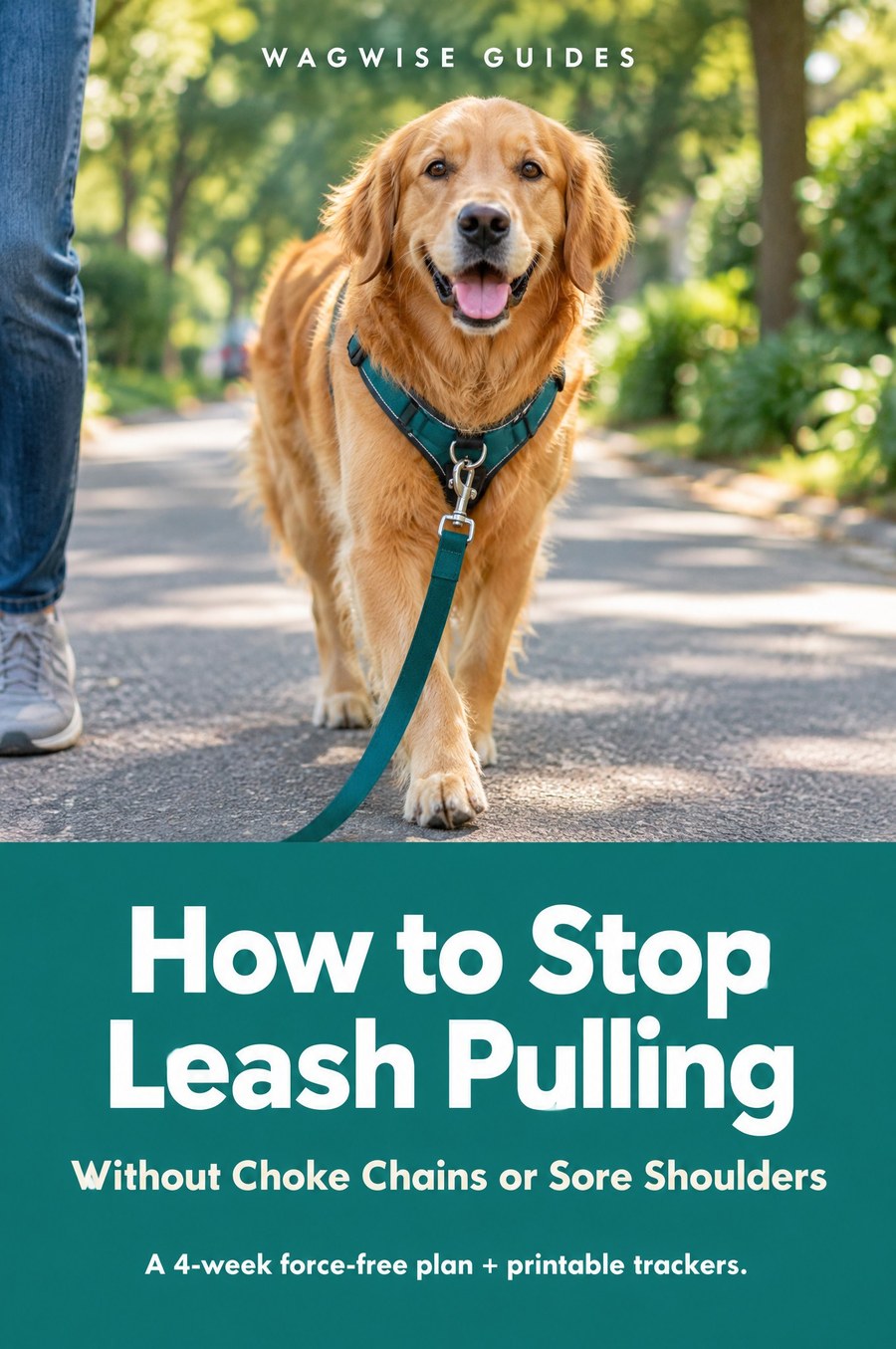
Leash pulling
Squirrel! Leash Pulling Triggers
Quick answer
A dog pulling toward squirrels is following an instinct, and chasing isn't trained out in a month. Redirect before your dog notices the trigger, keep your distance, never punish and use a secure harness with a fixed 6 foot leash. Manage the route, reward the check-in and give an outlet.
- Chasing is an instinct, so aim for calmer, safer walks rather than a perfect leash everywhere.
- The best moment to train is before your dog notices the trigger.
- Manage the route, reward the check-in and give your dog an outlet.
- Never scold, startle or yank. It adds stress without teaching a different choice.
A dog pulling toward squirrels, birds or bikes is following an instinct, so don’t expect it to disappear in a month. The honest approach is to redirect before your dog notices the trigger, keep your distance, never punish and use a secure harness with a fixed 6 foot leash. Aim for calmer, safer walks, not a perfect leash everywhere.
How do I redirect my dog before the squirrel?
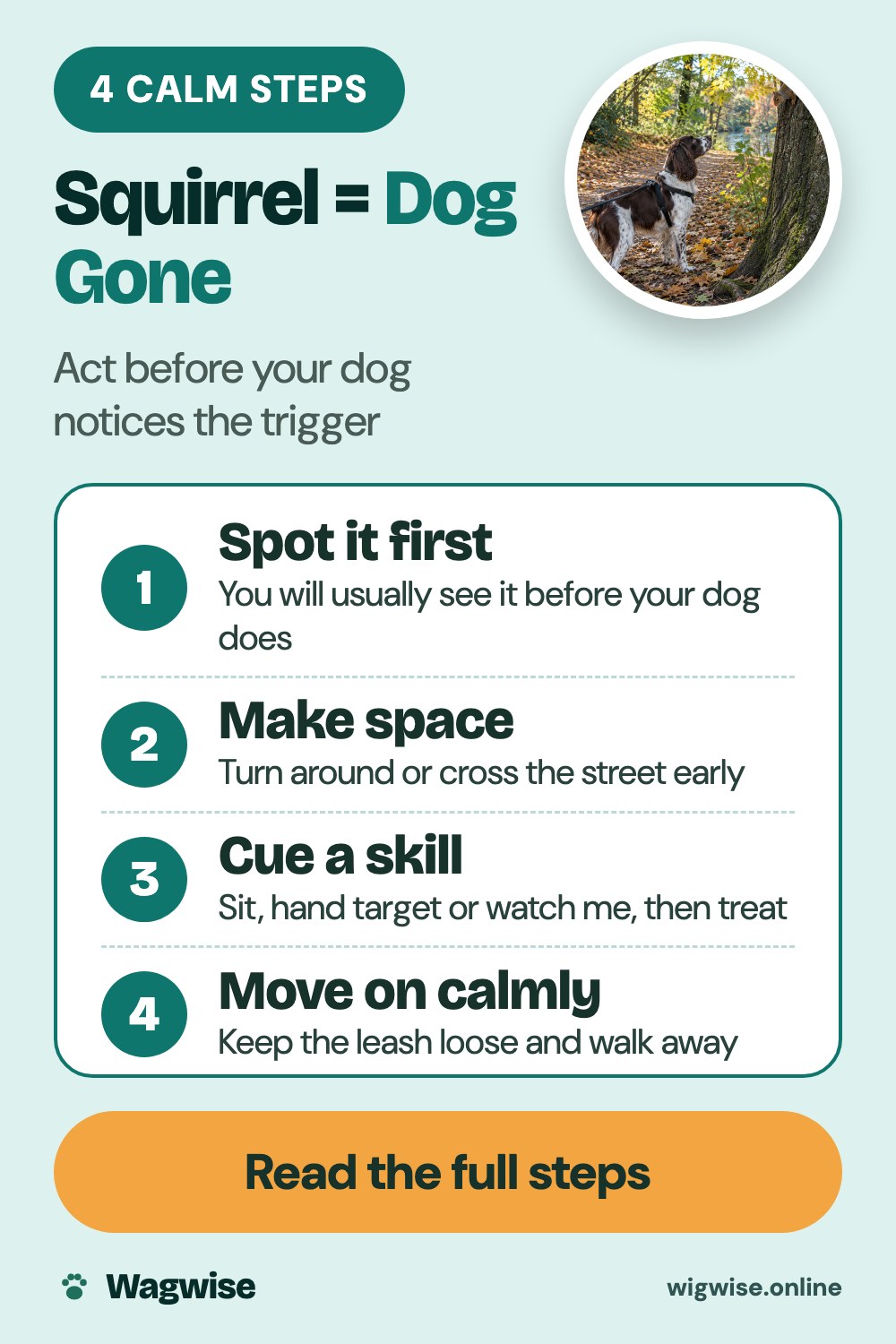
The best moment to train is before your dog notices a trigger. AKC suggests asking for a sit, a hand target or a “watch me” before the distraction gets too exciting. That makes the calm response the easy one.
- Spot it first. You will usually see it before your dog does.
- Make space. Turn around or cross the street early.
- Ask for a skill. Sit, hand target or “watch me”, then treat.
- Calmly move on. Keep the leash loose and walk away.
What should I do and not do around chasers?
| Do | Don’t |
|---|---|
| Practice the lookback and the turn at a distance first | Scold, startle or yank |
| Reward the moment your dog notices and looks at you | Test your dog in the hardest place and call it training |
| Change your route or the time of day if one spot keeps beating you | Expect a perfect leash everywhere |
| Use a secure harness and a fixed 6 foot leash | Use a retractable leash |
Can I train my dog not to chase squirrels?
Chasing is an instinct and it isn’t trained out in a month. The honest approach has three parts: manage the route, reward the check-in, and give your dog an outlet. Good outlets include a sniff walk, a tug game or a food puzzle. If a squirrel-heavy block keeps beating you, skip it for a few weeks, train on a quiet street and come back later. The goal then isn’t perfection. It is a glance back at you and a leash that stays loose.
What about other dogs, bikes and the front door?
A dog who pulls toward another dog to say hello is a different problem from a dog who lunges, barks or growls. For the first, play the turn and the lookback at a distance and reward the check-in before the greeting, not after. For the second, that is reactivity, so read When Pulling Is Really Reactivity. Never force a scared dog to face what scares it.
Here are quick fixes for common moments:
| Moment | Try this |
|---|---|
| Bolting out the front door | Practice a “wait” at the door, leash on, before opening. Reward and release. |
| Pulling toward the car or home | Walk away from home first, finish on a loose-leash stretch, then go in. |
| Dragging to a sniff spot | Stop, wait for slack, then release with “go sniff”. Pulling doesn’t win the smell. |
| Pulling after other dogs or people | Turn away before the leash tightens and reward the follow. |
How do I plan my route?
List your dog’s top three triggers and where they live on your route. Plan one alternate route that avoids your hardest trigger this week, and practice one “look at that” moment at a distance, rewarding the glance. A decompression sniff walk gives your dog an outlet too. If the plan stalls, the Stop Leash Pulling guide has the full steps.
Frequently asked questions
Can I train my dog not to chase squirrels?
Chasing is an instinct, and it isn't trained out in a month. The honest approach is to manage the route, reward the check-in and give your dog an outlet.
Should I scold my dog when he lunges at a squirrel?
No. Scolding, startling or yanking adds stress without teaching a different choice.
What gear should I use around squirrels?
A secure, well-fitted harness or flat collar and a fixed 6 foot leash. Ask a trainer or the shop to check the fit.
My dog bolts out the front door. What helps?
Practice a wait at the door with the leash on before opening, then reward and release.
More Wagwise guides for dog owners
 Stop Puppy BitingA gentle 4-week plan to stop the nipping and get through teething.$17 · instant PDFSee the guide →
 Get Rid of Dog Pee SmellRemove urine odor for good, then stop the accidents with a 14-day reset.$17 · instant PDFSee the guide →
 Stop Dog BarkingA quiz finds why your dog barks, then a plan made for that reason.$17 · instant PDFSee the guide →
 Help Your Itchy DogTrack triggers, soothe skin safely and know when to see the vet.$17 · instant PDFSee the guide →
 House-Train Your PuppyA kind 4-week plan with a schedule by age, a night plan and printable trackers.$17 · instant PDFSee the guide →
 Leave Your Dog AloneFilm, sort and build calm alone time with a vet-first plan and a step-by-step ladder.$17 · instant PDFSee the guide →
 Puppy Sleeps Through the NightA realistic, age-by-age plan for calmer nights, without cry-it-out or crate fights.$17 · instant PDFSee the guide →
 Less Dog Hair, Less SmellA 4-week brushing, bath and home routine for a calmer-smelling house.$17 · instant PDFSee the guide →
Want all four? Get the complete library for $49.
Sources
This article is general education, not veterinary advice. It does not replace an examination by your vet or help from a qualified behaviourist.