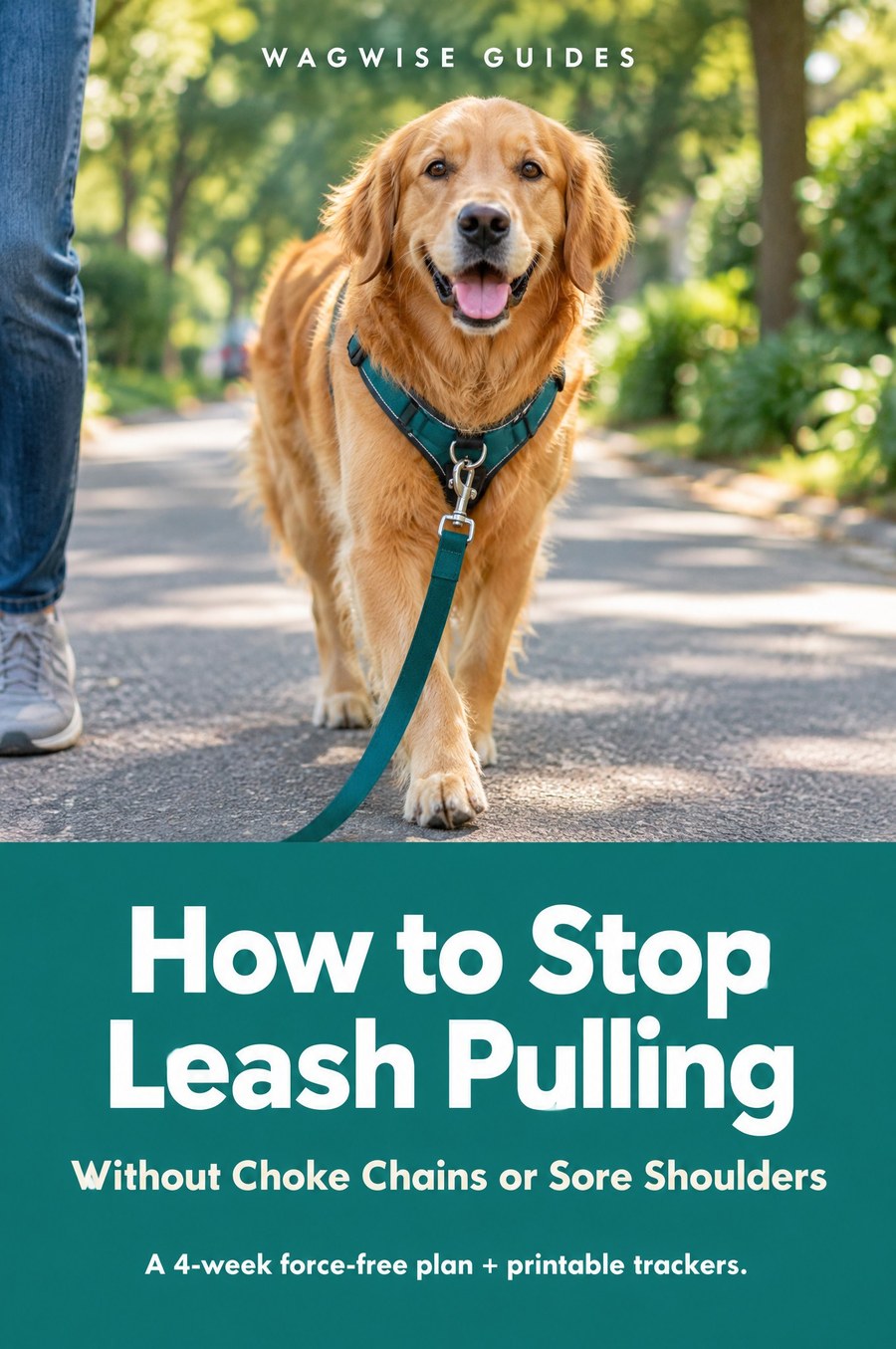
Leash pulling
The Decompression Sniff Walk
Quick answer
A decompression walk for dogs is a slow, dog-led walk where your dog moves freely and follows her nose, off leash or on a long line in a safe place. It's common trainer practice with a plausible rationale, not a proven method, and it gives your dog an outlet outside training walks.
- A sniff walk is dog-led: your dog picks the way and moves freely.
- We found no controlled study of decompression walks, so call it common trainer practice, not proven.
- Keep two modes with two cues, such as let's go for training walks and go sniff for sniff walks.
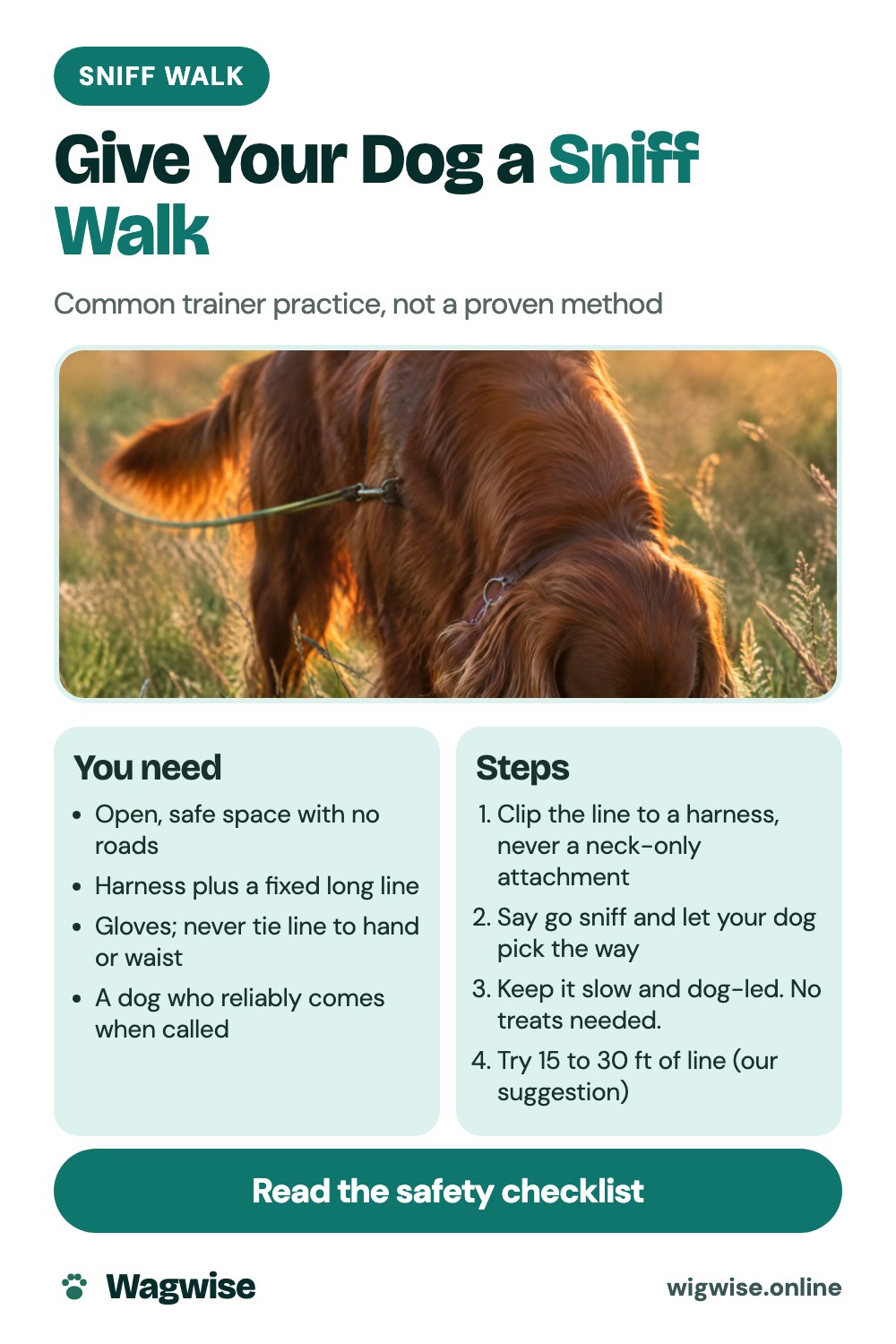
- Use a fixed long line clipped to a harness, never a neck-only attachment, and only if your dog reliably comes when called.
A decompression walk for dogs is a dog-led walk where your dog moves freely and follows her nose. It happens off leash or on a long line in nature, and it is slow on purpose. It gives your dog an outlet, so your training walks don’t have to do everything.
An honest note first: we found no controlled study of decompression walks. It is common trainer practice with a plausible rationale, not a proven method.
What is a decompression walk, and who recommends it?
Trainer Pat Miller of Whole Dog Journal writes that decompression walks “can benefit every dog” and calls a leashed walk “an exercise hors d’oeuvre for most dogs”. AKC recommends “sniffy” walks several times a week for puppies, where the puppy picks the direction, and says it may reduce pulling.
Training walk or sniff walk?
Keep two modes and use a cue to switch between them. A different clip point or harness can help your dog tell the difference. This is our adaptation of the two-harness idea from Dogs Trust.
| Training walk | Sniff walk | |
|---|---|---|
| Leash | Standard 5 to 6 foot leash | Long line on a harness, in an open safe space |
| Treats | Ready | Not needed |
| Pace | Short and focused, your route | Slow and dog-led, your dog picks the way |
| Cue | “Let’s go” | “Go sniff” |
What is the safety checklist?
A long line adds risk, so check these before you go:
- Attach the line to a harness, never a neck-only attachment.
- Use a fixed-length line, not a retractable.
- Your dog must come reliably when called. Long lines tangle and take practice.
- Pick an open space with no roads, watch for wildlife and check local leash rules.
- Wear gloves, never tie the line around your hand, wrist or waist, and try 15 to 30 feet (5 to 10 meters) as a line length (our suggestions).
If your dog doesn’t reliably come when called, skip the long line and sniff on a normal leash in a quiet spot instead.
How does a sniff walk fit with leash training?
Think of it as the other half of the plan. Training walks are short, focused and treat-based. Sniff walks are slow and free. Having both means your dog has a place to be a dog, and your training walks can stay small.
A quick way to blend them is to plan one sniff break on today’s training walk and use “go sniff” as a reward. After a stretch of walking without pulling, release your dog to sniff on a loose leash. A sniff is often worth more to a dog than food. In week 4 of our 4-week walking plan there is one decompression walk. If a squirrel-heavy route keeps beating you, a sniff walk in a field gives your dog an outlet away from it, as we describe in Squirrel! Leash Pulling Triggers.
What should I do this week?
Do the safety checklist for your chosen spot, pick two cue words (one for training, one for sniffing) and plan one sniff break on a training walk. The Stop Leash Pulling guide has the printable checklist.
Frequently asked questions
What is a decompression walk?
A dog-led walk, off leash or on a long line in nature, where your dog moves freely and sniffs.
Does a sniff walk stop leash pulling?
AKC recommends sniffy walks several times a week for puppies and says they may reduce pulling. We found no controlled study of decompression walks, so we call it common trainer practice.
How long should the long line be?
We suggest 15 to 30 feet (5 to 10 meters). That is our suggestion, not a studied figure.
Is a retractable leash okay for a sniff walk?
No. Use a fixed-length line clipped to a harness, never a retractable and never a neck-only attachment.
More Wagwise guides for dog owners
 Stop Puppy BitingA gentle 4-week plan to stop the nipping and get through teething.$17 · instant PDFSee the guide →
 Get Rid of Dog Pee SmellRemove urine odor for good, then stop the accidents with a 14-day reset.$17 · instant PDFSee the guide →
 Stop Dog BarkingA quiz finds why your dog barks, then a plan made for that reason.$17 · instant PDFSee the guide →
 Help Your Itchy DogTrack triggers, soothe skin safely and know when to see the vet.$17 · instant PDFSee the guide →
 House-Train Your PuppyA kind 4-week plan with a schedule by age, a night plan and printable trackers.$17 · instant PDFSee the guide →
 Leave Your Dog AloneFilm, sort and build calm alone time with a vet-first plan and a step-by-step ladder.$17 · instant PDFSee the guide →
 Puppy Sleeps Through the NightA realistic, age-by-age plan for calmer nights, without cry-it-out or crate fights.$17 · instant PDFSee the guide →
 Less Dog Hair, Less SmellA 4-week brushing, bath and home routine for a calmer-smelling house.$17 · instant PDFSee the guide →
Want all four? Get the complete library for $49.
Sources
This article is general education, not veterinary advice. It does not replace an examination by your vet or help from a qualified behaviourist.