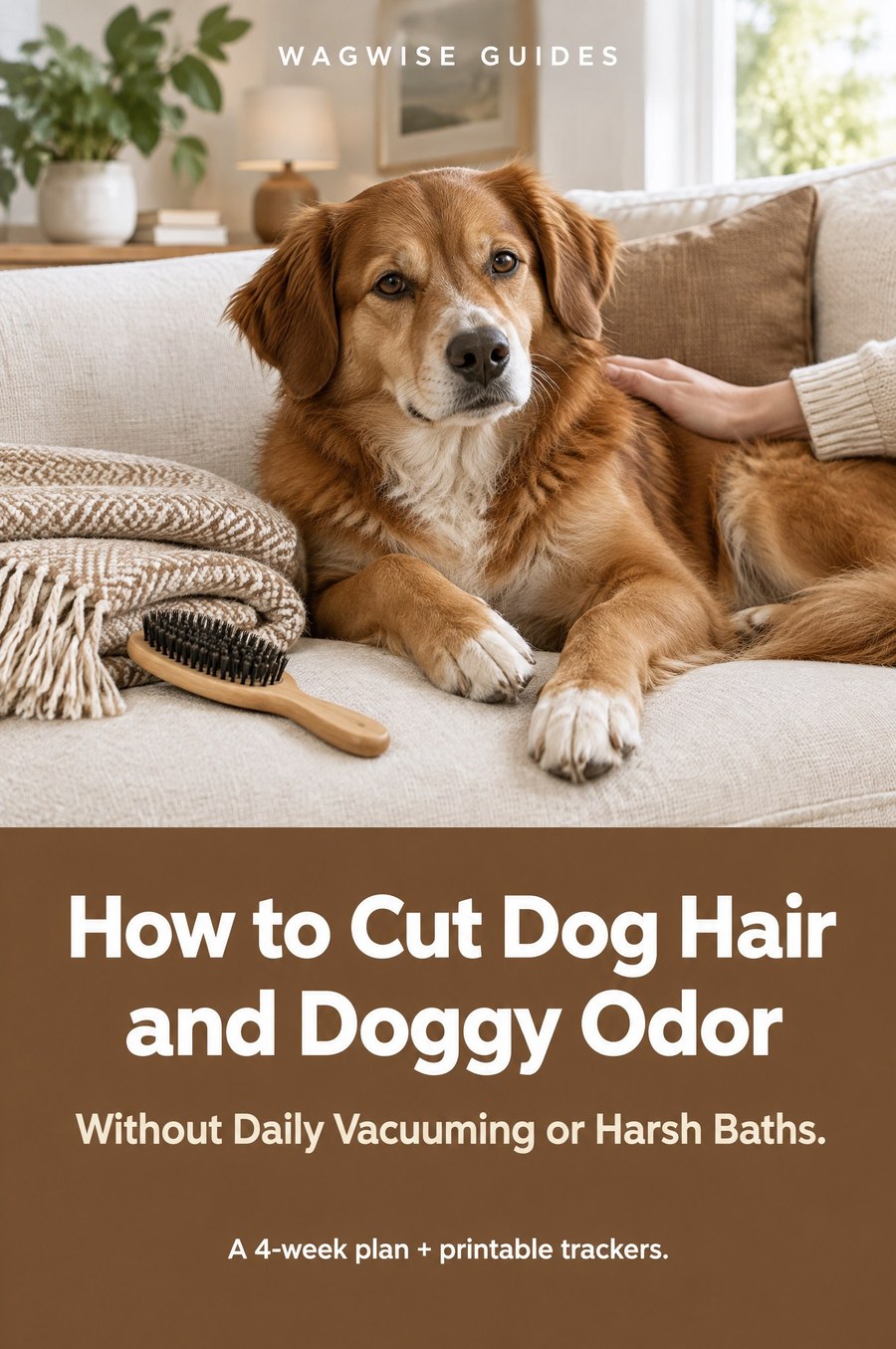
Shedding and smell
The Weekly Home Reset for Dog Hair
Quick answer
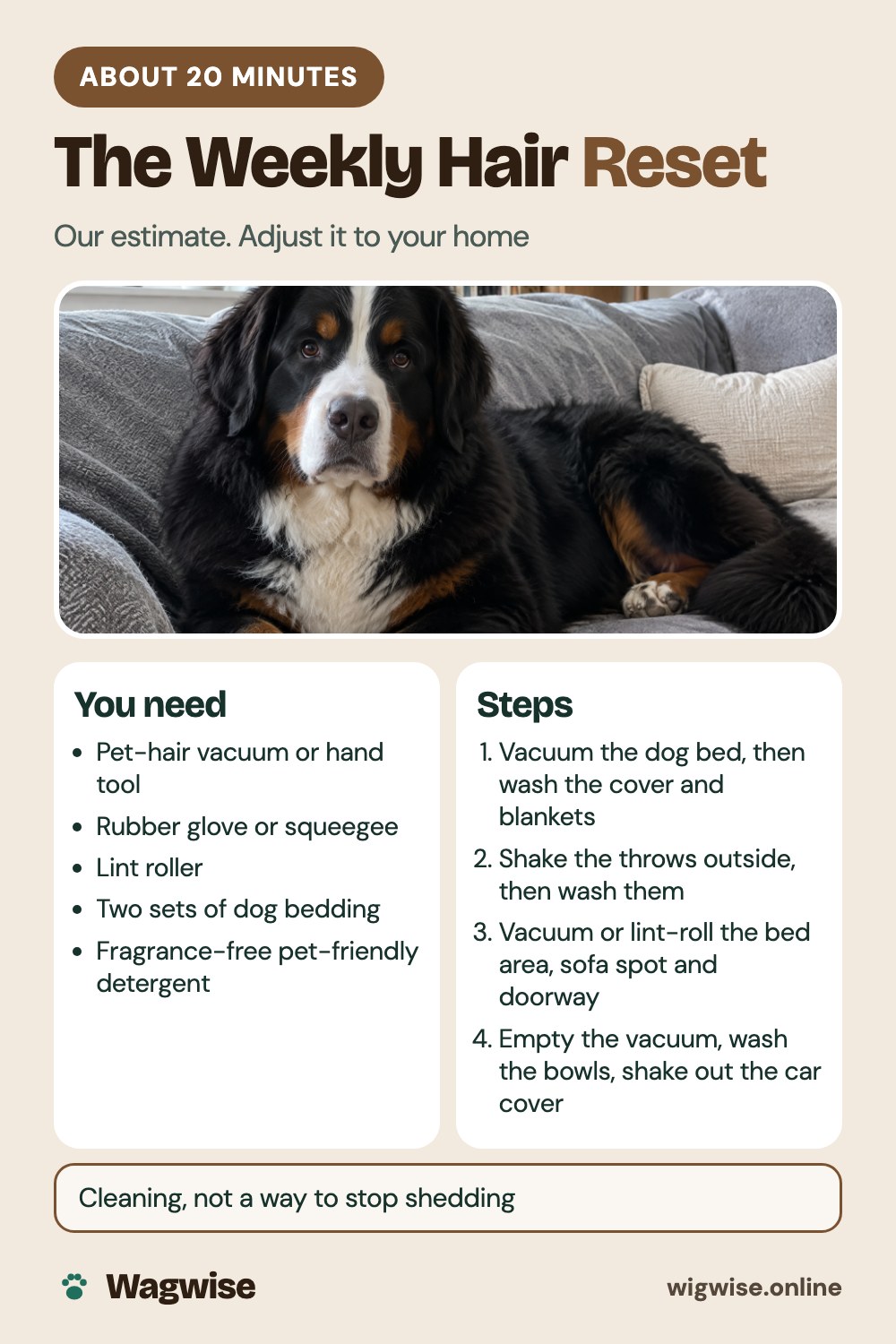
A simple dog hair cleaning routine swaps daily vacuuming for a weekly reset of about 20 minutes (our estimate): bedding, throws, three hair zones, the vacuum bin, bowls and the car cover. It is cleaning, not a way to change how much your dog sheds.
- A weekly reset plus washable dog zones can replace daily vacuuming for many homes.
- The 20 minutes and the task list are our starting point. Adjust them to your home.
- Vacuum the dog bed before you wash it, because hair clogs washing machines.
- Choose unscented products where your dog sleeps, and never mix cleaners.
A dog hair cleaning routine doesn’t have to mean vacuuming every day. Try a weekly reset of about 20 minutes (our estimate), washable dog zones and a few small habits. This is cleaning, not a way to stop shedding, but it keeps the hair in places where you can deal with it.
The weekly dog hair cleaning routine, step by step
- Bedding: vacuum, then wash the dog’s bed cover and blankets.
- Throws: shake outside, then wash.
- Hair zones: vacuum or lint-roll the bed area, the sofa spot and the doorway.
- Vacuum: empty the bin or bag.
- Bowls: wash them and wipe the floor around them.
- Car: shake out the cover.
The 20 minutes and the list are a starting point, not a tested standard. Adjust them to your home and your dog.
Three hair zones to circle
Most hair collects in the same three places. Circle yours and start there.
| Zone | Where it is | What helps |
|---|---|---|
| Bed area | Where the dog sleeps | Two sets of bedding, so one is always clean |
| Sofa spot | Their favorite cushion | A washable cover and a rubber glove |
| Doorway | Where they shake off | A cloth for paws and a quick sweep |
Small daily habits that cut the cleaning
Brush before your dog settles on the sofa. Run a rubber glove over the sofa spot. Shake the throw outside. Wipe muddy paws at the door. These are our two-minute habits, not tested methods, and they are easy to keep. For more ideas on the sofa, see dog hair on the sofa.
The cleaning tool plan
Keep it small:
- One pet-hair-friendly vacuum or hand tool.
- A rubber glove or squeegee for upholstery.
- Lint rollers for clothes.
- Two sets of dog bedding.
- Washable covers on the dog’s sofa spots.
The AKC mentions a pet-hair vacuum, a lint roller, masking tape and rubber gloves. No source tests which is best, so choose what you will actually use.
How to wash dog bedding in the reset
Wash dog bedding weekly. The CDC and the authors of one study recommend it, and heavy shedders need to do it more often. Vacuum the bed first, because hair clogs washing machines. Use a fragrance-free, pet-friendly detergent and the hottest setting the label allows. Air dry if you can, since a damp bed encourages mold. There is more in dog bedding and doggy odor.
Dog zones, the car and the air
Give your dog one or two washable spots, such as a bed and a blanket on the sofa, so hair stays where it can be washed. Brush before the sofa, not after.
For the car, brush before your dog gets in, use a washable cover, then shake it out and wash it weekly. We found no source on cars, so this is practical advice from us.
We also didn’t find a source we could cite on air cleaners for dog hair, so we make no claim about them, and none about allergies. Ventilate when you clean, and keep the windows open if you use any product with a strong smell.
What a good result looks like
Imagine a family with a shedding retriever. They stop vacuuming daily, put washable covers on the sofa spot, keep two bed covers in rotation, brush before the car and spend a short slot every Sunday on the reset. The hair still comes, but it collects in a few places and not everywhere. You are managing where it lands, not stopping the shed.
Renting?
Take before-and-after photos before cleaning anything that could mark a floor.
Product cautions
Pine-oil cleaners and deodorizers contain pine oil, which is toxic to dogs. Choose unscented products where your dog sleeps. Never mix cleaning products. Ventilate when you clean.
If you see bald patches, sore skin or a sudden jump in hair loss while you reset, that is a question for your vet, not for the vacuum.
Frequently asked questions
How often should I clean up after a shedding dog?
A weekly reset of about 20 minutes, plus small daily habits, is our starting point. Heavy shedders may need to wash bedding more often.
Which pet hair tool works best?
No source tests which one works best. The AKC mentions a pet-hair vacuum, a lint roller, masking tape and rubber gloves, so choose what you will actually use.
Do I need an air cleaner for dog hair?
We didn't find a source we could cite on air cleaners for dog hair, so we make no claim about them. Ventilate when you clean.
Are pine cleaners safe to use around dogs?
Pine-oil cleaners and deodorizers contain pine oil, which is on the toxic list for dogs. Choose unscented products where your dog sleeps and ask your vet if you are unsure.
More Wagwise guides for dog owners
 Stop Puppy BitingA gentle 4-week plan to stop the nipping and get through teething.$17 · instant PDFSee the guide →
 Get Rid of Dog Pee SmellRemove urine odor for good, then stop the accidents with a 14-day reset.$17 · instant PDFSee the guide →
 Stop Dog BarkingA quiz finds why your dog barks, then a plan made for that reason.$17 · instant PDFSee the guide →
 Help Your Itchy DogTrack triggers, soothe skin safely and know when to see the vet.$17 · instant PDFSee the guide →
 House-Train Your PuppyA kind 4-week plan with a schedule by age, a night plan and printable trackers.$17 · instant PDFSee the guide →
 Stop Leash PullingA 4-week force-free plan for calmer walks and a loose leash.$17 · instant PDFSee the guide →
 Leave Your Dog AloneFilm, sort and build calm alone time with a vet-first plan and a step-by-step ladder.$17 · instant PDFSee the guide →
 Puppy Sleeps Through the NightA realistic, age-by-age plan for calmer nights, without cry-it-out or crate fights.$17 · instant PDFSee the guide →
Want all four? Get the complete library for $49.
Sources
This article is general education, not veterinary advice. It does not replace an examination by your vet or help from a qualified behaviourist.