
Shedding and smell
Dog Bedding and Doggy Odor
Quick answer
How often to wash a dog bed: weekly is the advice the CDC and the authors of one study give, and heavy shedders need it more often. Vacuum the bed first, use fragrance-free pet-friendly detergent, wash on the hottest setting the label allows and dry fully.
- Wash dog bedding weekly. Heavy shedders need it more often.
- Vacuum first, because hair clogs washing machines.
- Use fragrance-free, pet-friendly detergent, and dry the bed fully.
- Two sets of bedding means one is always clean.
How often to wash a dog bed is one of the easiest doggy odor questions to answer: weekly. The CDC and the authors of one study recommend it, and heavy shedders need more often. A clean, fully dry bed also removes one suspect when you’re working out where a smell comes from.
How often to wash a dog bed, and what to wash
Wash the bed cover and the blankets your dog sleeps on every week. Throws that live on the sofa should be shaken outside, then washed. Two sets of bedding, one on the bed and one in the wash, mean the dog always has a clean bed.
How to wash a dog bed in five steps
- Vacuum the bed first. Hair clogs washing machines.
- Use a fragrance-free, pet-friendly detergent.
- Use the hottest setting the label allows. The source gives no temperature, so don’t guess a number.
- Air dry if you can. A damp bed encourages mold.
- Rotate your two sets. Put the clean one on the bed and let the other dry fully.
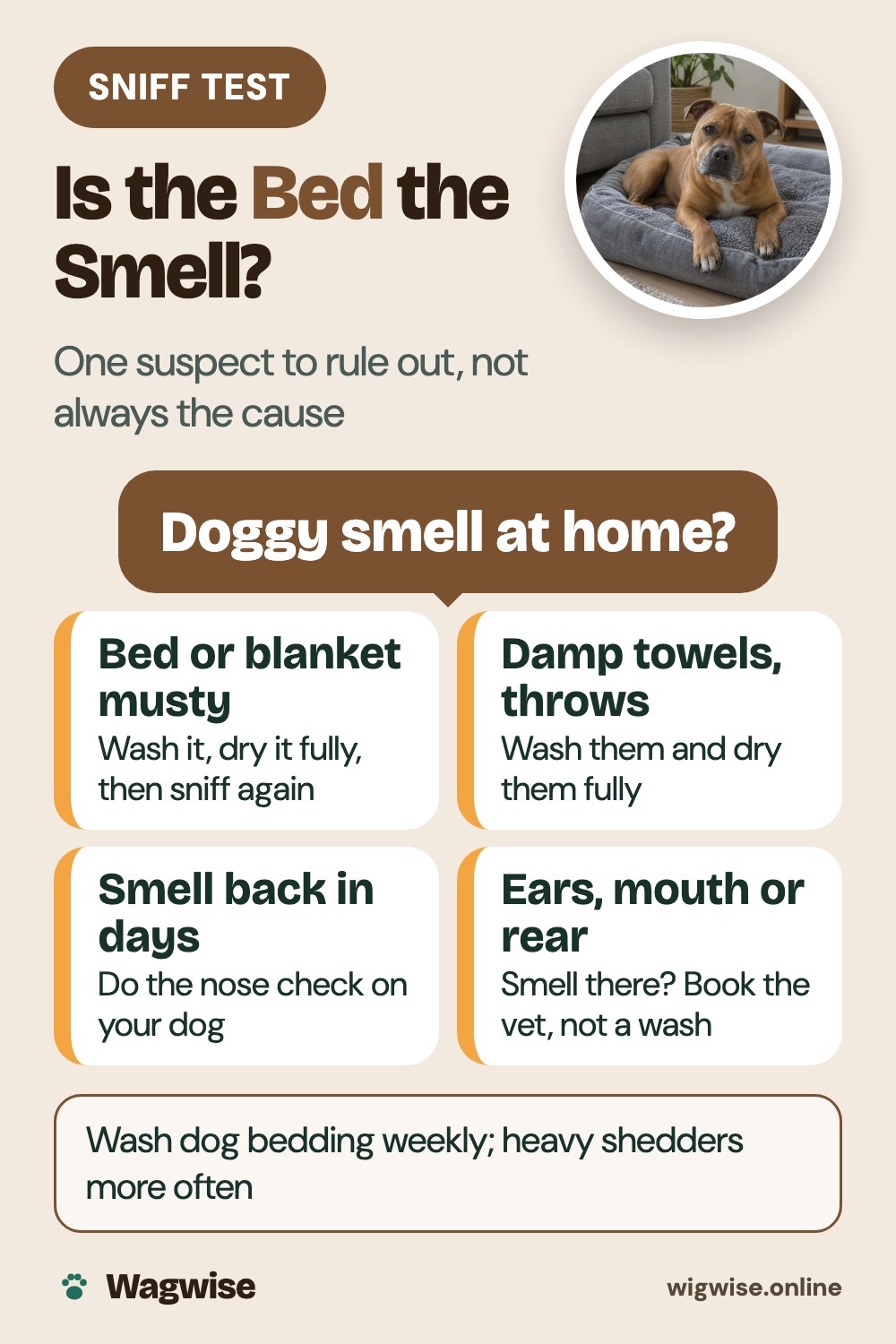
Is the bed the smell? A quick sniff test
Before you buy new bedding, do the sniff test. Bed and blankets: washed in the last week? Towels and throws that stay damp? If a blanket smells musty, wash it and dry it fully. If a freshly washed bed smells again within days, give your dog a nose check too.
Then check your dog. Sniff in the same order every time: coat, ears, breath, rear end and paws. If any zone is off, the laundry won’t fix it. The nose check explains what each zone can mean.
Bedding steps at a glance
| Step | Why |
|---|---|
| Vacuum first | Hair clogs washing machines |
| Fragrance-free detergent | Avoids scented products where your dog sleeps |
| Hottest label setting | The source gives no temperature |
| Air dry | A damp bed encourages mold |
| Two sets | One is always clean |
Why two sets of bedding help
With only one bed cover, washing day leaves your dog with nowhere clean to sleep and tempts you to put the cover back before it is fully dry. A second set solves both problems. While set A is on the bed, set B is in the wash or drying. Swap them every week, and note the date on a calendar or phone reminder so the habit sticks.
Put a washable cover or blanket on the dog’s favorite sofa spot too, so the places your dog lies most are the places you can wash. Heavy shedders need more frequent cleaning, so if the bed fills with hair within a few days, shorten the gap between washes. Our two-set rotation is a suggestion, and your own routine may differ.
What to do with old or worn bedding
Check the care label before you wash a new bed, and test any product on a hidden spot first. If a bed can’t be washed, vacuum it, shake it outside and ask the shop how to clean it. A bed that stays damp or smells musty after a full wash and dry may be due for replacement, which is a judgment call, not a source-backed rule.
Cleaning products to avoid near the bed
Pine-oil cleaners and deodorizers contain pine oil, which is toxic to dogs. Choose unscented products where your dog sleeps, and ask your vet if you’re not sure. Scented sprays and perfumes can cover a smell, but covering it can hide a medical sign, so look for the cause first. Never mix cleaning products.
Where bedding fits in the weekly routine
Bedding is the first item in the weekly home reset: vacuum the bed, wash the cover, wash the throws, then move on to the hair zones. If your dog is itching or you see fleas, that is a question for your vet. The sources we used for this article do not cover flea control, so we don’t give any advice on it here.
Frequently asked questions
How often should I wash my dog's bed?
Weekly. The CDC and the authors of one study recommend it, and heavy shedders need it more often.
Why does my dog's bed smell?
An unwashed or damp bed is a common reason, but a smell on the bed can also come from your dog. Do a nose check on the coat, ears, breath, rear end and paws too.
What temperature should I wash dog bedding at?
The source gives no temperature, so use the hottest setting the label allows.
What if my dog's bedding keeps smelling after washing?
Check that it dried fully, and that the smell isn't coming from your dog. A smell from ears, mouth or rear end, or a greasy sour coat, is a reason to call your vet.
More Wagwise guides for dog owners
 Stop Puppy BitingA gentle 4-week plan to stop the nipping and get through teething.$17 · instant PDFSee the guide →
 Get Rid of Dog Pee SmellRemove urine odor for good, then stop the accidents with a 14-day reset.$17 · instant PDFSee the guide →
 Stop Dog BarkingA quiz finds why your dog barks, then a plan made for that reason.$17 · instant PDFSee the guide →
 Help Your Itchy DogTrack triggers, soothe skin safely and know when to see the vet.$17 · instant PDFSee the guide →
 House-Train Your PuppyA kind 4-week plan with a schedule by age, a night plan and printable trackers.$17 · instant PDFSee the guide →
 Stop Leash PullingA 4-week force-free plan for calmer walks and a loose leash.$17 · instant PDFSee the guide →
 Leave Your Dog AloneFilm, sort and build calm alone time with a vet-first plan and a step-by-step ladder.$17 · instant PDFSee the guide →
 Puppy Sleeps Through the NightA realistic, age-by-age plan for calmer nights, without cry-it-out or crate fights.$17 · instant PDFSee the guide →
Want all four? Get the complete library for $49.
Sources
This article is general education, not veterinary advice. It does not replace an examination by your vet or help from a qualified behaviourist.