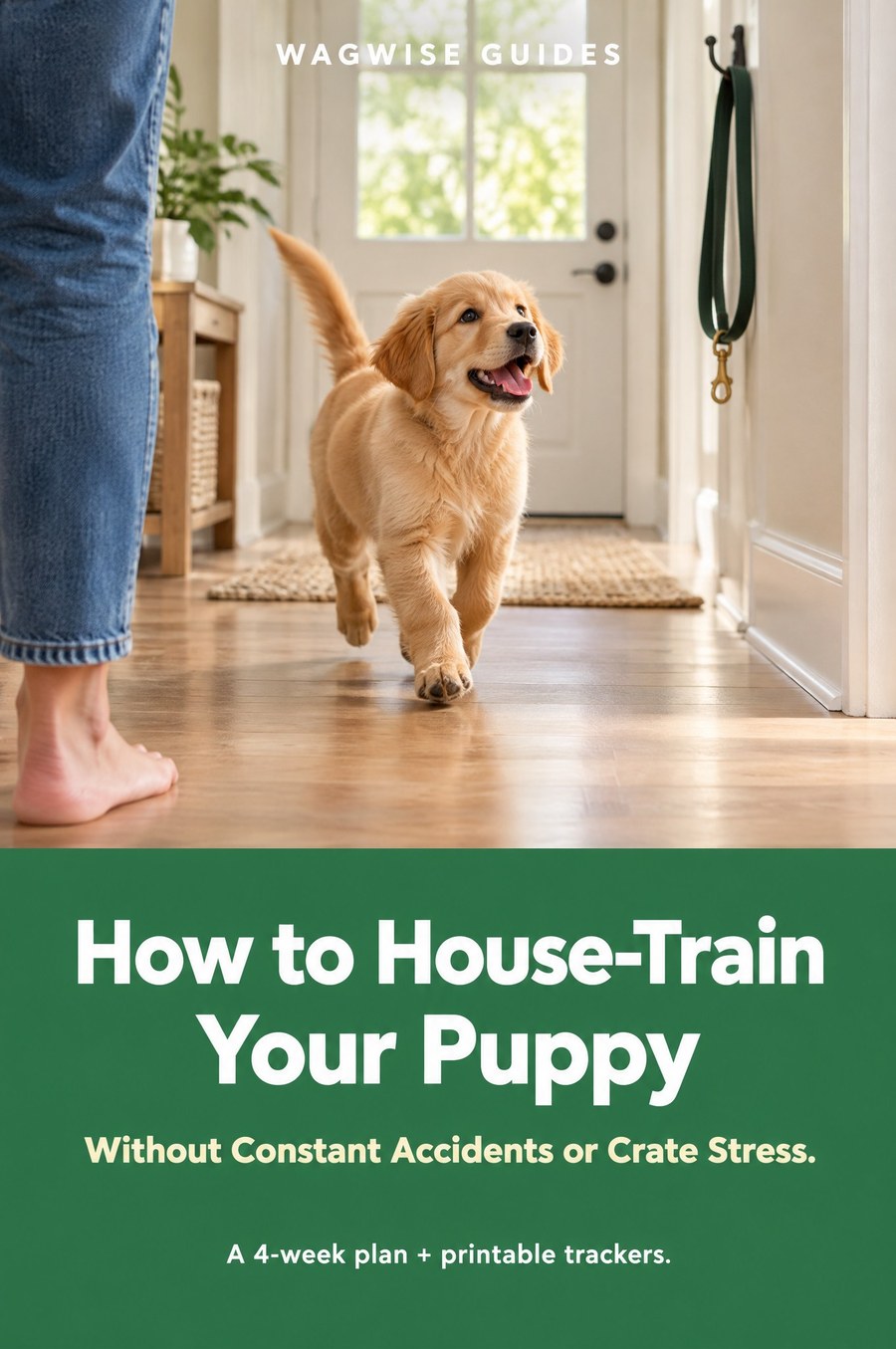
House-training
Crate Training for Potty: Do It Kindly
Quick answer
Crate training for potty means making the crate a calm den and using it for sleep and short, kind absences. Introduce it in small steps, never force your puppy in, never use it as punishment, and take your puppy straight to the toilet spot after any long stretch inside.
- A crate is a safe den and a way to prevent accidents, never a time-out.
- Move up the comfort ladder only when your puppy is fully relaxed, and step back if they whine or scrabble.
- There is no magic number of hours. Stay shorter than you think, and use a pen if you will be out longer than your puppy can hold it.
- Panic, heavy drooling, hurting themselves or soiling a clean crate are stop signs.
Crate training for potty works when the crate feels like a calm den, not a cell. Used kindly, it gives your puppy a place to sleep and rest, and it prevents accidents in the minutes you cannot watch. Used as a punishment or for hours of boredom, it backfires.
What is a crate for, and what is it not?
A crate or pen is a safe den and a way to prevent mistakes. It is for sleep, rest and short, calm absences. Never force a dog in, and never leave a puppy to “cry it out”.
| A crate is for | A crate is not for |
|---|---|
| Sleep and rest | Punishment or a time-out |
| Short, calm absences | Storage or hours of boredom |
| Preventing accidents when you cannot watch | Fixing separation distress |
If the crate has ever been used to scold or “teach a lesson”, start the ladder again from step 1.
How do I start crate training for potty?
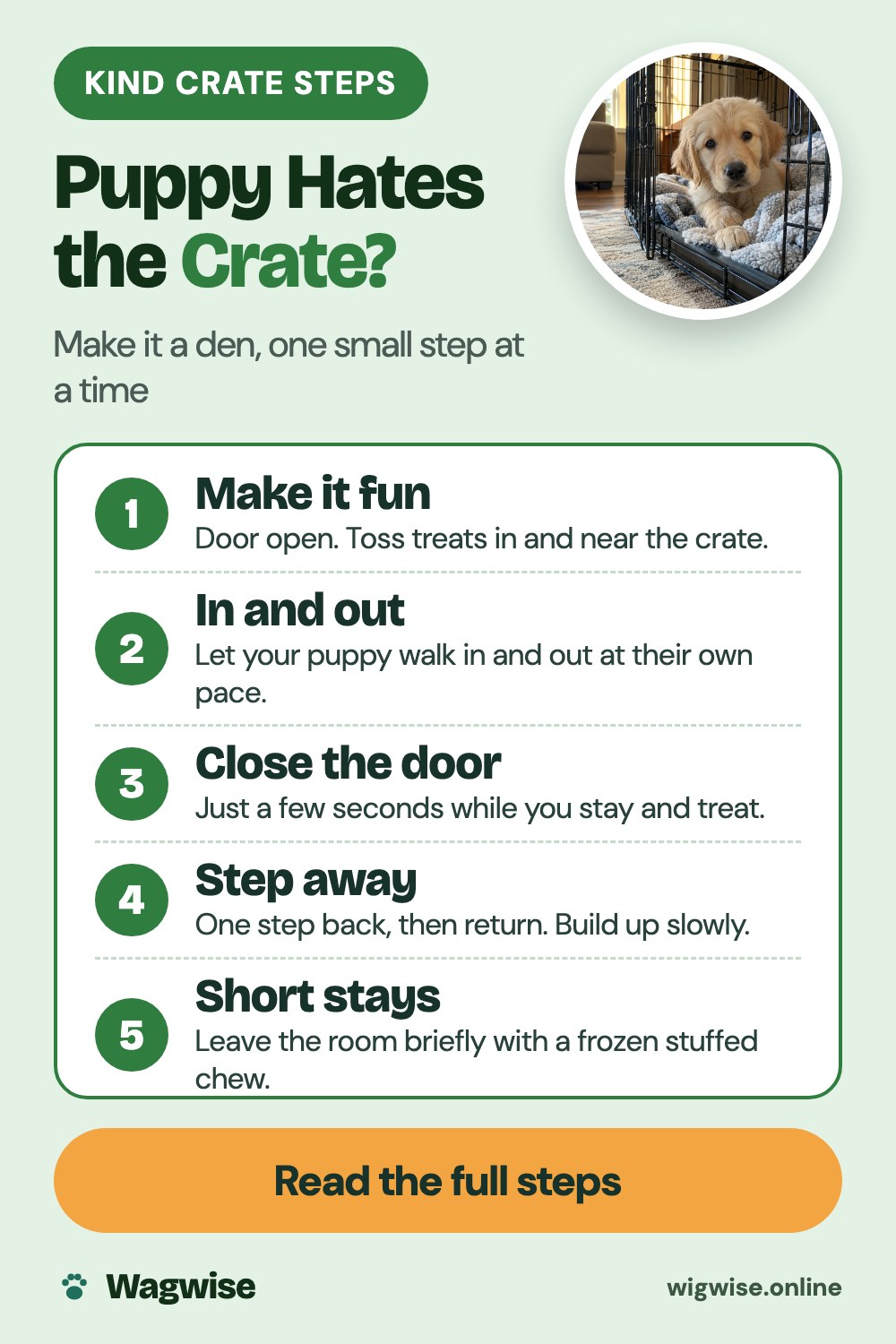
Based on steps from Dogs Trust Dog School and the AKC, here is the comfort ladder. Move on only when your puppy is entirely confident. If they whine or scrabble, go back a step.
- Make it fun. Leave the door open. Toss treats in and near the crate, and treat every 5 to 10 seconds while your puppy is inside.
- In and out. Let your puppy walk in for a treat or toy and walk out again at their own pace.
- Close the door. Close it for a few seconds only, while you stay and treat. Open it before any fuss.
- Step away. Take one step back, then return. Build slowly to moving around the room.
- Leave the room. Start with short stretches and a frozen stuffed chew. Return calmly.
- Short, real-life stays. Use the crate for naps and bedtime, and go on a potty trip straight afterward.
What size crate does a puppy need?
Big enough to stand, turn around and lie down comfortably. Dogs Trust Dog School adds that it should be tall enough for your puppy to stand at full height and stretch out. Use a divider so the crate grows with your puppy. If it is too big, a puppy may soil one end and sleep at the other.
Inside, keep it simple: a washable blanket or bed, a frozen stuffed chew each time you crate, and nothing that could be swallowed.
How long can a puppy stay in a crate?
There is no magic number. Dogs Trust Dog School says never leave a dog for longer than they can cope with, because too long can lead to stiff joints, separation-related behaviors or toilet accidents. The AKC says no longer than your dog can hold their bladder.
Some websites print exact crate hours for puppies. We leave them out, because we could not confirm them in the veterinary and welfare guidance we read. A rough ceiling many sources use is about one hour per month of age, but treat that as the most a calm puppy might manage, not a plan. Play, excitement and drinking shorten it. After several hours of confinement, go straight to the toilet spot.
When should I stop crating and use a pen?
If you will be out longer than your puppy can hold it, do not crate. Use an exercise pen or a small gated room with separate sleep, play and toilet areas, so your puppy can sleep away from where they go. Our pages on eyes-on or confined supervision show how to set one up.
Stop crating and switch to a pen if you see:
- Panic, heavy drooling or frantic escape attempts
- Your puppy hurting themselves on the crate
- Soiling in a crate they usually keep clean
- Refusing to go in, even for treats
The crate also does not fix distress when alone. A dog who is upset by being left needs a gentler plan, not a locked door. For night use, see the night plan, and for the whole routine, see the House-Train Your Puppy guide.
Frequently asked questions
How long can a puppy stay in a crate?
There is no single safe number. Never leave a dog longer than they can cope with or can hold their bladder, and stay shorter than you think during the day. Ask your vet for a number that fits your puppy's age and health.
What size crate does a puppy need?
Big enough to stand, turn around and lie down comfortably. A crate with a divider grows with your puppy, because one that is too big lets a puppy soil one end and sleep at the other.
My puppy hates the crate. What now?
Go back to step 1 and make the crate a place where good things happen with the door open. If your puppy panics, stop crating and use a puppy-proofed pen or gated area.
Should I crate my puppy while I am at work?
Crating a young puppy for longer than they can hold it risks accidents and distress. A pen with separate sleep, play and toilet areas, plus a midday visitor, is a better plan.
More Wagwise guides for dog owners
 Stop Puppy BitingA gentle 4-week plan to stop the nipping and get through teething.$17 · instant PDFSee the guide →
 Get Rid of Dog Pee SmellRemove urine odor for good, then stop the accidents with a 14-day reset.$17 · instant PDFSee the guide →
 Stop Dog BarkingA quiz finds why your dog barks, then a plan made for that reason.$17 · instant PDFSee the guide →
 Help Your Itchy DogTrack triggers, soothe skin safely and know when to see the vet.$17 · instant PDFSee the guide →
 Stop Leash PullingA 4-week force-free plan for calmer walks and a loose leash.$17 · instant PDFSee the guide →
 Leave Your Dog AloneFilm, sort and build calm alone time with a vet-first plan and a step-by-step ladder.$17 · instant PDFSee the guide →
 Puppy Sleeps Through the NightA realistic, age-by-age plan for calmer nights, without cry-it-out or crate fights.$17 · instant PDFSee the guide →
 Less Dog Hair, Less SmellA 4-week brushing, bath and home routine for a calmer-smelling house.$17 · instant PDFSee the guide →
Want all four? Get the complete library for $49.
Sources
This article is general education, not veterinary advice. It does not replace an examination by your vet or help from a qualified behaviourist.