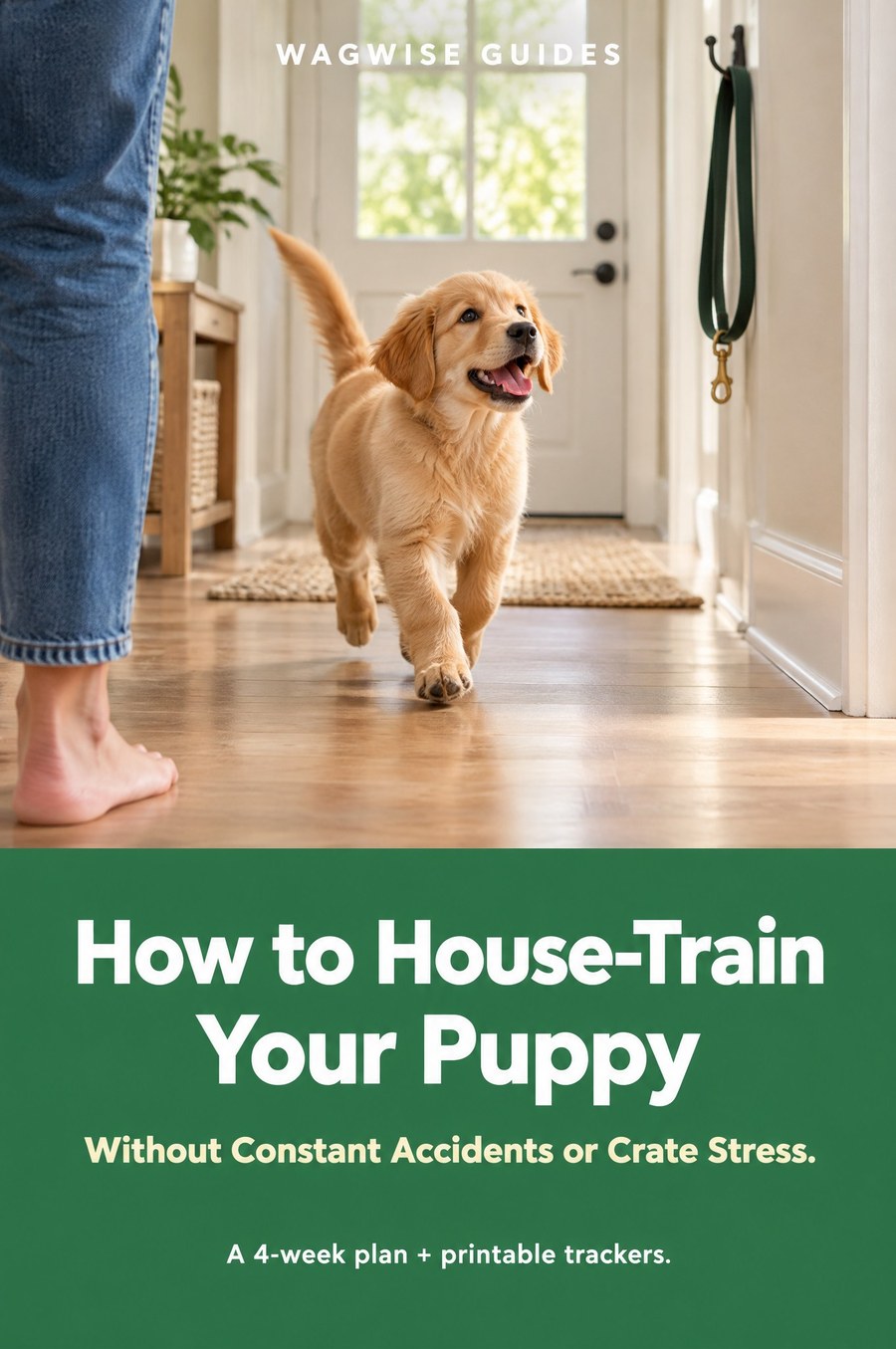
House-training
Eyes-On or Confined: Potty Training Supervision Rules
Quick answer
Potty training supervision has two modes and nothing in between. Eyes-on means your puppy is in sight or on a leash to you. Safely confined means a pen or crate set up kindly. Most accidents happen in unwatched minutes, so every minute should be one or the other.
- Most accidents happen in unwatched minutes. There is no half-watching.
- Eyes-on means in sight, or on a 6-foot leash clipped to you or a heavy chair.
- Safely confined means a pen or gated area small enough that your puppy does not want to go there.
- Take your puppy out straight after opening the pen or crate.
Potty training supervision is simpler than it sounds. Most accidents happen in unwatched minutes, so every minute is one of two modes: eyes-on, or safely confined. There is no “half-watching” while you scroll your phone.
What are the two supervision modes?
| Mode 1: Eyes-on | Mode 2: Safely confined |
|---|---|
| Same room and in sight | A pen or gated area small enough that your puppy does not want to go there |
| Or on a 6-foot leash clipped to you or a heavy chair | Or a crate, for sleep and short stretches |
| Not on your phone, cooking or in the shower | Water, a bed and a chew are in, with the toilet corner away from them |
| You know when the last trip was | A potty trip comes straight after you open the door |
Working from home? The leash clipped to your chair keeps you eyes-on.
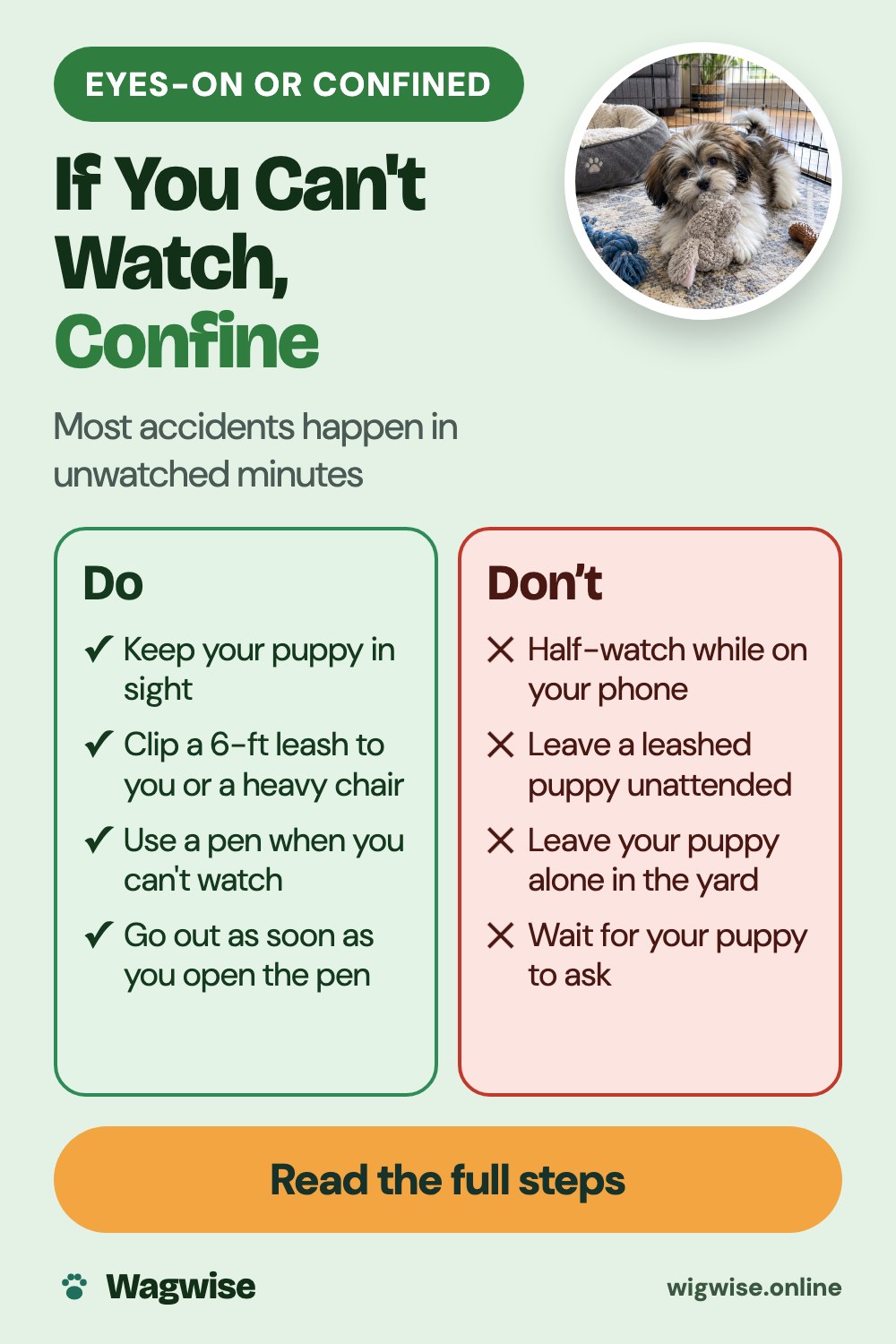
Clip a 6-foot leash to your waistband or a chair while you cook or work. You will see the sniffing and circling that come before a puddle. Use it only while you are there, and never leave a puppy on a leash unattended.
How do I set up a pen the right way?
If you will be out longer than your puppy can hold it, use an exercise pen or small gated room with separate sleep, play and toilet areas, so your puppy can sleep away from where they go. A crate is for sleep and short, calm absences. See crate training for potty for the kind way to introduce it. A pen or crate is a calm corner, never a punishment.
Name the eyes-on and confined spots in each room you use. Tell everyone at home: if you cannot watch, the puppy goes in the pen.
Is the yard a room too?
Yes. Keep your puppy on a leash outside while you train. A puppy left alone in the yard goes without any reward from you, and you miss the moment to teach. Treat the yard like another room where you are eyes-on.
Who watches when guests and kids are around?
One adult owns the log and the leash. Children can help with the cue word and treats, but not with taking a puppy out alone. Ask guests to join the plan, or put your puppy in the pen. Take your puppy out without other pets for now, so play does not compete with the job.
What should I watch for?
Sniffing the floor, circling, suddenly stopping play, whining, scratching at a door, and restlessness. Do not wait for your puppy to ask, because many puppies never signal in a way owners notice. Our guide to signs your puppy needs to go covers them. After several hours of confinement, take your puppy straight to the toilet spot.
How do I give freedom back?
Rooms are earned with clean days. If an accident happens, ask whether your puppy was watched, a trip was overdue, or the space was too big, and take one step back rather than starting over. The freedom ladder shows the steps, and the House-Train Your Puppy guide explains the full routine. If your puppy circles and strains but little comes out, call your vet.
Frequently asked questions
What counts as eyes-on?
Your puppy is in the same room and in sight, or on a 6-foot leash clipped to you or a heavy chair. You are not on your phone, cooking or in the shower, and you know when the last trip was.
What is the leash or umbilical cord method?
Clip a 6-foot leash to your waistband or a chair while you cook or work, so you see the sniffing and circling before a puddle. Use it only while you are there, and never leave a puppy on a leash unattended.
How big should a puppy pen be?
Small enough that your puppy does not want to go there. Put water, a bed and a chew in, and keep the toilet corner away from them.
Can children supervise the puppy?
Children can help with the cue word and treats, but not with taking a puppy out alone. One adult owns the log and the leash.
More Wagwise guides for dog owners
 Stop Puppy BitingA gentle 4-week plan to stop the nipping and get through teething.$17 · instant PDFSee the guide →
 Get Rid of Dog Pee SmellRemove urine odor for good, then stop the accidents with a 14-day reset.$17 · instant PDFSee the guide →
 Stop Dog BarkingA quiz finds why your dog barks, then a plan made for that reason.$17 · instant PDFSee the guide →
 Help Your Itchy DogTrack triggers, soothe skin safely and know when to see the vet.$17 · instant PDFSee the guide →
 Stop Leash PullingA 4-week force-free plan for calmer walks and a loose leash.$17 · instant PDFSee the guide →
 Leave Your Dog AloneFilm, sort and build calm alone time with a vet-first plan and a step-by-step ladder.$17 · instant PDFSee the guide →
 Puppy Sleeps Through the NightA realistic, age-by-age plan for calmer nights, without cry-it-out or crate fights.$17 · instant PDFSee the guide →
 Less Dog Hair, Less SmellA 4-week brushing, bath and home routine for a calmer-smelling house.$17 · instant PDFSee the guide →
Want all four? Get the complete library for $49.
Sources
This article is general education, not veterinary advice. It does not replace an examination by your vet or help from a qualified behaviourist.