
House-training
Potty Training at Night: The Night Plan
Quick answer
Potty training at night means expecting to get up for the first few weeks. Keep the evening calm, take a last trip right before bed, and make night trips quiet and boring: low light, no play, straight back to bed. Extend the gap when your log shows dry nights.
- Expect to get up at night for the first weeks. Plan for it instead of fighting it.
- A calm evening and a last trip right before bed set up the night.
- Night trips are quiet and boring: low light, no talking, no play.
- Sources disagree on how long puppies can hold it and on night water, so ask your vet and let your log lead.
Potty training at night starts with a realistic promise: you will probably get up for the first few weeks. That is normal for a small bladder, not a sign you are failing. A calm evening and a quiet, boring night trip keep everyone as rested as possible.
What does a good evening look like?
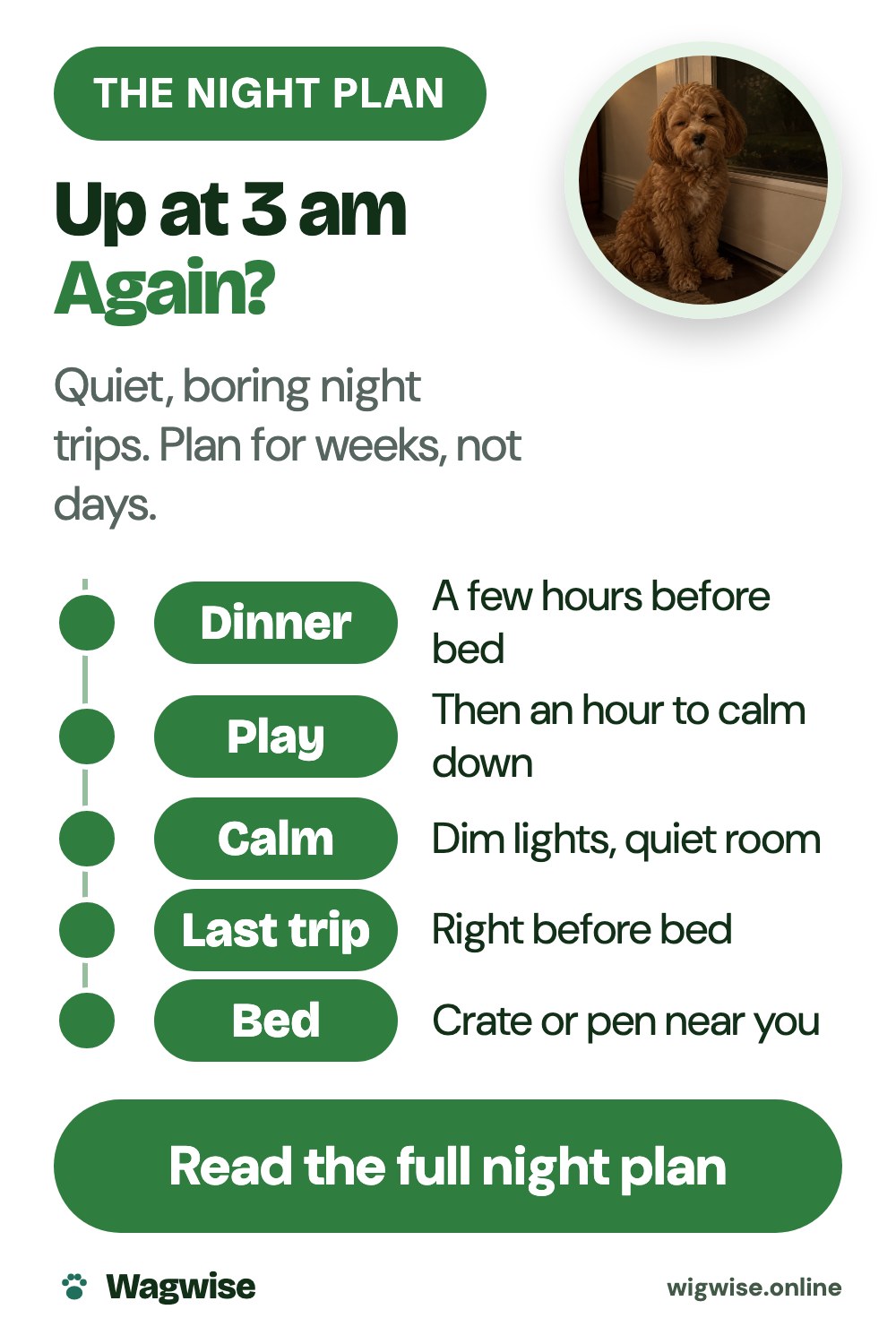
Work backward from bed. A veterinarian’s example is dinner at 5, play from 7 to 8 and bed at 9 pm. Adjust it to your day, but keep the order the same.
- Dinner a few hours before bed.
- Play, then an hour to calm down.
- Calm: dim lights and a quiet room.
- Last trip right before bed.
- Bed: a crate or pen near you.
A crate or pen in your bedroom helps a new puppy feel close, and a worn shirt of yours in the bed can help. Move it further away gradually.
How do I handle night trips?
For the first weeks, set one alarm. Keep the lights low, do not talk or play, take your puppy to the spot, reward calmly and go straight back to bed. Longer gaps come as your log shows dry nights.
If your puppy cries, a quick check helps. Crying right after crating is usually worry. Crying in the middle of the night may be a toilet break. Answer the need calmly, and do not make it a party. If your puppy is distressed for any reason, never leave them to “cry it out”.
How long until my puppy has dry nights?
Experts differ, so there is no honest single number.
| Source | What it says |
|---|---|
| A veterinarian (PetMD) | Usually about 4 to 6 hours overnight |
| Humane World | Most can comfortably sleep about seven hours |
| Dogs Trust Dog School | A puppy on track should hold it through the night by about 8 months |
Plan for night trips for weeks, and let your log decide when to stretch the gap.
Should I take water away at night?
This is another place where experts differ.
- Option A: Humane World suggests picking up the water dish about two and a half hours before bedtime.
- Option B: Dogs Trust Dog School says not to withhold food or water.
Our call: never limit water during the day. If you time it at night, do it only in the evening, keep a bowl available at other times, and ask your vet first.
What can I set up tonight?
A few small choices make the first weeks easier.
- Set tonight’s dinner time and bedtime, using the evening order above.
- Set one night alarm, and keep a dim light and the leash ready by the bed.
- Decide with your vet how you will handle water in the evening.
- Put the crate or pen close to your bed, with a worn shirt of yours inside.
Feeling worn out is normal. Ask a friend or family member to take one night shift if you can, so you get a full night’s sleep now and then.
What if the bed gets wet?
Do not scold. Add a trip, make the space smaller and tell your vet. A wet bed is information about timing. If your puppy drinks much more than usual, or wakes to pee far more often than before, call your vet. For the crate side of the plan, read crate training for potty. To spot your puppy’s pattern, try the 3-day potty log, and see the House-Train Your Puppy guide for the full night plan.
Frequently asked questions
How long until my puppy sleeps through the night?
It varies. One veterinarian says puppies can usually hold about 4 to 6 hours overnight, Humane World says most can comfortably sleep about seven hours, and Dogs Trust Dog School says a puppy on track should hold it through the night by about 8 months. Plan for night trips for weeks.
Should I take my puppy's water away at night?
Experts differ. One source suggests picking up the dish about two and a half hours before bed, another says not to withhold food or water. Never limit water during the day, and ask your vet before timing it at night.
Is my puppy crying because of worry or because they need to go?
Crying right after crating is usually worry. Crying in the middle of the night may be a toilet break. Answer the need calmly and do not turn it into play.
My puppy wet the bed overnight. What now?
Add a trip, make the sleeping space smaller and tell your vet. Never scold. A bed that stays wet is information about timing.
More Wagwise guides for dog owners
 Stop Puppy BitingA gentle 4-week plan to stop the nipping and get through teething.$17 · instant PDFSee the guide →
 Get Rid of Dog Pee SmellRemove urine odor for good, then stop the accidents with a 14-day reset.$17 · instant PDFSee the guide →
 Stop Dog BarkingA quiz finds why your dog barks, then a plan made for that reason.$17 · instant PDFSee the guide →
 Help Your Itchy DogTrack triggers, soothe skin safely and know when to see the vet.$17 · instant PDFSee the guide →
 Stop Leash PullingA 4-week force-free plan for calmer walks and a loose leash.$17 · instant PDFSee the guide →
 Leave Your Dog AloneFilm, sort and build calm alone time with a vet-first plan and a step-by-step ladder.$17 · instant PDFSee the guide →
 Puppy Sleeps Through the NightA realistic, age-by-age plan for calmer nights, without cry-it-out or crate fights.$17 · instant PDFSee the guide →
 Less Dog Hair, Less SmellA 4-week brushing, bath and home routine for a calmer-smelling house.$17 · instant PDFSee the guide →
Want all four? Get the complete library for $49.
Sources
This article is general education, not veterinary advice. It does not replace an examination by your vet or help from a qualified behaviourist.