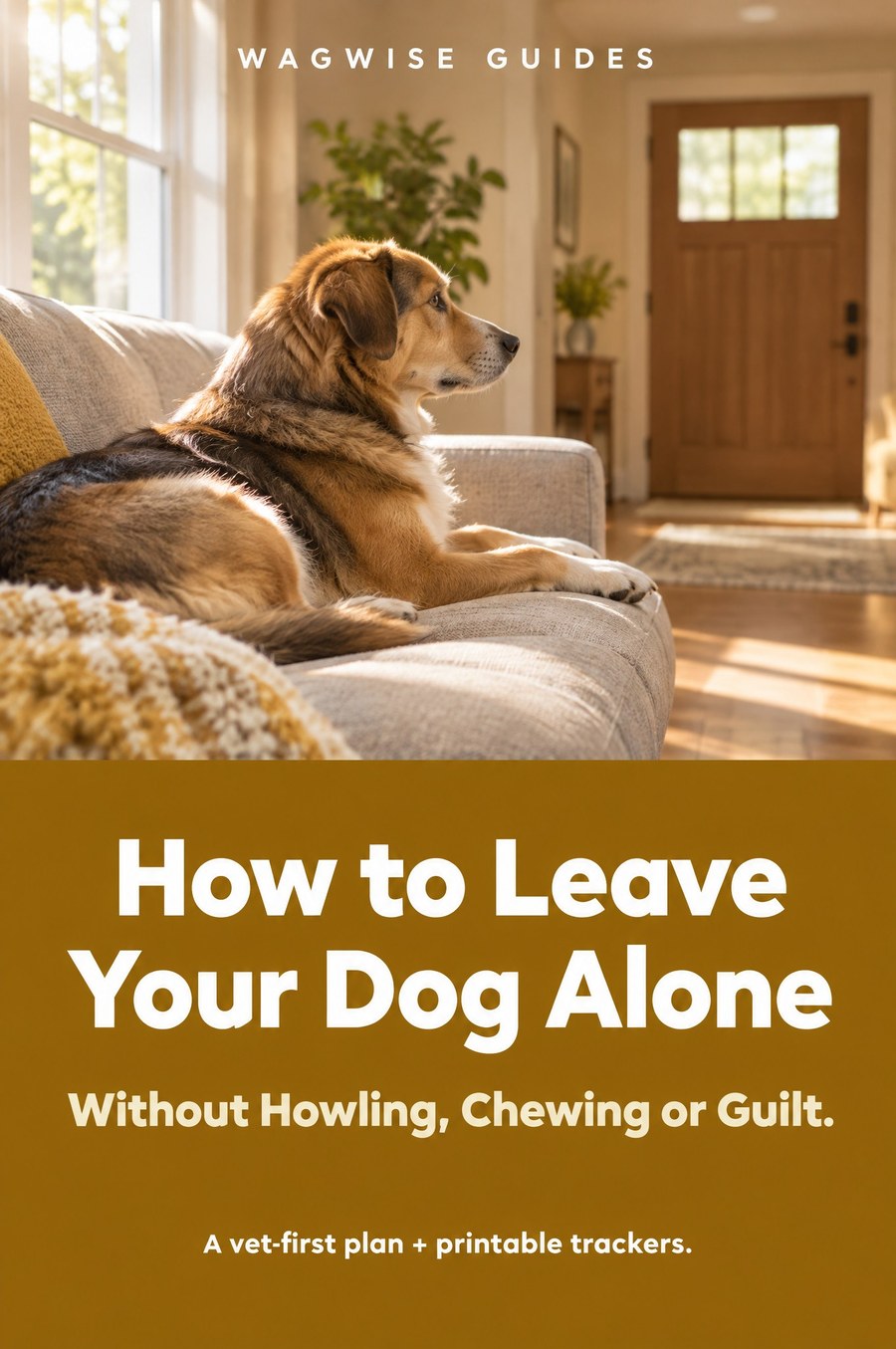
Home alone
Dog Home Alone: Your Vet and a Behaviorist
Quick answer
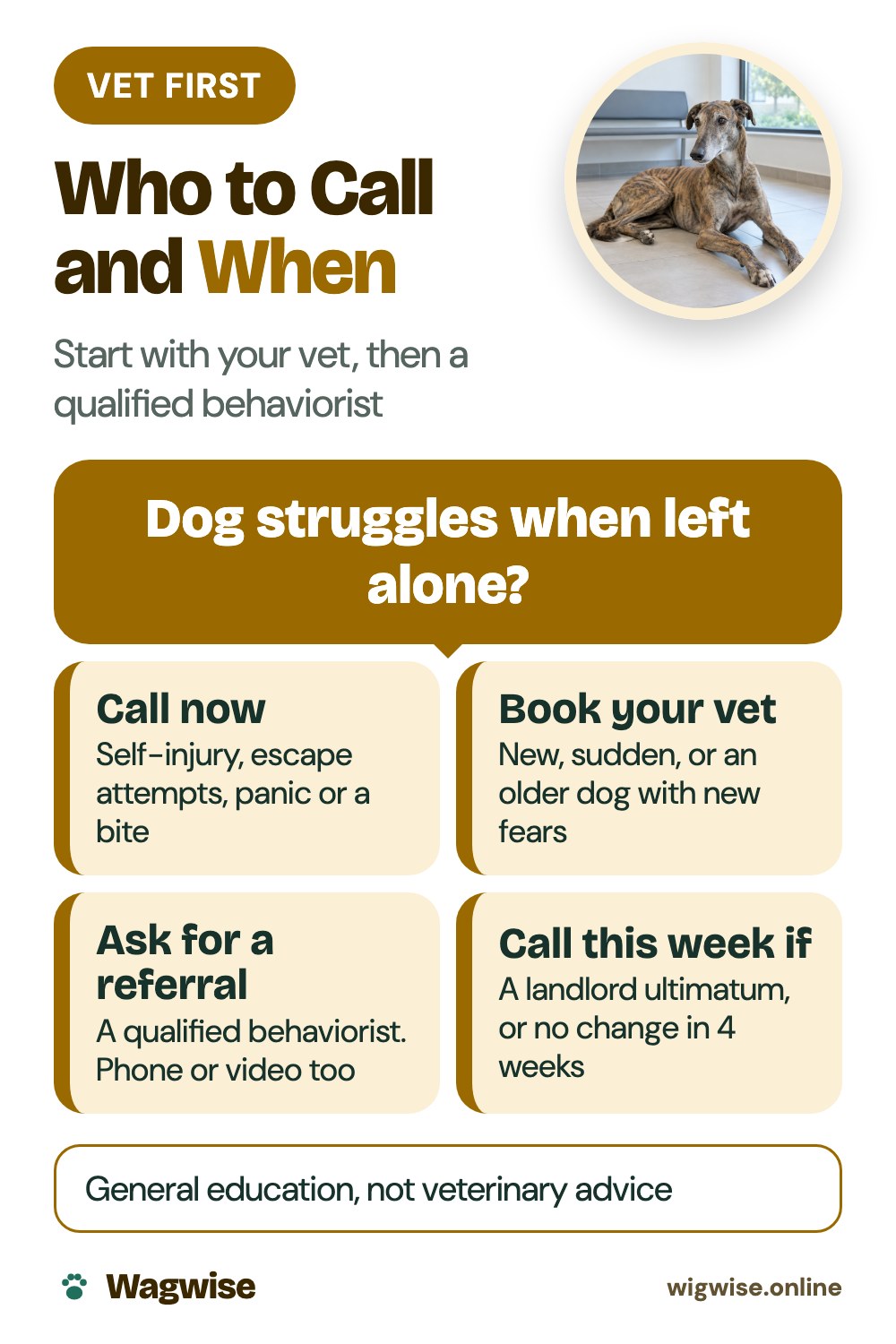
Start with your vet, who can check for pain, illness and age changes that look like anxiety. Then ask for a referral to a qualified dog behaviorist for separation anxiety. Bring videos and notes, ask about medication as your vet's decision, and walk away from anyone who uses punishment or promises quick results.
- Your vet comes first: pain, illness, incontinence, medication side effects and age changes can all look like anxiety.
- Ask your vet for a referral to a qualified behaviorist. A remote consult is a real option.
- Medication is your vet's decision, and the evidence is mixed. Never start, stop or change a medicine yourself.
- Walk away from anyone who talks about being alpha, uses aversive tools, punishes a mess or promises quick results.
A dog behaviorist for separation anxiety is often part of the answer, and your vet is the way in. This is a problem where professional help often matters. Dogs Trust says contacting a qualified professional is the best way to stop it from getting worse. Asking early isn’t failing. It is the plan.
A guide like ours can help you notice, prepare and ask good questions. It does not diagnose anything, and it can’t examine your dog.
Why start with the vet?
Your vet can check for pain, illness, incontinence, medication side effects and age-related changes, any of which can look like anxiety. Start here if the behavior is new, has changed suddenly, or your dog seems more fearful in general or seeks comfort more than before.
Bring to the visit:
- Your videos, and the minute signs began.
- When it started, and what changed in your life.
- What you’ve tried, and what happened.
- Your dog’s food, medicines and routine.
Questions to ask:
- Could pain or illness be part of this?
- What do you think is behind it?
- Can you refer us to a veterinary behaviorist?
- Would medication make sense for us, or not?
- What should we do about the hours alone while we wait?
Who does what: a dog behaviorist for separation anxiety and others
| Who | What they do |
|---|---|
| Your vet | First stop. Rules out health causes, talks through options, and refers you on. |
| Board-certified veterinary behaviorist (US: Dip ACVB) | A vet with extra training in behavior. Can look at the whole picture, including medication. |
| Certified applied animal behaviorist (US: CAAB or ACAAB) | A behavior specialist with advanced training. |
| Clinical animal behaviorist (UK) | The RSPCA says your vet should refer you to one to find the cause and make a personalized plan. |
| Dog trainer with fear-work experience | Can help, but a trainer certificate doesn’t require experience with desensitization, so ask. |
Which professionals should you walk away from?
Walk away from someone who:
- talks about being “alpha” or “the boss”
- uses or recommends shock, spray, prong or choke tools, or bark collars
- suggests punishing a mess
- promises quick or certain results
- won’t explain what they plan to do
Ask any professional what training and credentials they have, what methods they use (look for reward-based), how many separation cases they see, and whether they will work with your vet. Reward-based, force-free methods are what the American Veterinary Society of Animal Behavior supports. Check credentials with the issuing organization.
What about medication and cost?
Some dogs with separation-related distress are prescribed medication alongside behavior work. Whether that is right for your dog is a conversation with your vet. The evidence is mixed, and medication on its own is unlikely to resolve the problem. We name no drugs and give no doses.
Help can be remote: advice by phone, video or email appeared as effective as in person in one review. Ask your vet’s office or a local rescue about behavior support or low-cost clinics. In the UK, Dogs Trust runs a free Behaviour Support Line; check its current hours first.
What does a professional’s plan usually look like?
Expect a short, specific plan. A review found that advice works best when it is specific and limited to about five instructions. If the professional’s plan differs from any guide, follow the professional’s plan. They know your dog.
Next, sort what you are seeing before the visit, and read what not to do. The Wagwise home alone guide includes a visit sheet you can fill in. It is general education, not veterinary advice.
Frequently asked questions
Who should I call first about my dog's trouble when left alone?
Your vet. They can check for health causes and refer you to a qualified behaviorist. Say it is a behavior concern when you book.
What is the difference between a vet, a veterinary behaviorist and a trainer?
A vet is the first stop. A board-certified veterinary behaviorist (US: Dip ACVB) is a vet with extra training in behavior. A certified applied animal behaviorist has advanced training. A trainer can help, but ask about experience with fear work.
Can I get help by phone or video?
Yes. In one review, advice by phone, video or email appeared as effective as in person, so a remote consult is a real option.
Will my dog need medication?
That is a conversation with your vet, not a decision to make yourself. The evidence is mixed, and medication on its own is unlikely to resolve the problem.
More Wagwise guides for dog owners
 Stop Puppy BitingA gentle 4-week plan to stop the nipping and get through teething.$17 · instant PDFSee the guide →
 Get Rid of Dog Pee SmellRemove urine odor for good, then stop the accidents with a 14-day reset.$17 · instant PDFSee the guide →
 Stop Dog BarkingA quiz finds why your dog barks, then a plan made for that reason.$17 · instant PDFSee the guide →
 Help Your Itchy DogTrack triggers, soothe skin safely and know when to see the vet.$17 · instant PDFSee the guide →
 House-Train Your PuppyA kind 4-week plan with a schedule by age, a night plan and printable trackers.$17 · instant PDFSee the guide →
 Stop Leash PullingA 4-week force-free plan for calmer walks and a loose leash.$17 · instant PDFSee the guide →
 Puppy Sleeps Through the NightA realistic, age-by-age plan for calmer nights, without cry-it-out or crate fights.$17 · instant PDFSee the guide →
 Less Dog Hair, Less SmellA 4-week brushing, bath and home routine for a calmer-smelling house.$17 · instant PDFSee the guide →
Want all four? Get the complete library for $49.
Sources
This article is general education, not veterinary advice. It does not replace an examination by your vet or help from a qualified behaviourist.