Home alone
What Not to Do When Your Dog Struggles Alone
Quick answer
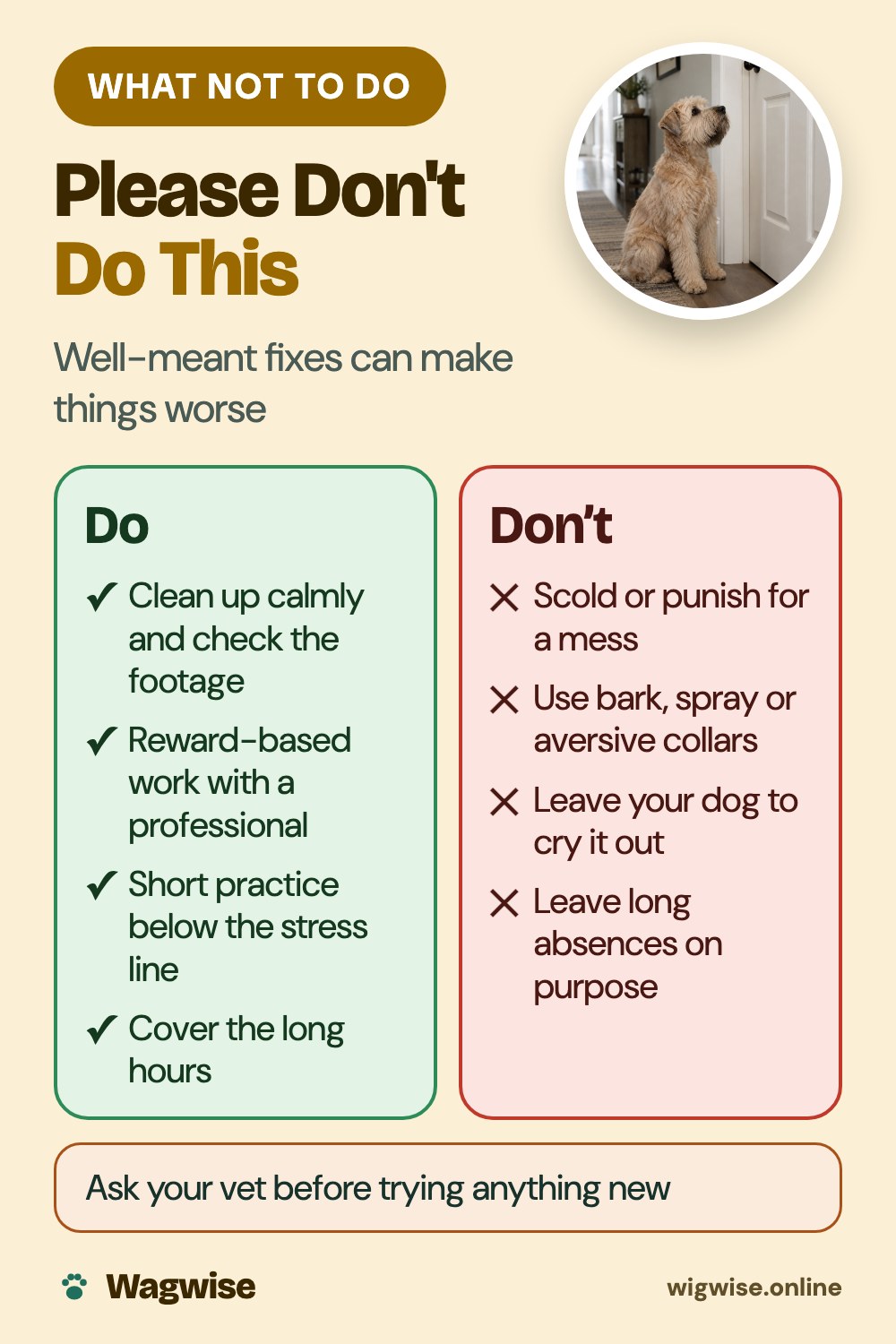
Here is what not to do when your dog struggles alone: don't punish, don't use aversive collars, don't leave your dog to cry it out, don't leave long absences on purpose, and don't rely on a crate, a second dog or a calming product as the fix. Cover the long hours and ask your vet.
- Well-meant fixes can make things worse. Punishing a mess teaches nothing, because dogs can't link it to something done hours earlier.
- Cry it out can teach a dog that being alone is terrifying, and some dogs stop calling and suffer in silence.
- A crate, a second dog and calming products are not proven fixes. Ask your vet before you try anything new.
- Silence is not progress. Count relaxed behavior.
Here is what not to do when your dog struggles alone: don’t punish, don’t leave your dog to cry it out, and don’t rely on a gadget to do the work. Well-meant fixes can make things worse. This is what the sources say about the common ones, and what to do instead.
Instead of this, do this
| Instead of | Do |
|---|---|
| Scolding or punishing, including for a mess | Clean up calmly. Look at the footage. |
| Aversive collars or sprays to stop howling | Reward-based work with a professional. |
| “Cry it out” or leaving your dog to “get used to it” | Short practice below the stress line, with cover for the rest. |
| Long absences on purpose | Cover the hours. Practice small. |
| A crate as the fix | A gated room. A crate only if your dog already rests happily in it, door fixed open. |
| Getting a second dog | Work on the plan, with a professional. |
Why punishment backfires
Dogs can’t link a telling-off to something done hours earlier, and punishing can increase anxiety and confusion. The same goes for the guilty look at the door, which usually reflects your dog reacting to your mood. The American Veterinary Society of Animal Behavior supports reward-based methods, and we found no evidence that aversive tools address the cause.
What not to do when your dog struggles alone: cry it out and long absences
The RSPCA says leaving a dog to cry it out teaches your dog that being alone is terrifying, that stress hormones can take days to fall, and that some dogs stop calling out and suffer in silence. Dogs Trust says to avoid long absences, and Merck says to leave the dog alone as rarely as possible to prevent further sensitization.
So cover the long hours, and keep any practice short, with your return time planned in advance. Come back before distress. Never wait for your dog to go quiet.
Is a crate or a second dog the fix?
Dogs Trust says crating alone won’t fix it and a panicking dog risks injury. ASPCA says to skip a crate with heavy panting, drooling or frantic escape attempts. A review found crated dogs were no less likely to show problems. Experts differ here, so ask your vet.
A second dog is not a fix either. Dogs Trust lists conflict, learned unwanted behaviors and both dogs becoming distressed when separated, and a review says another dog doesn’t prevent separation problems.
Calming products: unproven, not proven useless
Dogs Trust says there is no scientific evidence that non-prescription products work. The wider picture is thin and mixed. A sham-controlled trial of a handheld device in 40 dogs had borderline results, owners reported no difference between groups, and the maker funded it. So don’t buy these instead of the plan. If you try one, track whether anything changes, and don’t let it delay vet help.
Before you believe a claim, ask who paid for the study, whether there was a control group, whether the benefit is only what owners reported, and whether it’s a company’s own page. We also found no independent evidence that interactive cameras or treat tossers help with distress. They are fine for watching, not as the plan.
Your five rules this week
- Never punish.
- Cover the long hours.
- Gated room before crate.
- Calming products are optional extras.
- Ask your vet before you try anything new.
Next, read who to call and when and why this isn’t spite. The Wagwise home alone guide has a fuller what-not-to-do chapter. It is general education, and no plan can promise results.
Frequently asked questions
Should I scold my dog for a mess or chewed shoe?
No. Dogs can't link a telling-off to something done hours earlier, and punishing can increase anxiety and confusion. Clean up calmly and look at the footage.
Do bark or spray collars stop howling?
We found no evidence that aversive tools address the cause. AVSAB supports reward-based methods, so work on a plan with a professional.
Will a second dog help?
Dogs Trust lists conflict, learned unwanted behaviors and both dogs becoming distressed when separated. A review says another dog doesn't prevent separation problems.
Do calming products work?
Dogs Trust says there is no scientific evidence that non-prescription products work. The wider picture is thin and mixed, so they are unproven, not proven useless. Don't let one delay vet help.
More Wagwise guides for dog owners
 Stop Puppy BitingA gentle 4-week plan to stop the nipping and get through teething.$17 · instant PDFSee the guide →
 Get Rid of Dog Pee SmellRemove urine odor for good, then stop the accidents with a 14-day reset.$17 · instant PDFSee the guide →
 Stop Dog BarkingA quiz finds why your dog barks, then a plan made for that reason.$17 · instant PDFSee the guide →
 Help Your Itchy DogTrack triggers, soothe skin safely and know when to see the vet.$17 · instant PDFSee the guide →
 House-Train Your PuppyA kind 4-week plan with a schedule by age, a night plan and printable trackers.$17 · instant PDFSee the guide →
 Stop Leash PullingA 4-week force-free plan for calmer walks and a loose leash.$17 · instant PDFSee the guide →
 Puppy Sleeps Through the NightA realistic, age-by-age plan for calmer nights, without cry-it-out or crate fights.$17 · instant PDFSee the guide →
 Less Dog Hair, Less SmellA 4-week brushing, bath and home routine for a calmer-smelling house.$17 · instant PDFSee the guide →
Want all four? Get the complete library for $49.
Sources
This article is general education, not veterinary advice. It does not replace an examination by your vet or help from a qualified behaviourist.