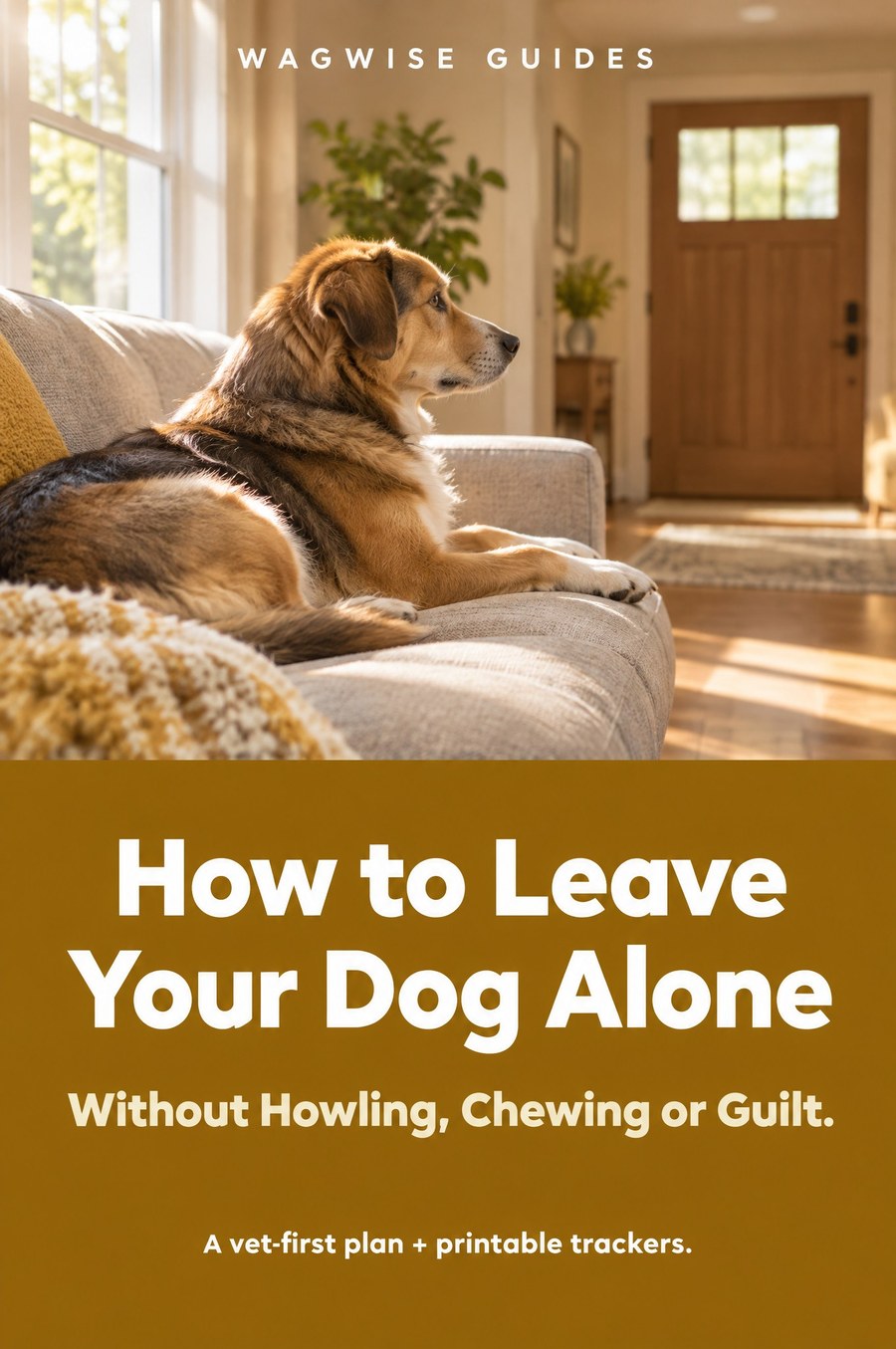
Home alone
Dog Howls When You Leave? Start Here
Quick answer
If your dog howls when you leave, do not scold, do not test your dog with another long absence, and point a camera at the spot where your dog waits. Check the red flags, then call your vet if any apply. These steps do not train anything yet. They stop things getting worse.
- A dog who howls, chews or toilets when you leave is not being bad. Sometimes it is boredom or mischief, and sometimes it is real distress.
- Five calm steps for tonight: drop the punishment, avoid long absences, film, check red flags, and sort before you train.
- Self-injury, escape attempts, a sudden change or a bite means call your vet now.
- Asking a vet and a qualified behaviorist for help early is part of the plan, not a last resort.
If your dog howls when you leave, the first job is not training. It is to stop things getting worse while you work out what is going on. Maybe a neighbor left a note, or a pet-camera clip showed 40 minutes of crying. Take a breath. Your dog is not being bad, and you are not a bad owner.
Dogs don’t howl, chew or toilet when you leave to get even. Sometimes it is boredom, sometimes teenage mischief, sometimes house-training that isn’t finished, and sometimes real distress that needs a vet and a qualified behavior professional.
What to do when your dog howls when you leave
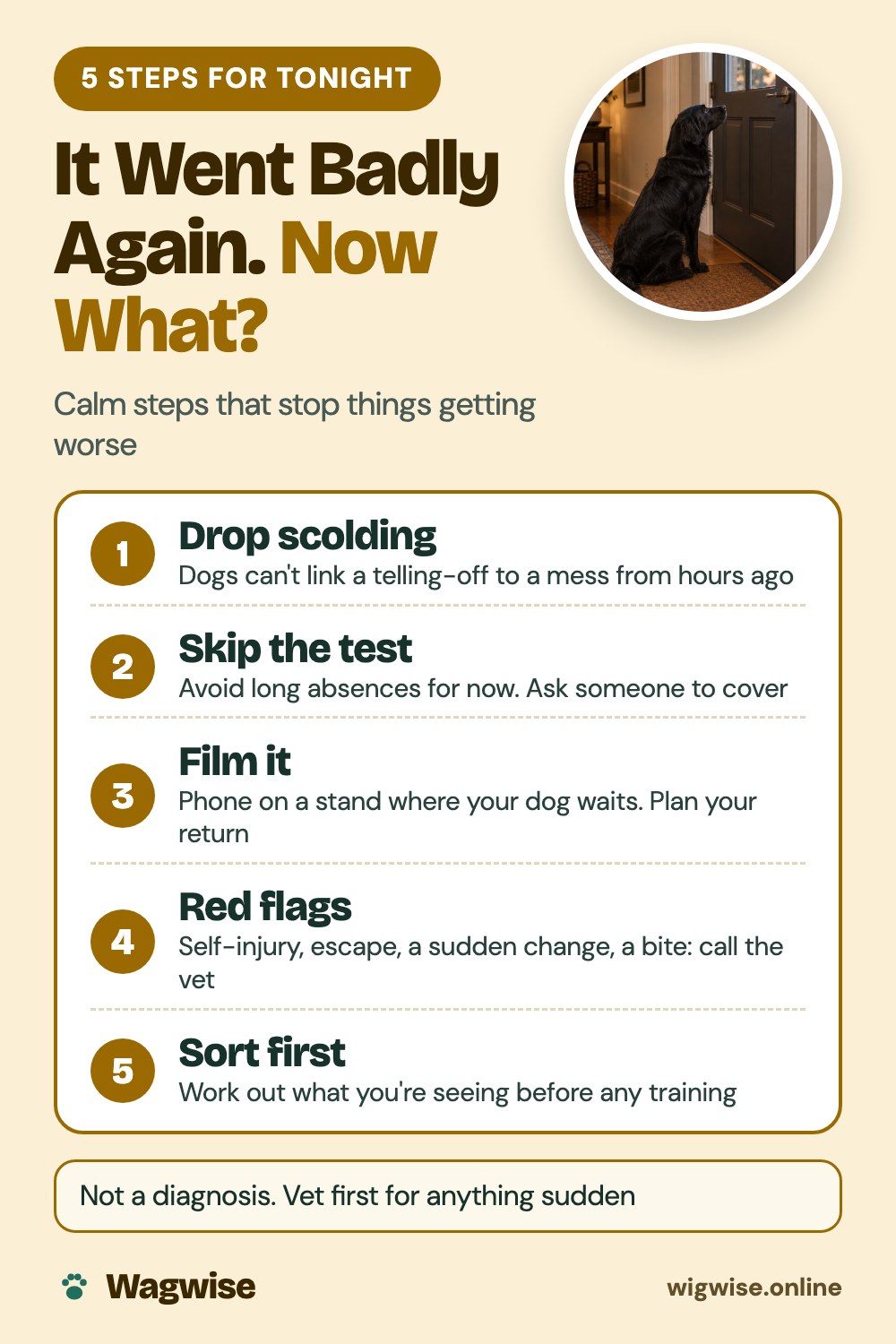
These five steps are for tonight. They are calm, free and quick.
- Drop the punishment. No scolding for a mess or a chewed shoe. Dogs can’t link a telling-off to something done hours earlier, and punishing can add anxiety and confusion.
- Don’t test your dog. If you can, avoid long absences for now. Ask a family member, neighbor, sitter, walker or daycare, or take your dog along. Long absences can make the problem worse.
- Point a camera at the spot. Use an old phone on a stand where your dog spends most of its time. Next time you go out, film. Decide your return time in advance, and come back early if your dog is panicking.
- Check the red flags. The list is below.
- Sort before you train. Work out what you are looking at before you start any plan.
Which red flags mean calling the vet now?
Call your vet now if you see any of these.
| Red flag | Why it matters |
|---|---|
| Self-injury or escape attempts | Bleeding paws, broken teeth or frantic scraping at doors and windows |
| A sudden change | New or sudden changes in behavior, or more fear or clinginess than before |
| An older dog with new fears | Restless nights or confusion in a dog around 8 or older |
| A bite or attempted bite | Including a bite at a person who is leaving |
Medical causes can look like anxiety, and the other way around. That is why the vet comes first for anything new, sudden, severe or involving injury.
Should you leave your dog to cry it out?
No. The RSPCA warns that crying it out teaches a dog that being alone is terrifying, that stress hormones can take days to fall, and that some dogs stop calling out and suffer in silence. So a quiet dog is not always a calm one.
Instead, keep any practice short and stop before your dog is upset. Cover the rest of the day with a helper, a sitter, a walker, daycare or a friend.
Why film your dog before you change anything?
About half of dogs with separation-related behavior show no signs while the owner is home, so a camera sees what you can’t. Video also stops you guessing. A dog who settles and sleeps on camera points toward boredom or mischief. A dog who paces, drools or ignores a chew points toward distress.
What comes after tonight
Dogs Trust says that getting in touch with a qualified professional is the best way to stop separation anxiety from getting worse. Asking early is not failing. Your vet can check for pain or illness, and can refer you to a qualified behaviorist.
Then you can read about filming your dog, and why this is not spite. The full plan, with the sorter, the ladder and the printables, is in the Wagwise home alone guide. It is general education, not veterinary or behavioral diagnosis, and no plan can promise how things will go for your dog.
Frequently asked questions
Why does my dog howl when I leave?
Dogs are social animals, and for some of them being alone feels frightening. Howling can also come from boredom, teenage mischief or unfinished house-training, so it helps to film your dog and sort the signs before you guess.
Should I leave my dog to cry it out?
No. Leaving a distressed dog to cry it out can teach your dog that being alone is terrifying, and some dogs stop calling out and suffer in silence. Keep practice short and cover the long hours instead.
Should I scold my dog when I get home to a mess?
No. Dogs can't link a telling-off to something done hours earlier, and punishing can add anxiety and confusion. Clean up calmly and look at the footage instead.
Is the guilty look a sign my dog knows what they did?
Dogs Trust explains that the guilty look usually reflects your dog reacting to your mood, or expecting to be told off. It is not a sign of guilt.
More Wagwise guides for dog owners
 Stop Puppy BitingA gentle 4-week plan to stop the nipping and get through teething.$17 · instant PDFSee the guide →
 Get Rid of Dog Pee SmellRemove urine odor for good, then stop the accidents with a 14-day reset.$17 · instant PDFSee the guide →
 Stop Dog BarkingA quiz finds why your dog barks, then a plan made for that reason.$17 · instant PDFSee the guide →
 Help Your Itchy DogTrack triggers, soothe skin safely and know when to see the vet.$17 · instant PDFSee the guide →
 House-Train Your PuppyA kind 4-week plan with a schedule by age, a night plan and printable trackers.$17 · instant PDFSee the guide →
 Stop Leash PullingA 4-week force-free plan for calmer walks and a loose leash.$17 · instant PDFSee the guide →
 Puppy Sleeps Through the NightA realistic, age-by-age plan for calmer nights, without cry-it-out or crate fights.$17 · instant PDFSee the guide →
 Less Dog Hair, Less SmellA 4-week brushing, bath and home routine for a calmer-smelling house.$17 · instant PDFSee the guide →
Want all four? Get the complete library for $49.
Sources
This article is general education, not veterinary advice. It does not replace an examination by your vet or help from a qualified behaviourist.