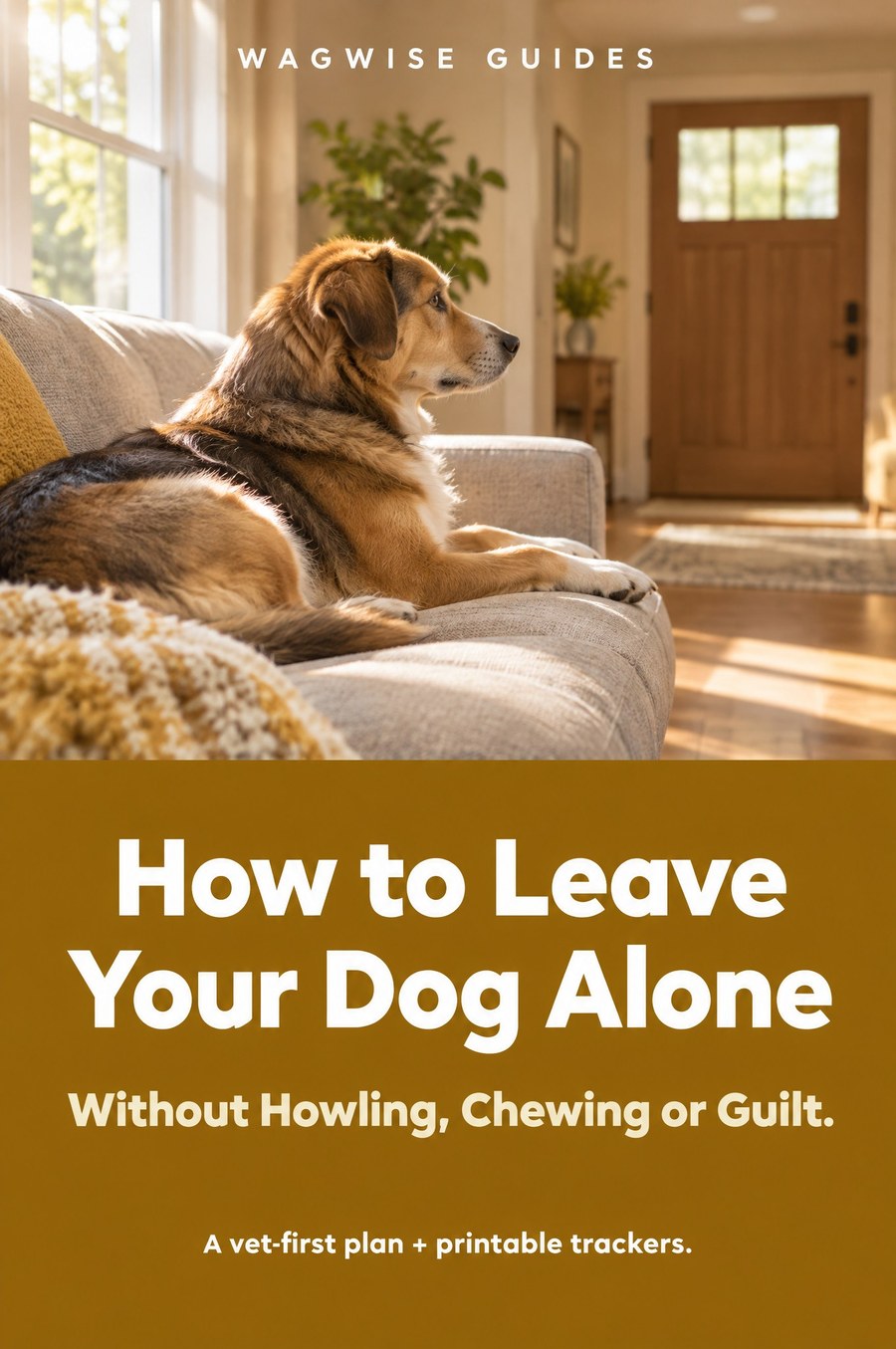
Home alone
It's Not Spite: Why Dogs Struggle Alone
Quick answer
Is my dog being spiteful when I leave? No. Dogs don't plan revenge. What looks like spite is a dog who is distressed, bored, young or confused, and none of it means you have failed. Film your dog, sort the signs, and get your vet involved if you see red flags.
- Dogs don't howl, chew or toilet to get even. Destruction near doors and windows points toward distress, not spite.
- The guilty look usually reflects your dog reacting to your mood, or expecting to be told off.
- Four things might be behind it: distress, boredom, teen mischief, or house-training that isn't finished.
- Turn guilt into small moves: film, call your vet, and arrange cover for the long hours.
Is my dog being spiteful? No. Dogs don’t howl, chew or toilet when you leave to get even. Dogs are social animals, and for some of them being alone feels frightening. What looks like revenge is usually a dog who is distressed, bored, young or confused.
None of that means you have failed. You came home to a chewed door frame or a puddle, and the story in your head says “he did this on purpose”. The more useful story is that your dog needed something you didn’t know how to give yet.
Is my dog being spiteful? What the guilty look really is
That “guilty look” when you get home is not guilt. Dogs Trust explains that it usually reflects your dog reacting to your mood, or expecting to be told off. Your dog reads your face and your body, and reacts to that.
So the look cannot tell you who chewed the shoe or why. It also explains why scolding doesn’t help. Dogs can’t link a telling-off to something done hours earlier, and punishing can add anxiety and confusion.
Why do dogs struggle when they are alone?
“Separation anxiety” is the phrase everyone searches for, but it isn’t one single disease. Researchers use “separation-related problems” because fear, frustration and boredom can all be part of the picture. In a questionnaire study of 2,757 dogs, the signs fell into four different clusters, including frustration and boredom-related ones.
That is why we sort first and don’t assume. It is also why a one-size tip like “buy a bigger chew” often misses.
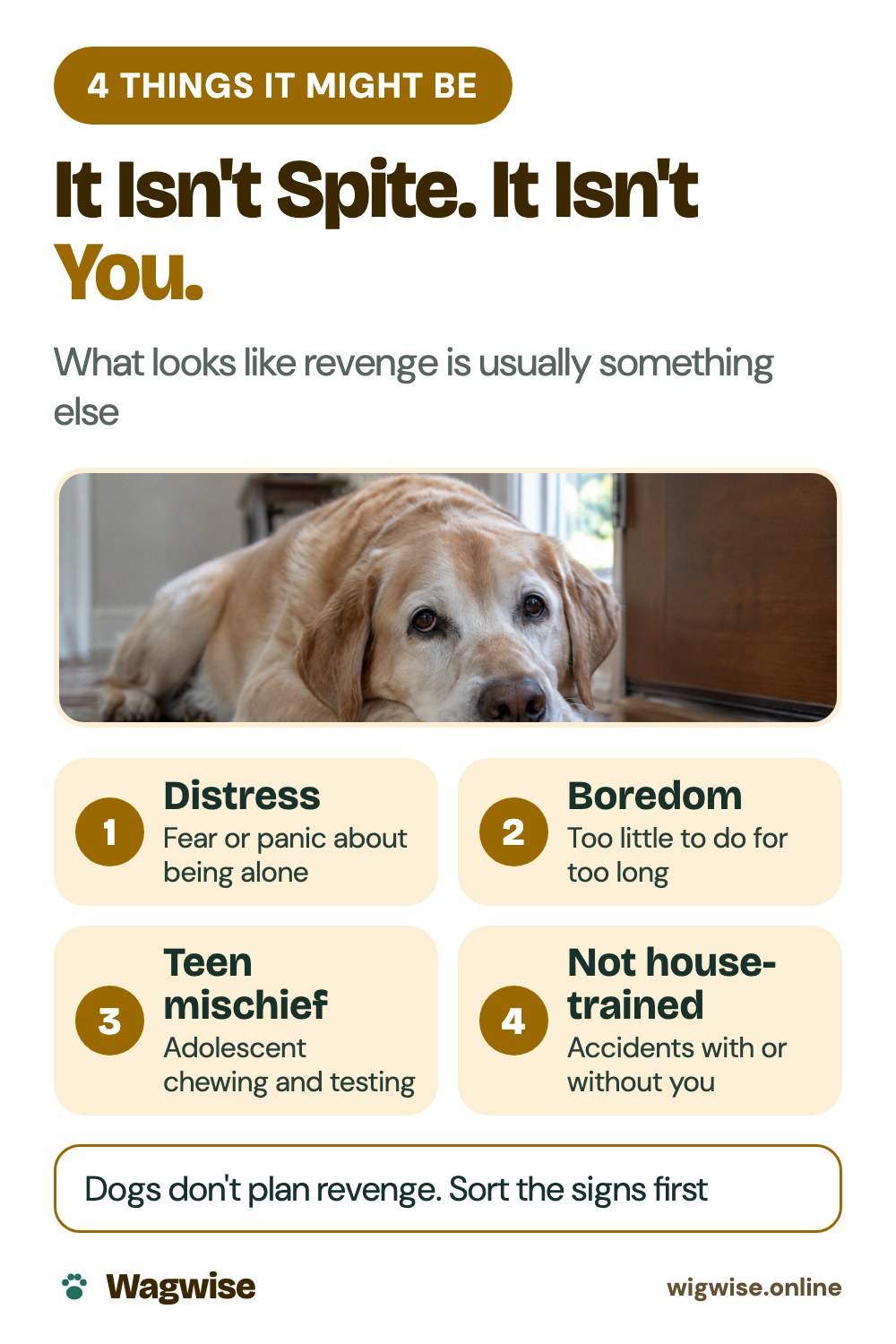
What might be behind it? Four things
| What it might be | In plain words |
|---|---|
| Distress | Fear or panic about being alone |
| Boredom | Too little to do for too long |
| Teen mischief | Adolescent chewing and testing |
| Not house-trained | Accidents with or without you |
Destruction near doors and windows, or only when you are out, points toward distress. A dog can also be more than one of these at once. A teenage chewer can also be a worried dog.
Can a change in routine make it worse?
Change can set it off. In a UK survey of 1,807 dogs, those whose time alone dropped the most were more likely to develop signs. A rough range often quoted is 14 to 20 percent of pet dogs, so you are far from the only owner here. Studies disagree about other risk factors, so there is no long checklist to worry over.
What to do with the guilt
Guilt feels like work, but it doesn’t help your dog. The useful moves are small:
- Film your dog while you are out.
- Call your vet if any red flag shows up.
- Arrange cover for the long hours your dog can’t manage yet.
- Tell one person what is going on, because you will need help.
If you are feeling overwhelmed yourself, talk to your own doctor or someone you trust as well.
Next, read about what to do tonight when your dog howls, and how to tell distress, boredom, mischief and house-training apart. The step-by-step plan is in the Wagwise home alone guide. It is general education, not a diagnosis, and it can’t replace a vet visit.
Frequently asked questions
Do dogs destroy things to get revenge?
No. Dogs don't plan revenge. Damage near doors and windows, or only when you are out, points toward distress, not spite.
What does my dog's guilty look mean?
Dogs Trust explains that the guilty look usually reflects your dog reacting to your mood, or expecting to be told off. It isn't guilt about what they did.
Is separation anxiety one single problem?
Not exactly. Researchers use the phrase separation-related problems because fear, frustration and boredom can all be part of what you see. That is why it helps to sort the signs first.
How common is it?
A rough range often quoted is 14 to 20 percent of pet dogs. Treat that as a ballpark, not a diagnosis of your dog.
More Wagwise guides for dog owners
 Stop Puppy BitingA gentle 4-week plan to stop the nipping and get through teething.$17 · instant PDFSee the guide →
 Get Rid of Dog Pee SmellRemove urine odor for good, then stop the accidents with a 14-day reset.$17 · instant PDFSee the guide →
 Stop Dog BarkingA quiz finds why your dog barks, then a plan made for that reason.$17 · instant PDFSee the guide →
 Help Your Itchy DogTrack triggers, soothe skin safely and know when to see the vet.$17 · instant PDFSee the guide →
 House-Train Your PuppyA kind 4-week plan with a schedule by age, a night plan and printable trackers.$17 · instant PDFSee the guide →
 Stop Leash PullingA 4-week force-free plan for calmer walks and a loose leash.$17 · instant PDFSee the guide →
 Puppy Sleeps Through the NightA realistic, age-by-age plan for calmer nights, without cry-it-out or crate fights.$17 · instant PDFSee the guide →
 Less Dog Hair, Less SmellA 4-week brushing, bath and home routine for a calmer-smelling house.$17 · instant PDFSee the guide →
Want all four? Get the complete library for $49.
Sources
This article is general education, not veterinary advice. It does not replace an examination by your vet or help from a qualified behaviourist.