
House-training
Is It Medical? Potty Red Flags Before Training
Quick answer
A puppy peeing a lot, straining, drinking much more, or having sudden accidents after being reliable needs a vet visit, not a tighter schedule. Use red, amber and green signs to decide, bring your potty log, and never give human medicine or home remedies.
- Rule out a health cause before you train, because some accidents are medical.
- Red signs mean call your vet now. Straining with little or nothing coming out is urgent.
- Amber signs mean book a vet visit this week. Green signs mean keep training and keep the log.
- Wagwise is not a vet and this article cannot diagnose anything.
A puppy peeing a lot, or a puppy who suddenly has accidents, is not always a training problem. Some accidents are medical, and more training will not fix those. This page is general education, not a diagnosis. Wagwise is not a vet, so when in doubt, call yours.
What are the red, amber and green signs?
Red: call your vet now.
- Blood in the urine
- Straining to pee or poop, crying while peeing, or only drops coming out
- Drinking much more than usual, tiredness, fever or a poor appetite
- Vomiting, diarrhea, pain or signs of dehydration
- Accidents that began suddenly in a puppy who had been reliable
If your puppy is straining and little or nothing comes out, treat it as urgent and phone an emergency vet straight away. A urinary tract infection in a dog can be a veterinary emergency, according to PetMD.
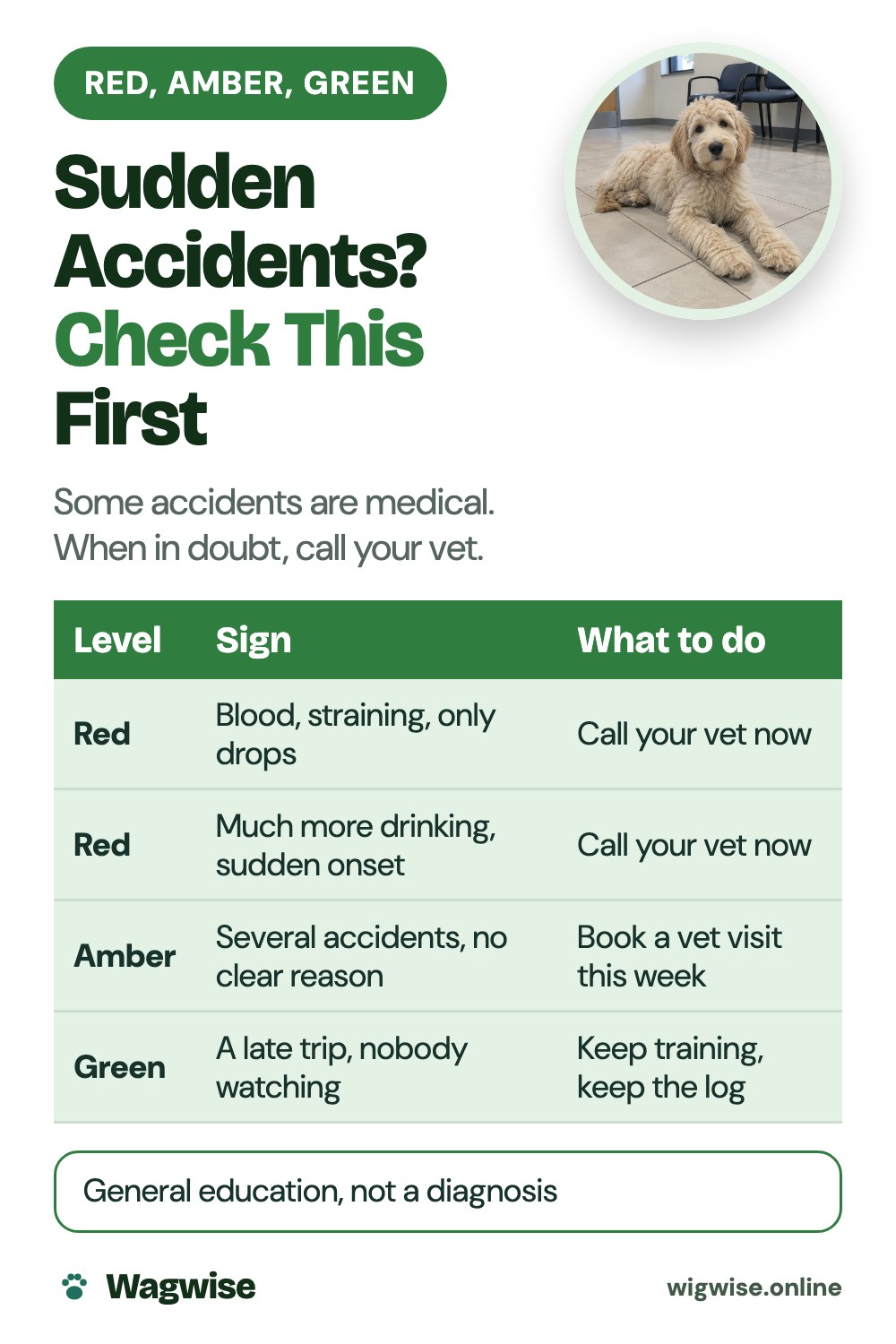
Amber: book a vet visit this week.
- Several accidents in a row with no clear reason
- A puppy who “just can’t get it” despite a solid routine
- Accidents that came back after a long clean stretch
- Very frequent small pees, or a sudden jump in trips
Green: keep training and keep the log.
- Occasional accidents in the first weeks, which are normal
- Accidents when you were not watching, or a trip was late
| Color | What it means | What to do |
|---|---|---|
| Red | Possible health problem | Call your vet now |
| Amber | Something is off | Book a vet visit this week |
| Green | A gap in the plan | Keep training and keep the log |
What will my vet do?
A physical exam, a urine test, and sometimes imaging or blood work. Ask the clinic how they want a urine sample collected before you try it. Do not guess. Never give human medicine or home remedies, and do not try to diagnose at home. A vet should check any dog that is soiling the house.
How do I prepare for the visit?
Bring a log summary. Three days of notes help your vet see the pattern quickly. Our 3-day potty log shows what to write. Note these as well:
- Your puppy’s name and age
- When house-training started
- How often your puppy pees and poops each day, and accidents per day
- When accidents started or changed
- Urine color and smell, and whether there is any blood
- Straining, crying or licking after going
- Drinking, appetite and energy
- Vomiting, diarrhea or constipation
- Any recent changes: home, food, travel, stress
Could it be behavior instead?
Sometimes. Soiling only when left alone, with signs of distress, points to a behavior professional, after a vet has checked your puppy. Peeing during greetings, or when excited or scared, may be excitement or submissive urination, which most often affects puppies and young females. Those are not the same as a missed trip, and scolding makes them worse.
Which professional should you ask?
- Your vet: any medical sign, any sudden change, urinary signs, and before you assume it is training.
- A qualified, reward-based trainer: routine and technique problems, and support when you feel overwhelmed.
- A veterinary behaviorist or behavior professional: soiling only when alone with distress, ongoing fear, or crate panic.
What if the vet finds nothing?
Then it is a training gap, and the usual plan applies: a good routine, eyes-on or confined time, and a calm answer to each accident. If the accidents came back after a good stretch, see potty training regression. If your puppy has accidents only when alone, with signs of distress, ask about a qualified behavior professional. The House-Train Your Puppy guide has a vet visit prep sheet you can print.
Frequently asked questions
Why is my puppy peeing so much?
Very frequent small pees, or a sudden jump in how often your puppy needs to go, is a vet question, not a schedule problem. Call your vet and bring your log.
Are sudden accidents a training problem?
Accidents that start suddenly in a puppy who had been doing well deserve a vet visit before you change the training.
What should I do if my puppy is straining?
If your puppy is straining and little or nothing comes out, treat it as urgent and phone your vet or an emergency vet straight away.
Can I give my puppy something at home?
No. Never give human medicine or home remedies for urinary problems, and do not try to diagnose at home.
What will the vet do?
A physical exam, a urine test, and sometimes imaging or blood work. Ask the clinic how they want a urine sample collected before you try.
More Wagwise guides for dog owners
 Stop Puppy BitingA gentle 4-week plan to stop the nipping and get through teething.$17 · instant PDFSee the guide →
 Get Rid of Dog Pee SmellRemove urine odor for good, then stop the accidents with a 14-day reset.$17 · instant PDFSee the guide →
 Stop Dog BarkingA quiz finds why your dog barks, then a plan made for that reason.$17 · instant PDFSee the guide →
 Help Your Itchy DogTrack triggers, soothe skin safely and know when to see the vet.$17 · instant PDFSee the guide →
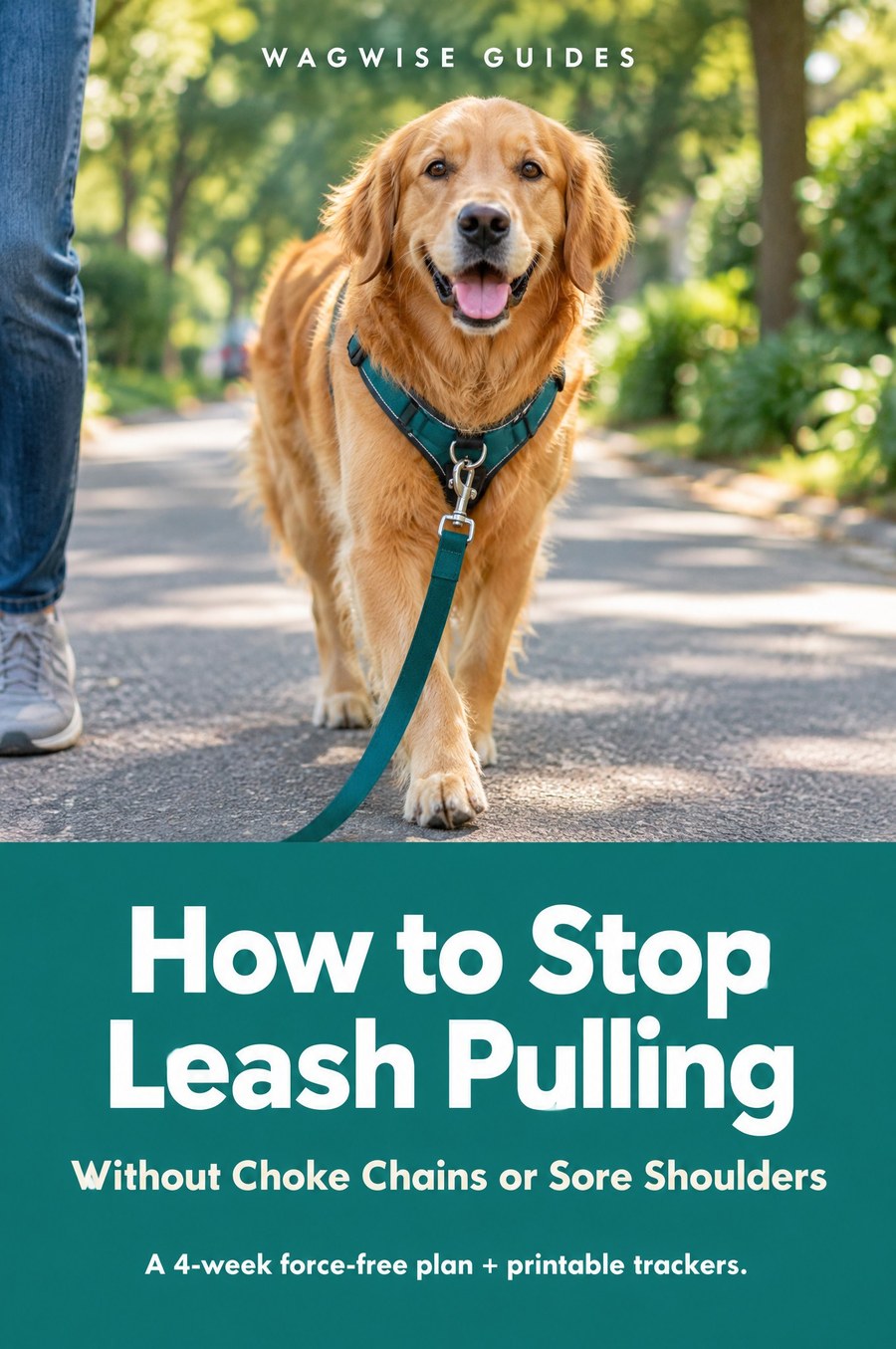 Stop Leash PullingA 4-week force-free plan for calmer walks and a loose leash.$17 · instant PDFSee the guide →
 Leave Your Dog AloneFilm, sort and build calm alone time with a vet-first plan and a step-by-step ladder.$17 · instant PDFSee the guide →
 Puppy Sleeps Through the NightA realistic, age-by-age plan for calmer nights, without cry-it-out or crate fights.$17 · instant PDFSee the guide →
 Less Dog Hair, Less SmellA 4-week brushing, bath and home routine for a calmer-smelling house.$17 · instant PDFSee the guide →
Want all four? Get the complete library for $49.
Sources
This article is general education, not veterinary advice. It does not replace an examination by your vet or help from a qualified behaviourist.